This is it. In the year of Railway 200, this is THE event that every train enthusiast has been eagerly awaiting. From 1st – 3rd August 2025, Alstom’s Litchurch Lane site throws open its doors for the weekend to welcome in the largest ever assembled gathering of locomotive and railway stock past, present and future. This is one that will go down in the history books. 12,500 people each day and tickets sold like hot cakes all the way back in February.
The Derby Litchurch Lane works is one of the world’s largest rolling stock factories, and the only UK facility that designs, engineers, builds and tests trains for domestic and international markets. Originally opened by the Midland Railway in 1876, it is now owned by Alstom and has been continually building trains here since 1839.
Welcome to a slice of history and to Derby as we attend what truly is, The Greatest Gathering, in both name and scale. Below you can find a map of the Alstom site and this entry will group photos into blocks that correspond with a location on the map.
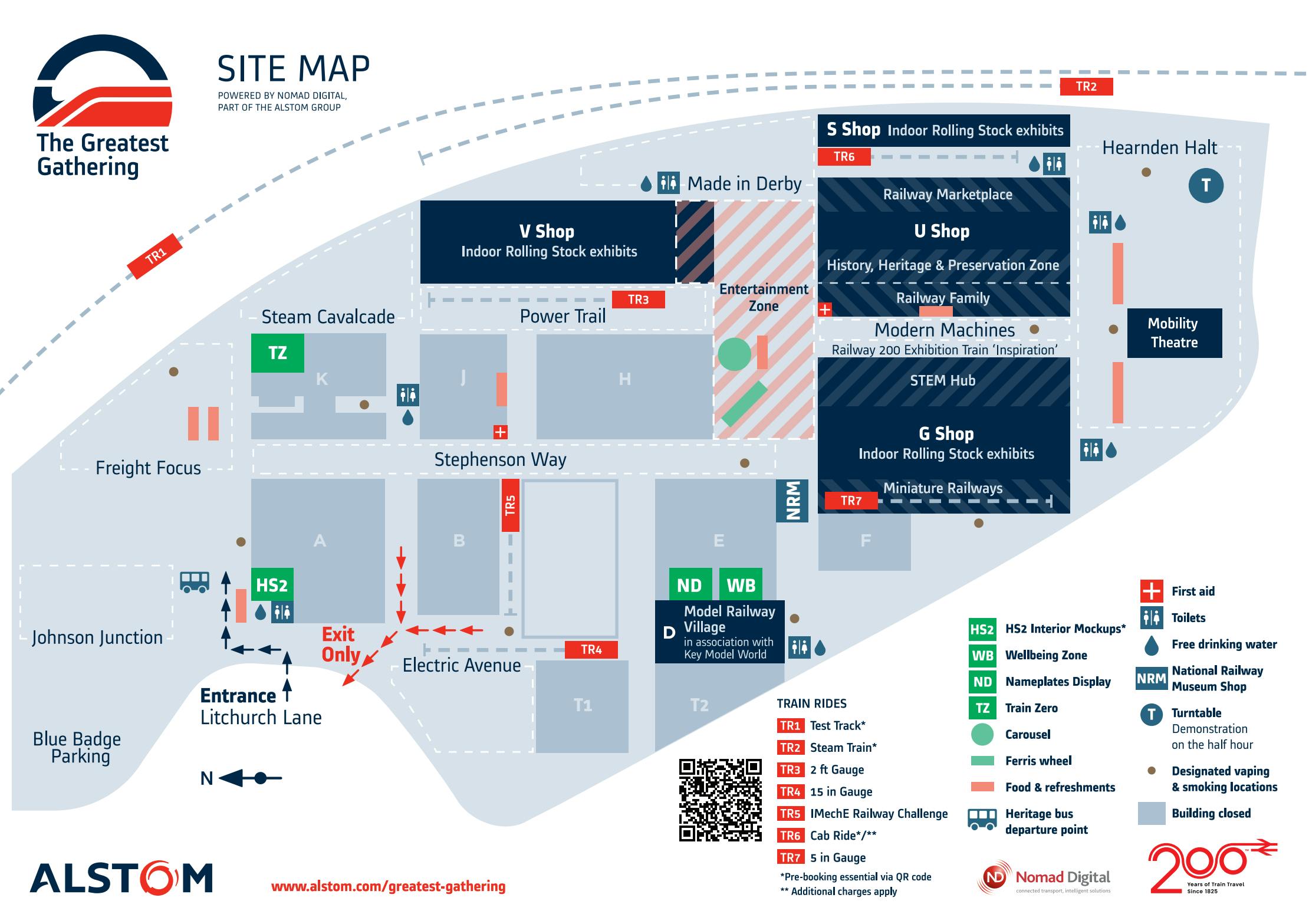
Following a 10am start, the doors swing open and it’s like wacky races. Everyone has a plan of where they want to go and what they want to see, and it’s a race to get there before too many people show up and ruin your photos. The first port of call was the steam cavalcade area behind K shop, and boy was this a good start to the day. An LNER A1, A2, A3 and A4 all together in the same place, at the same time. As a train enthusiast I cannot convey how unprecedented this is and how incredibly excited I was to see this line up. I’ve never seen Blue Peter in the flesh before and each one of these has a unique story to tell in the history of British railway travel.
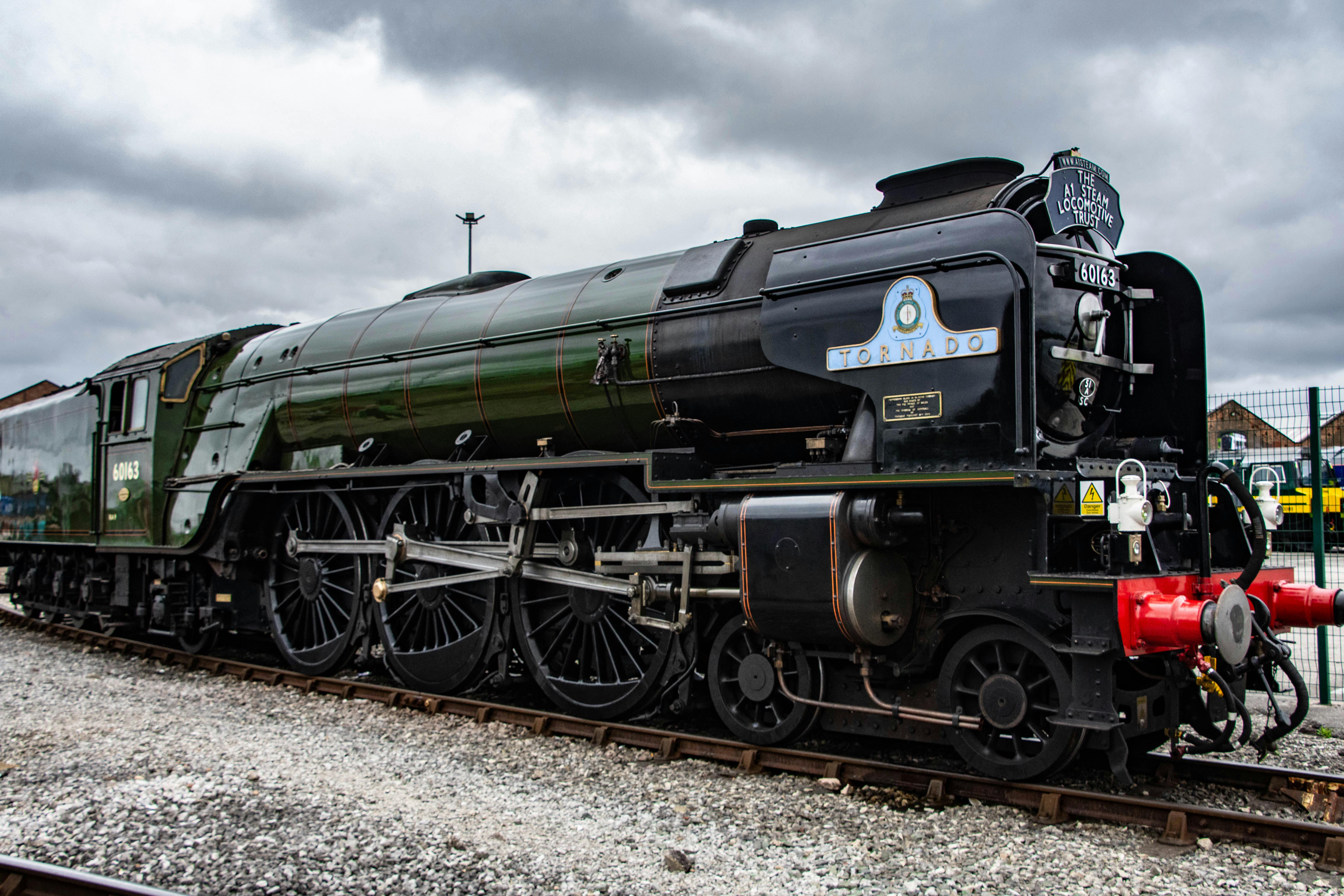
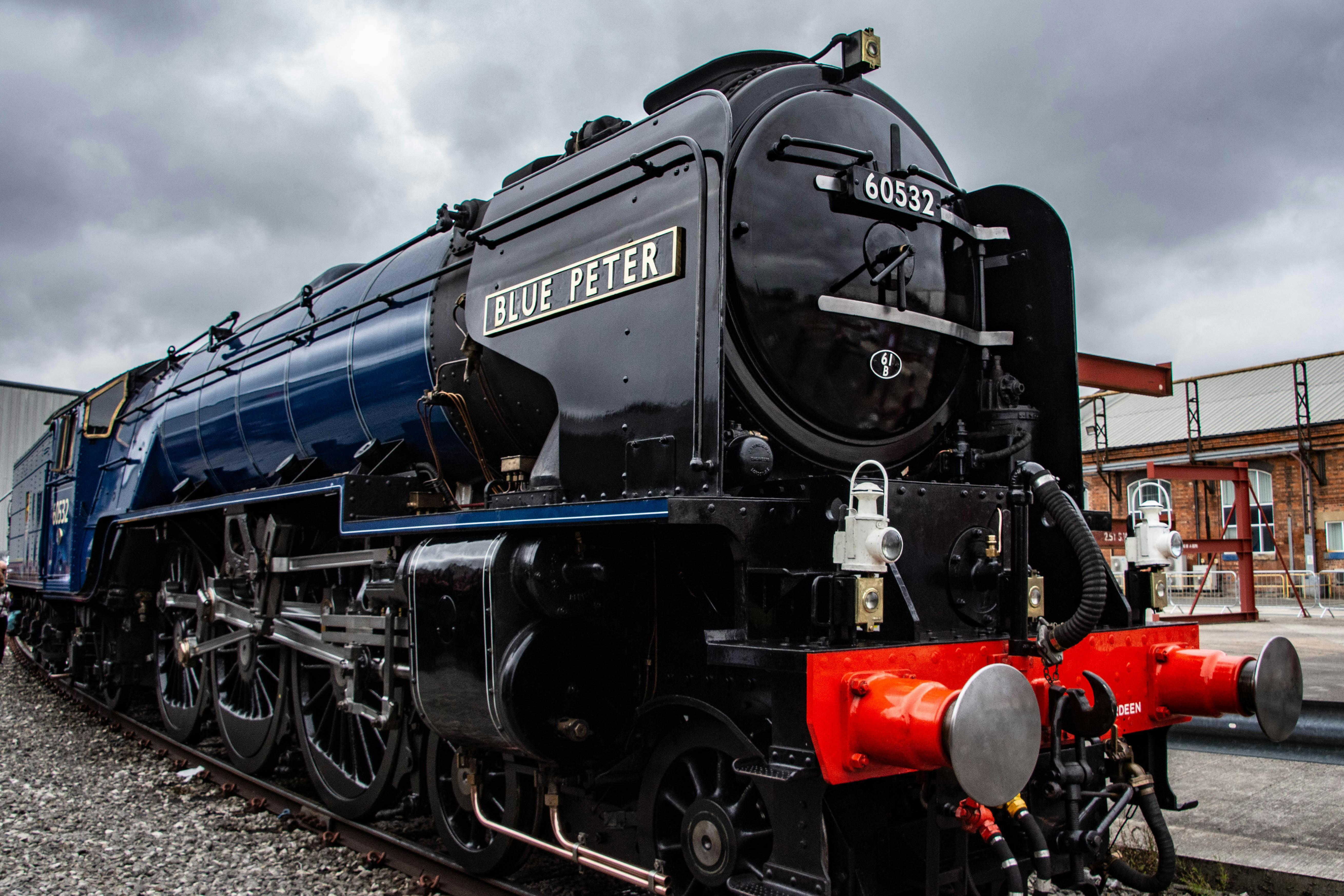
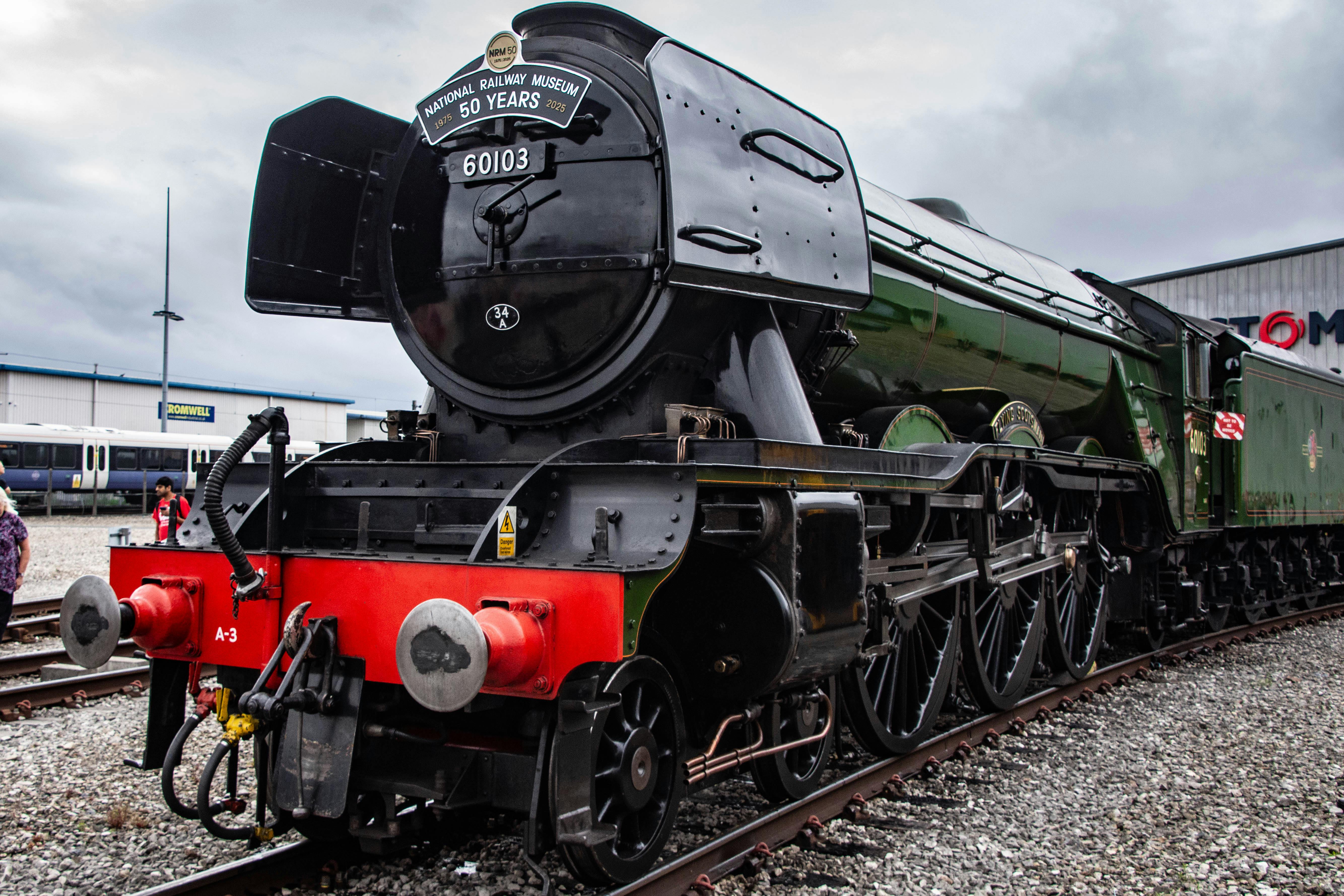
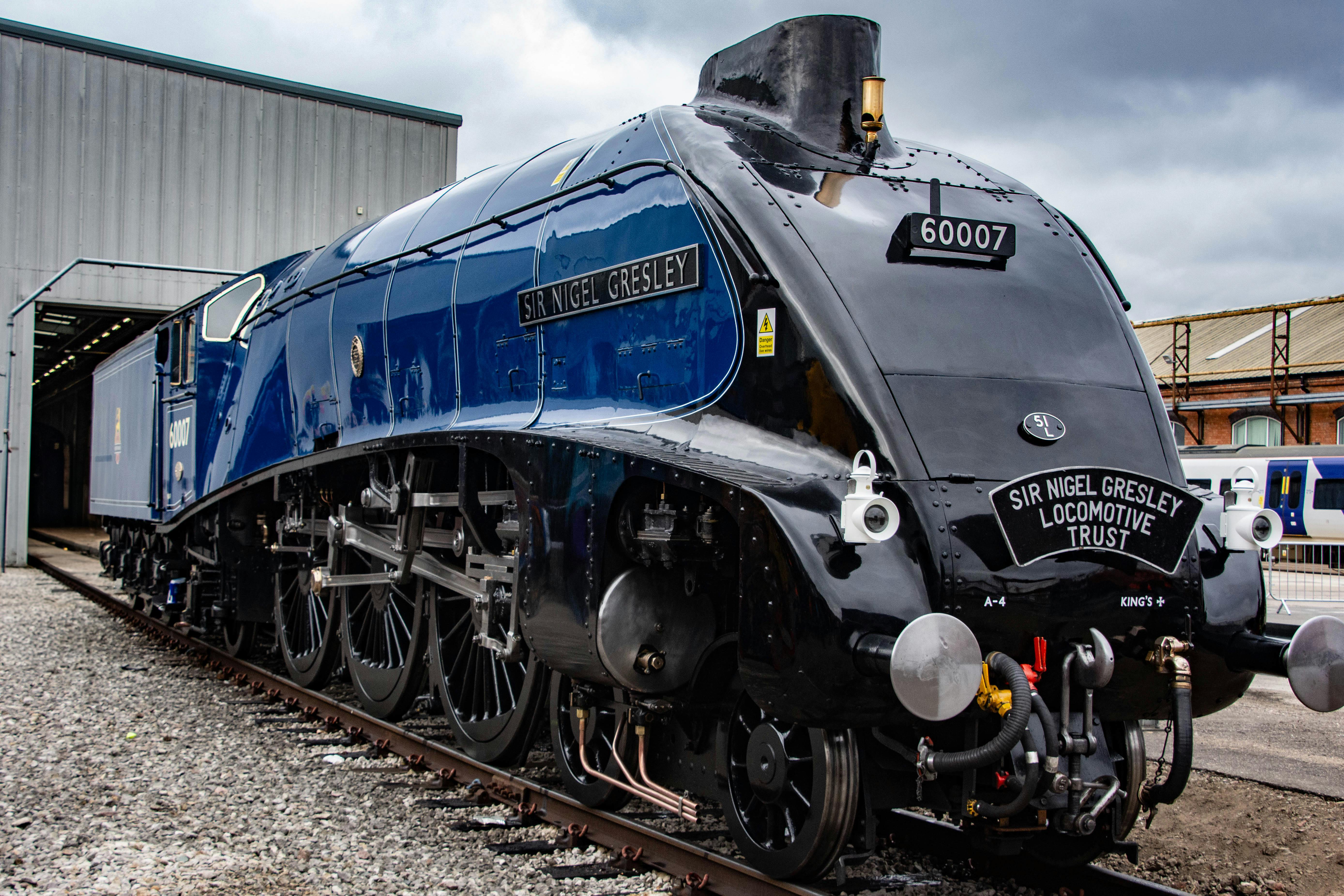
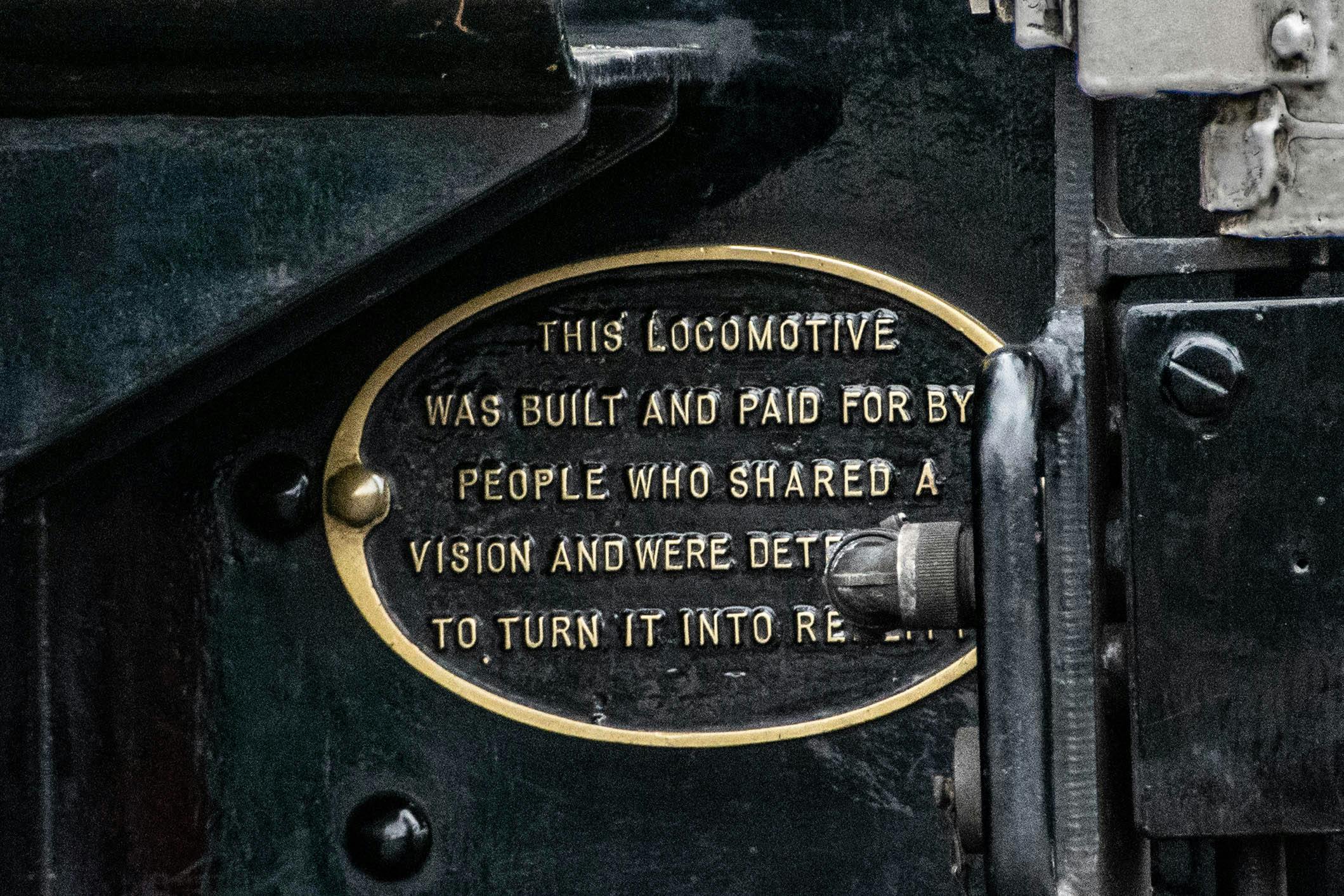
‘Tornado’ is particularly special. Not only is it the only Peppercorn A1 in existence, but it was built to an original design by Arthur Peppercorn between 1994 and 2008. That makes it first new build steam locomotive on British railways since 1960. It is a phenomenal achievement. ‘Blue Peter’ has undergone multiple extensive overhauls to get it back to mainline running standards which only concluded a couple of years ago. I think the plaque near the buffer beam of Tornado is not only applicable to her, but all those engineers who have lovingly restored and saved these iconic behemoths of steam.
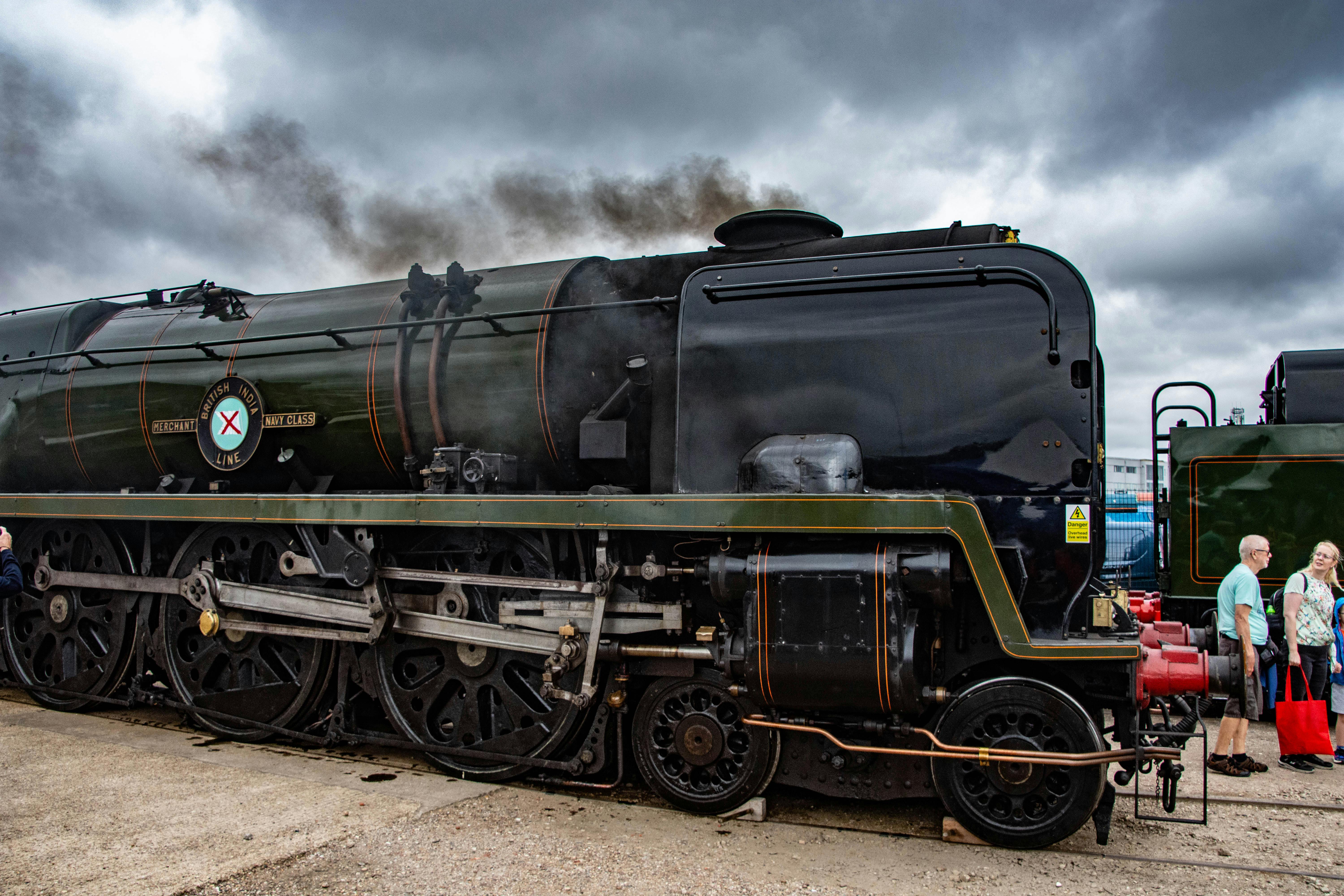
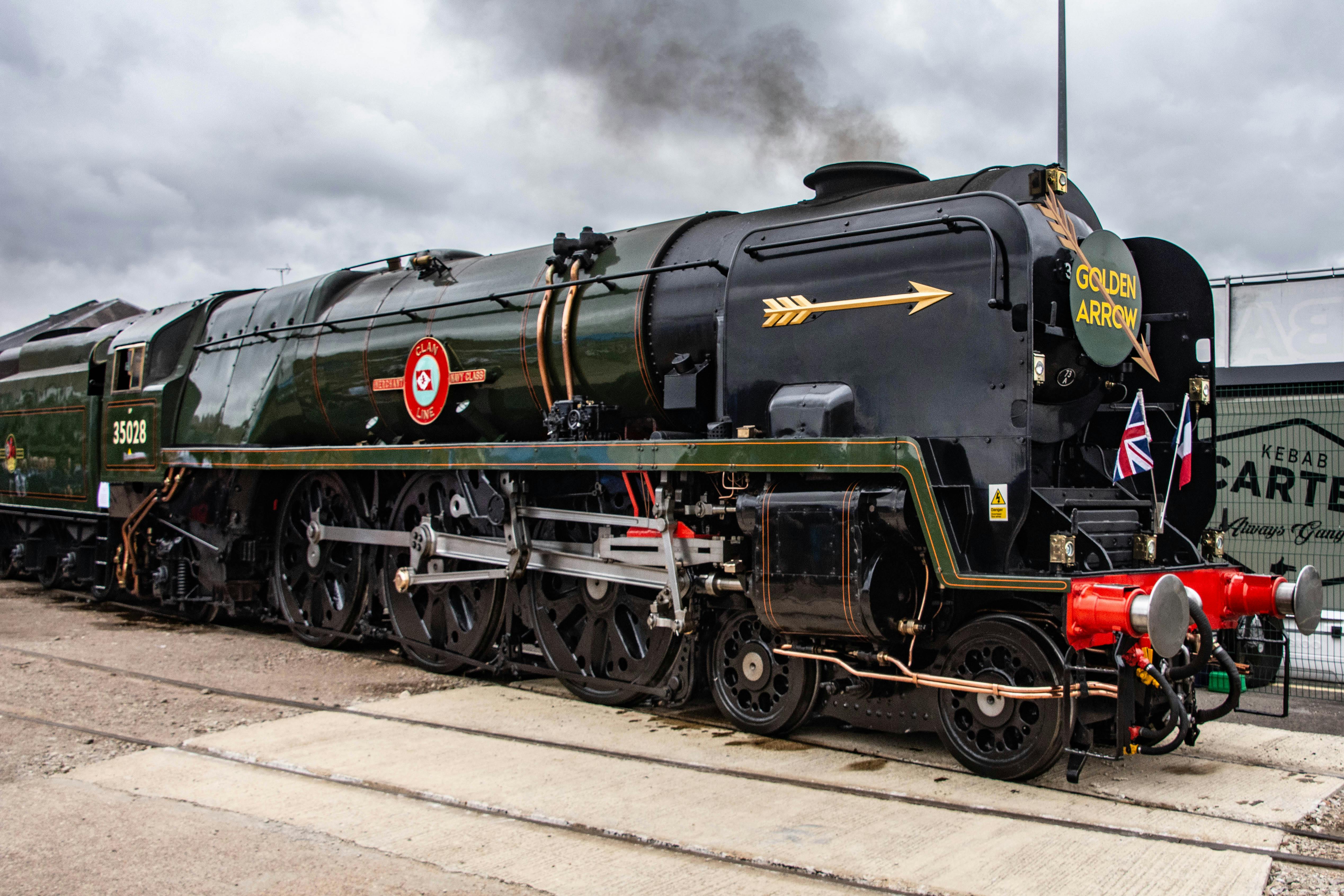
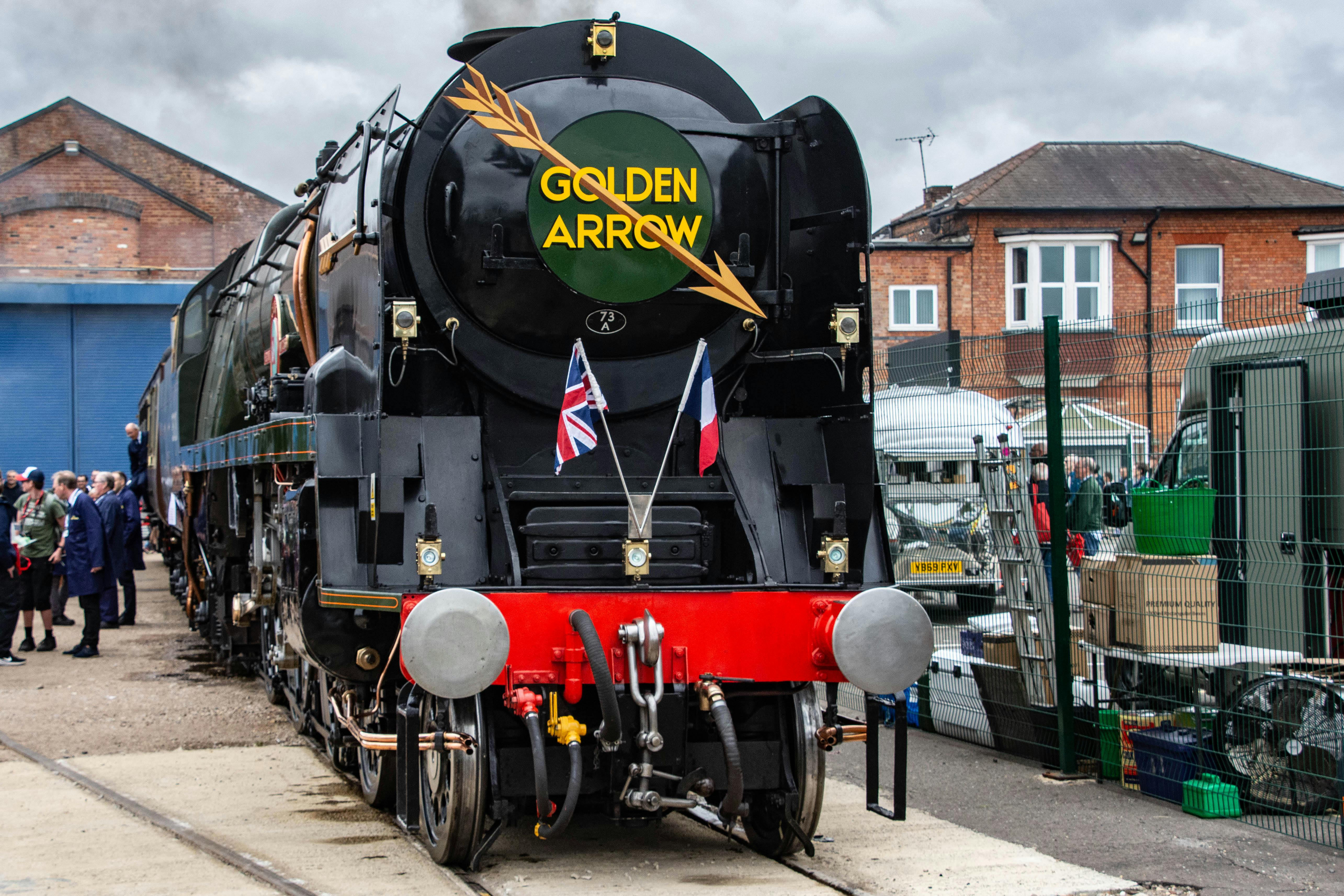
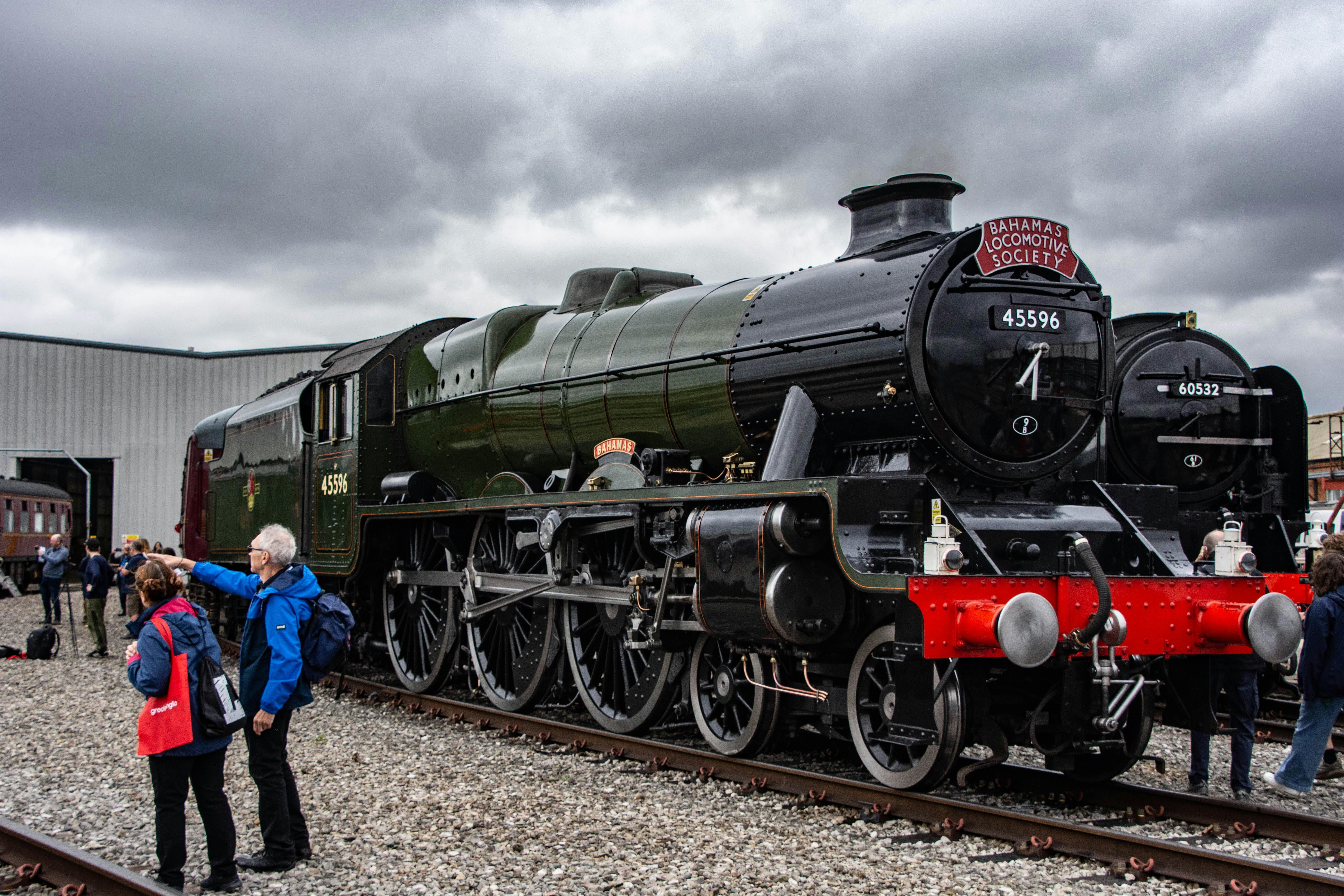
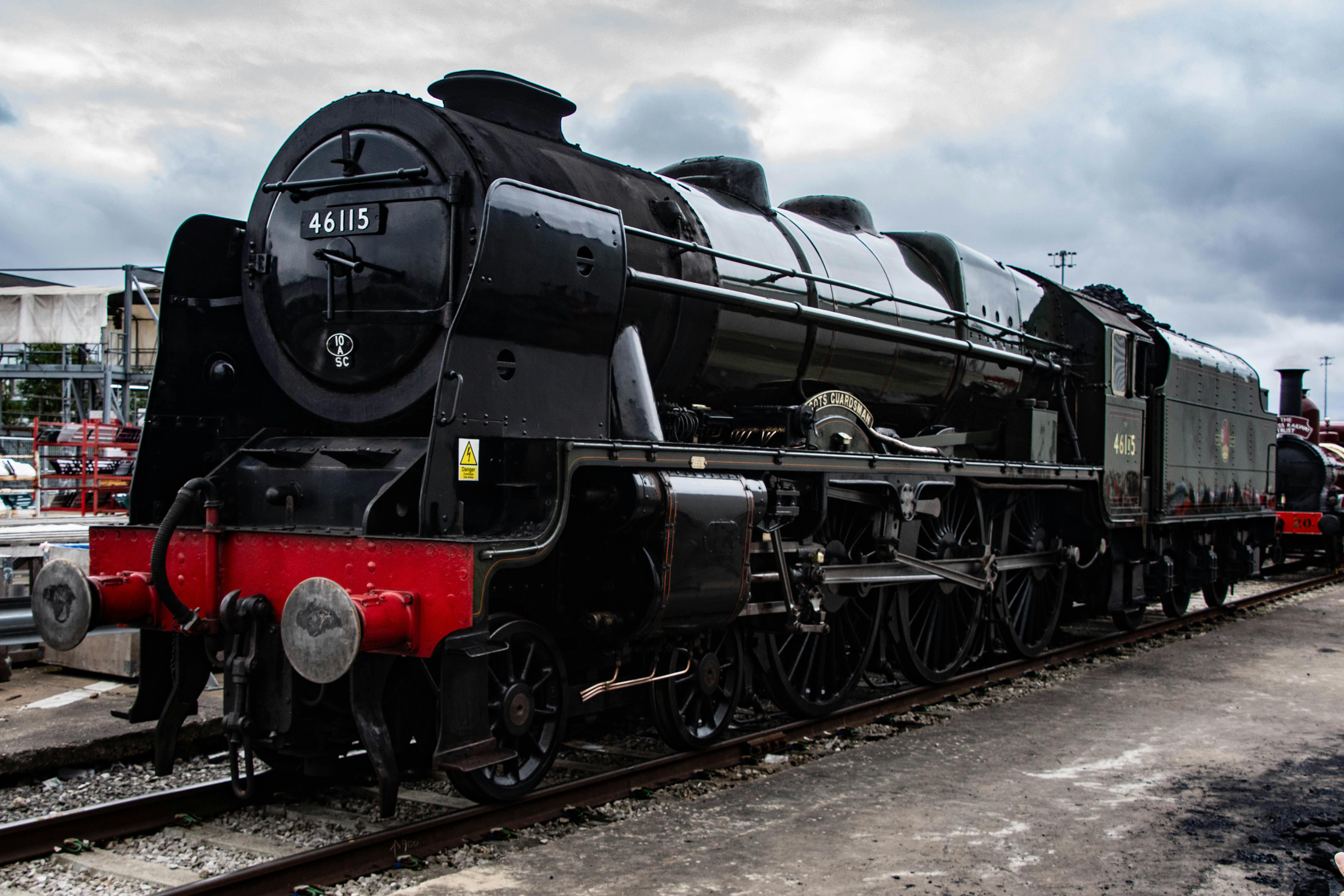
Still in the area of the steam cavalcade, the next set of locomotives is very much an homage to Stanier and Bulleid; two massive names in railway engineering of the 20th century. William Stanier was Chief Mechanical Engineer of the London, Midland and Scottish Railway and designed icons such as the ‘Black Fives’ as well as the Royal Scot Class, Jubilee Class and Mogul Class to name but a few. Oliver Bulleid was the Chief Mechanical Engineer of the Southern Railway between 1937 and 1948 and is the name behind the design of giants such as the Merchant Navy Class, West Country and Battle of Britain classes. A small example of these are shown below. The Merchant Navy 35028 ‘Clan Line’ is famous for hauling the ‘Bournemouth Belle’ and ‘Golden Arrow’ Pullman trains. She is still mainline certified and regularly hauls luxury Pullman trains in the south of England.
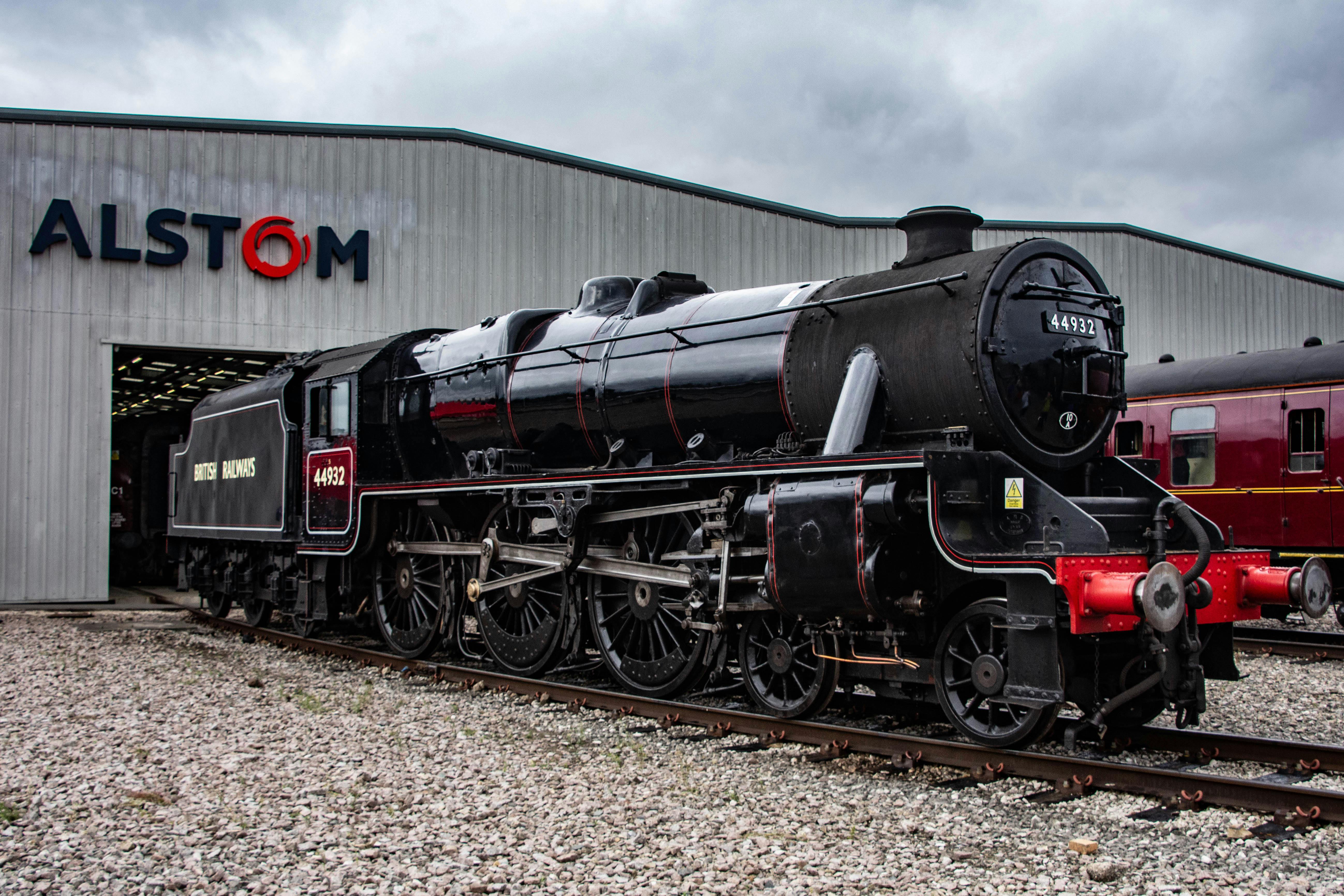
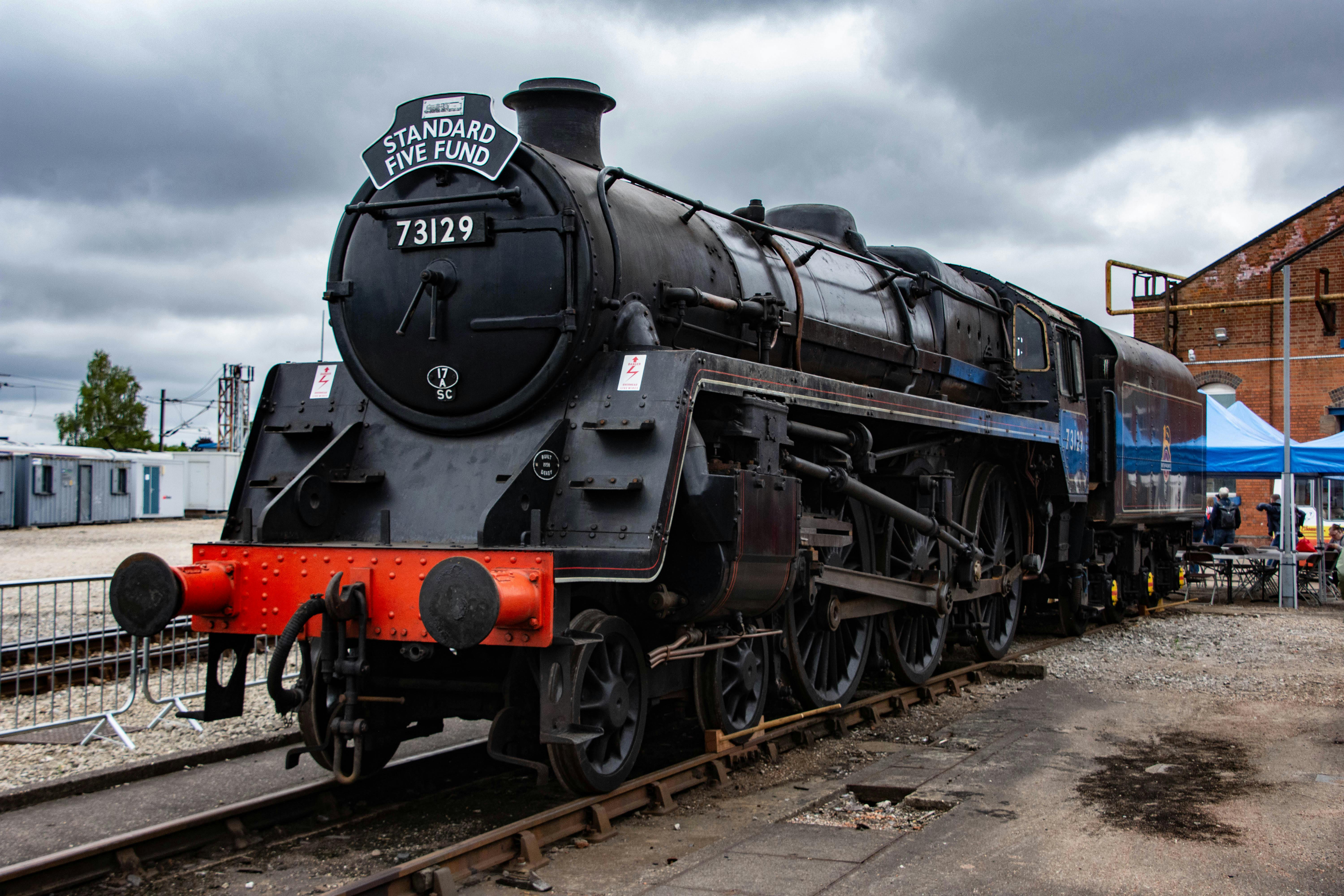
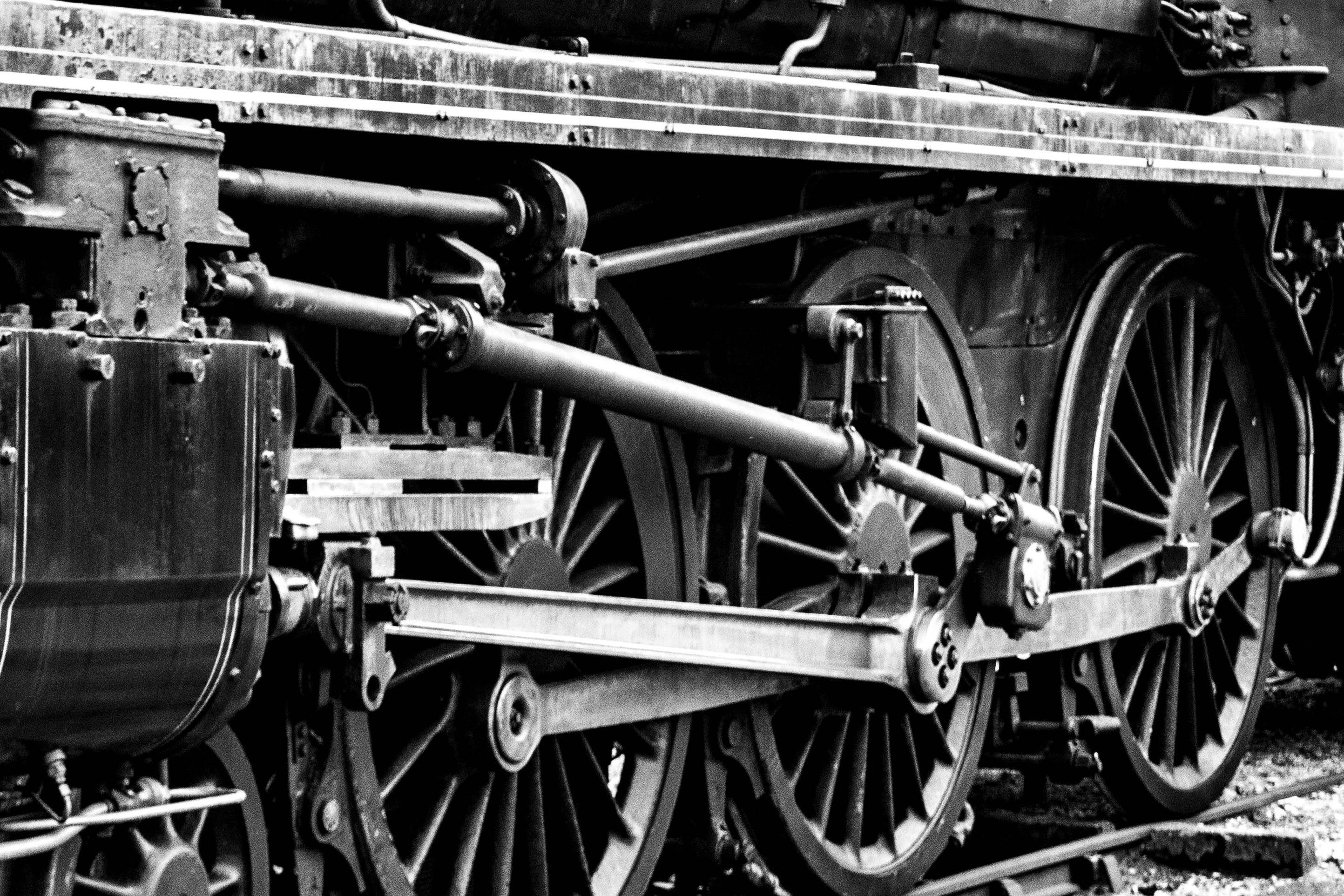
If you look at the valve gear for the majority of steam locomotives, you’ll see a piston valve which slides back and forth and is connected to the connecting rods. The BR Standard Class 5 5MT below however is the only example of a Caprotti valve gear (which uses a rotary motion rather than a sliding one) to survive into preservation.
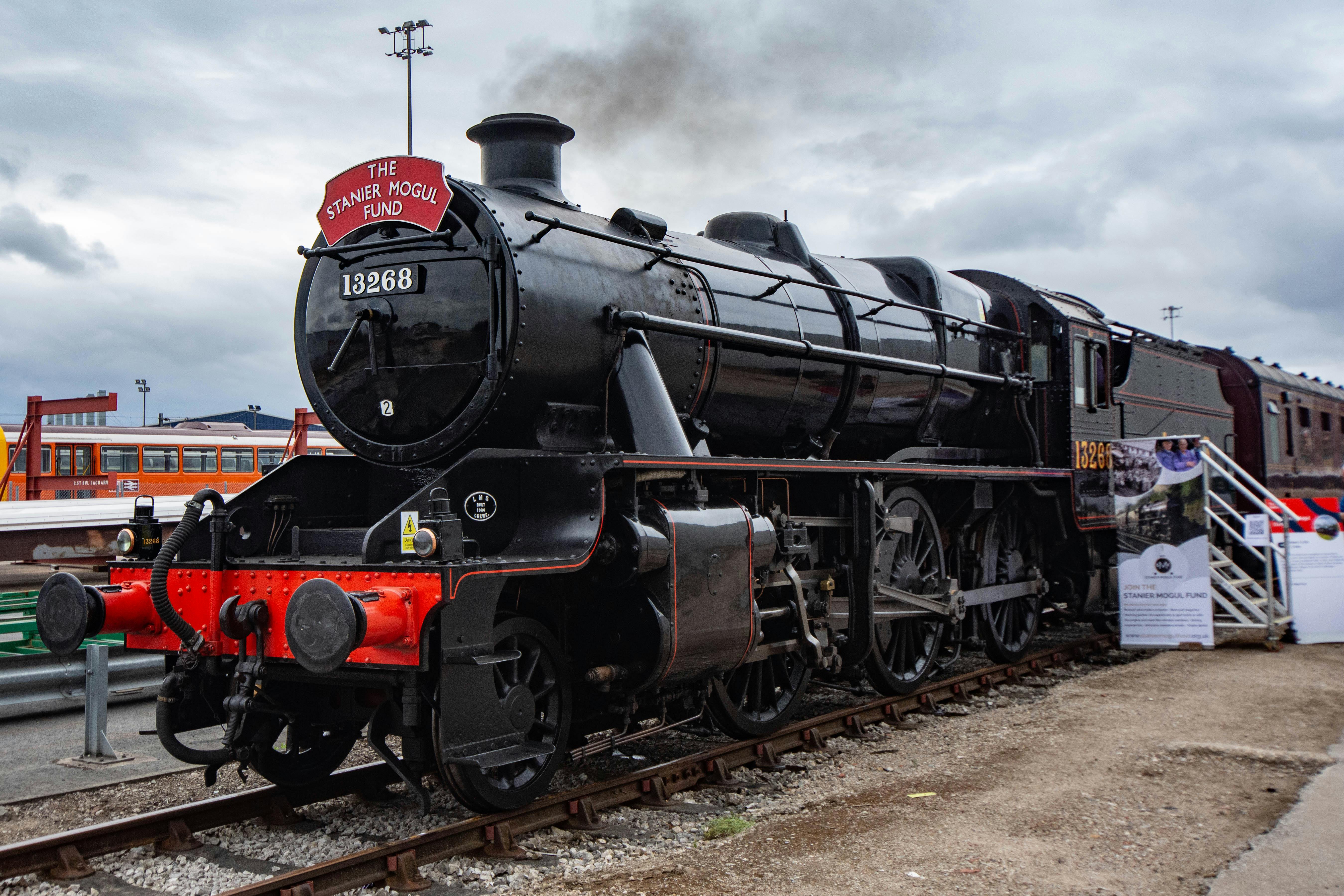
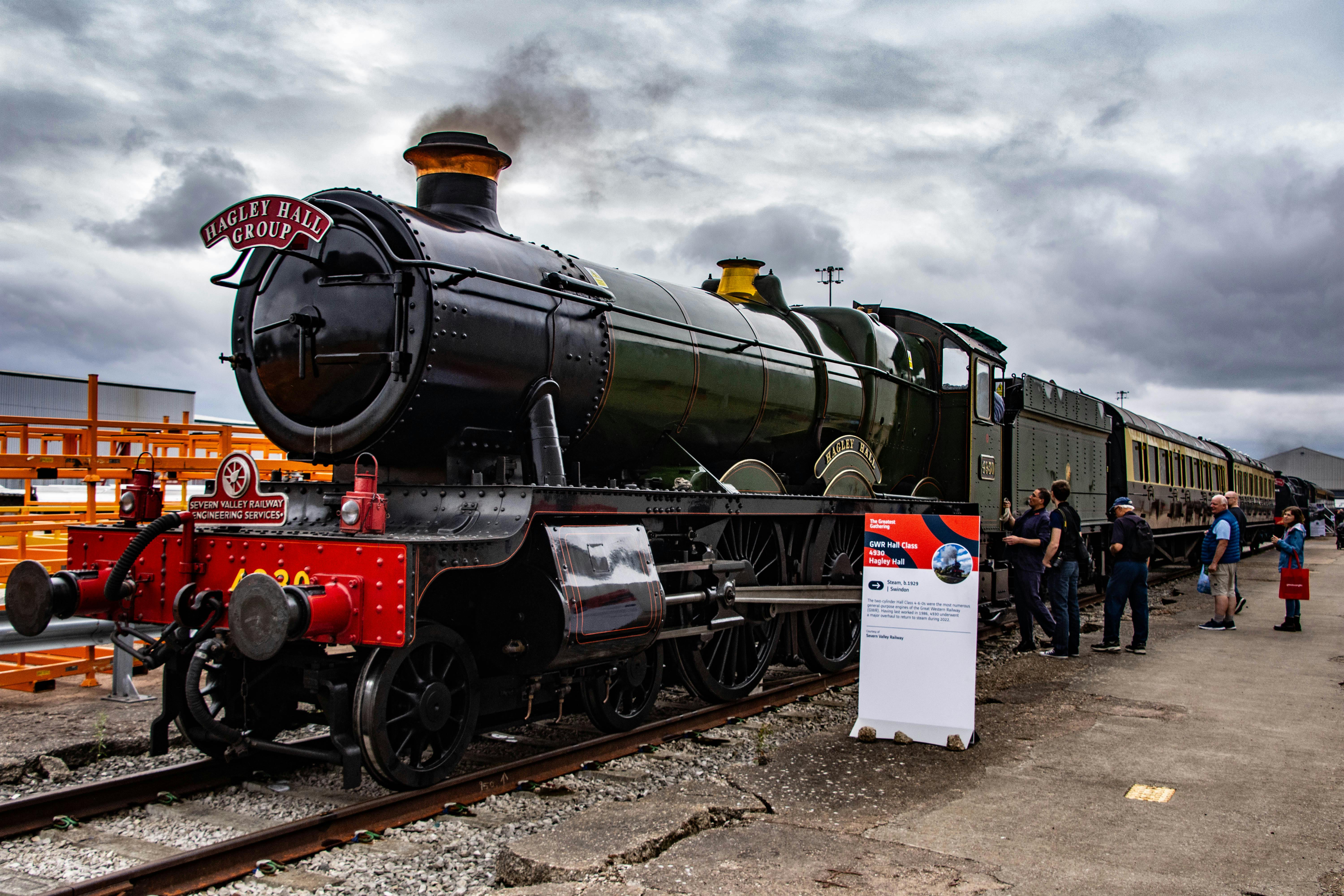
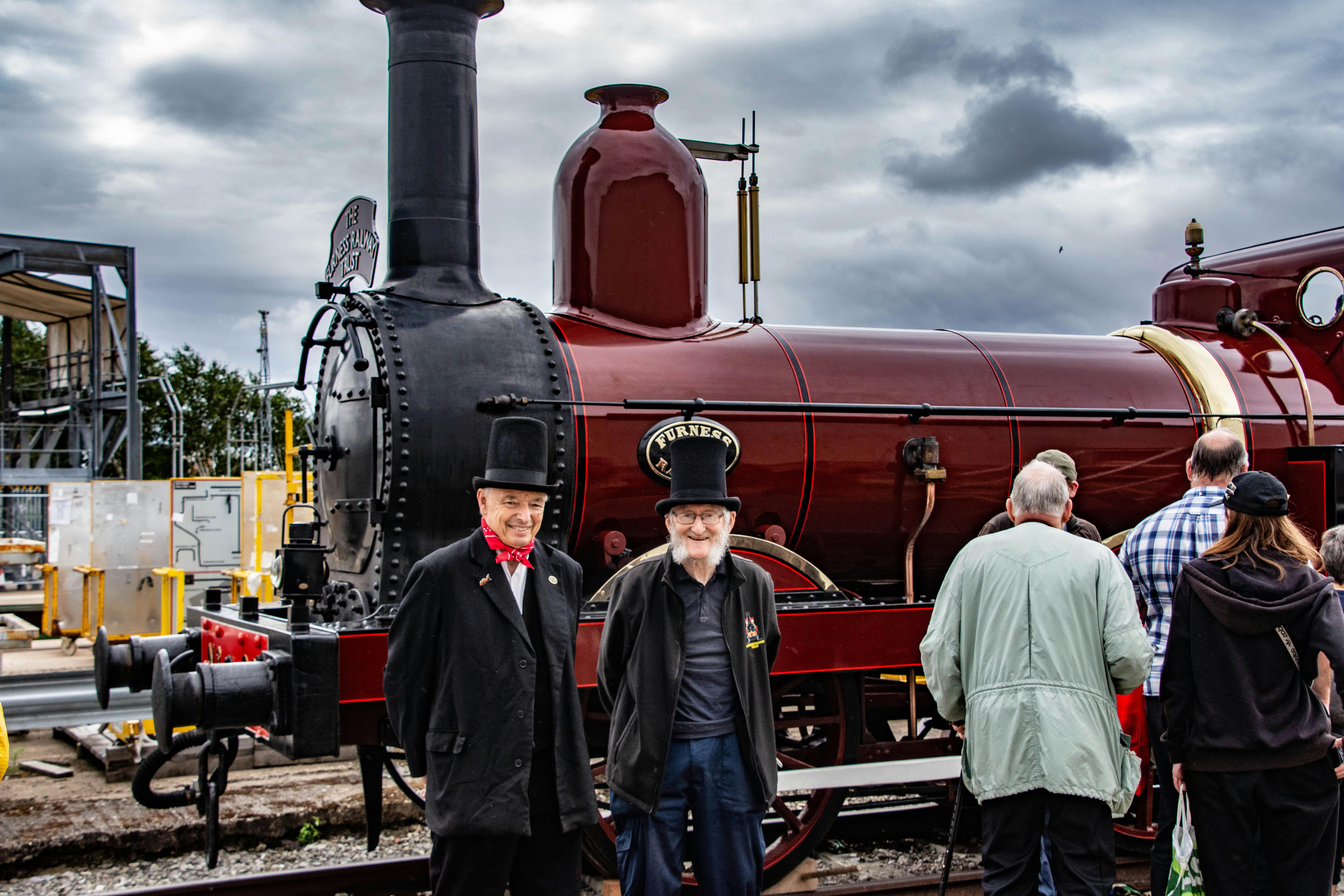
We move on now up behind V Shop and it’s here where we have yet more steam engines. We see another example of Stanier design in the Mogul, but also our first Charles Collett Hall Class, 4930 ‘Hagley Hall’. Charles Collect was the Chief Mechanical Engineer for the Great Western Railway between 1922 and 1941. We’ll see further examples of his designs later on. Following these two was Furness Railway 0-4-0 No. 20. She is one of the oldest surviving standard gauge steam locomotives in the UK. The representatives from the Furness Railway Trust who are her custodians today really looked the part as well and proudly pose next to her.
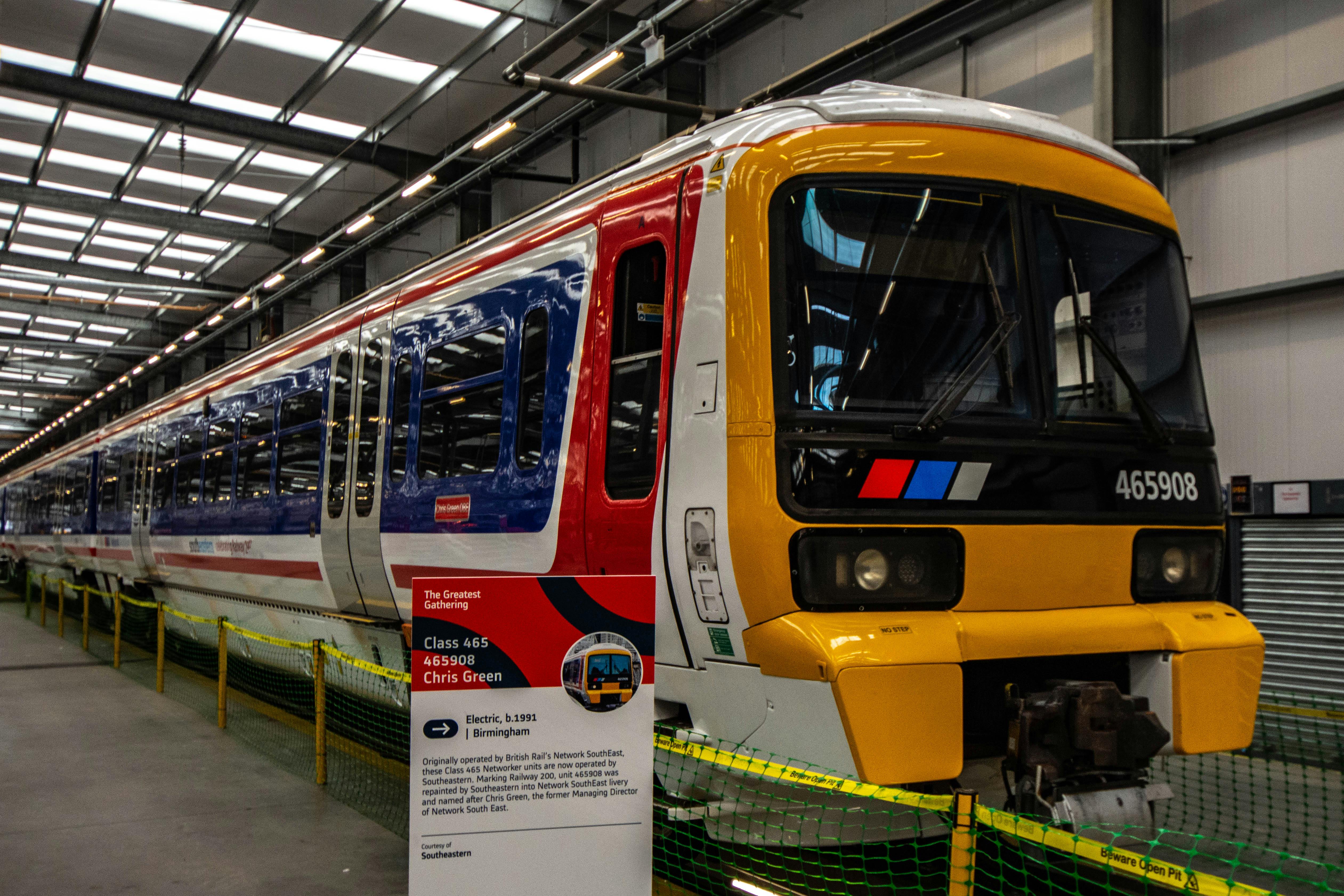
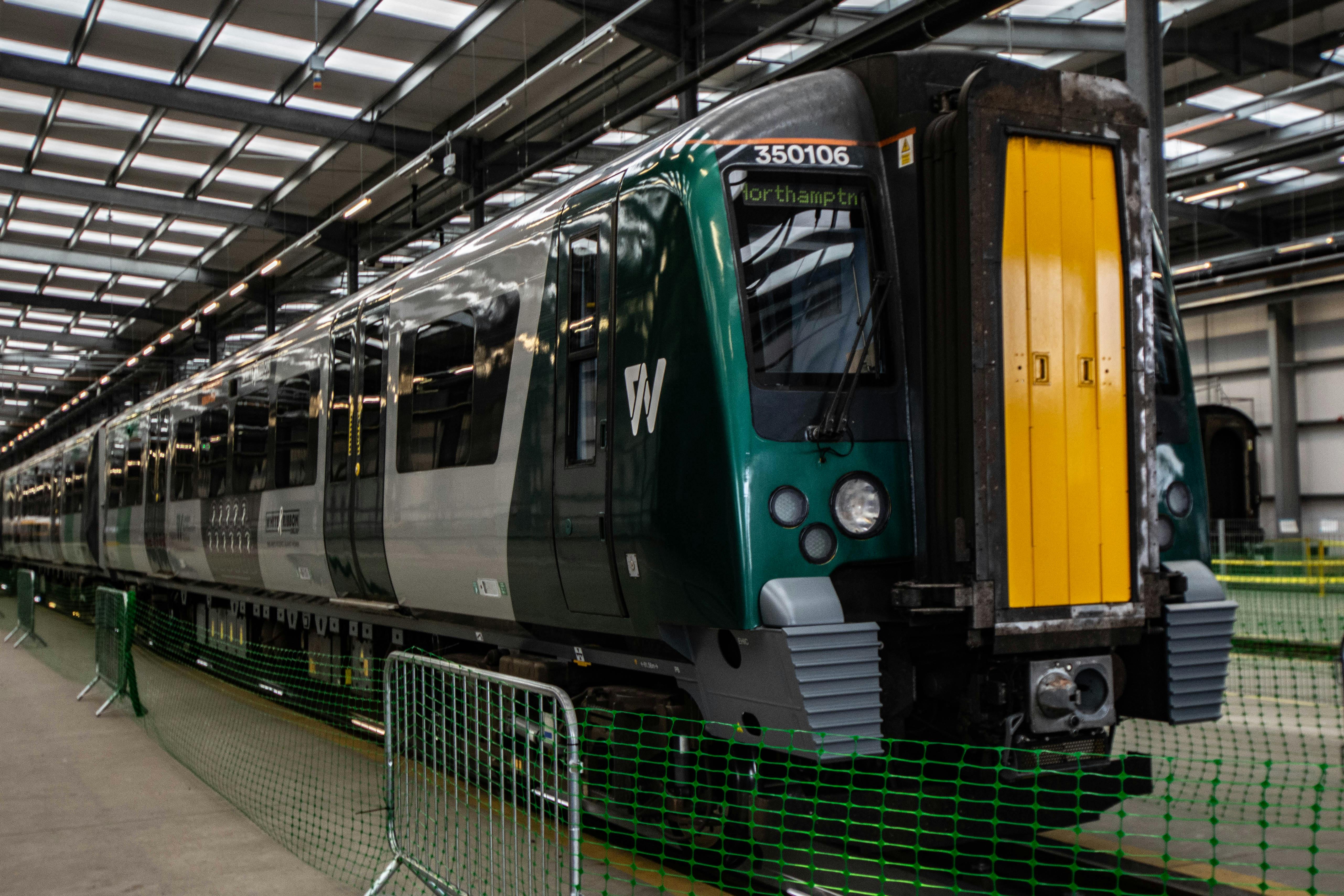
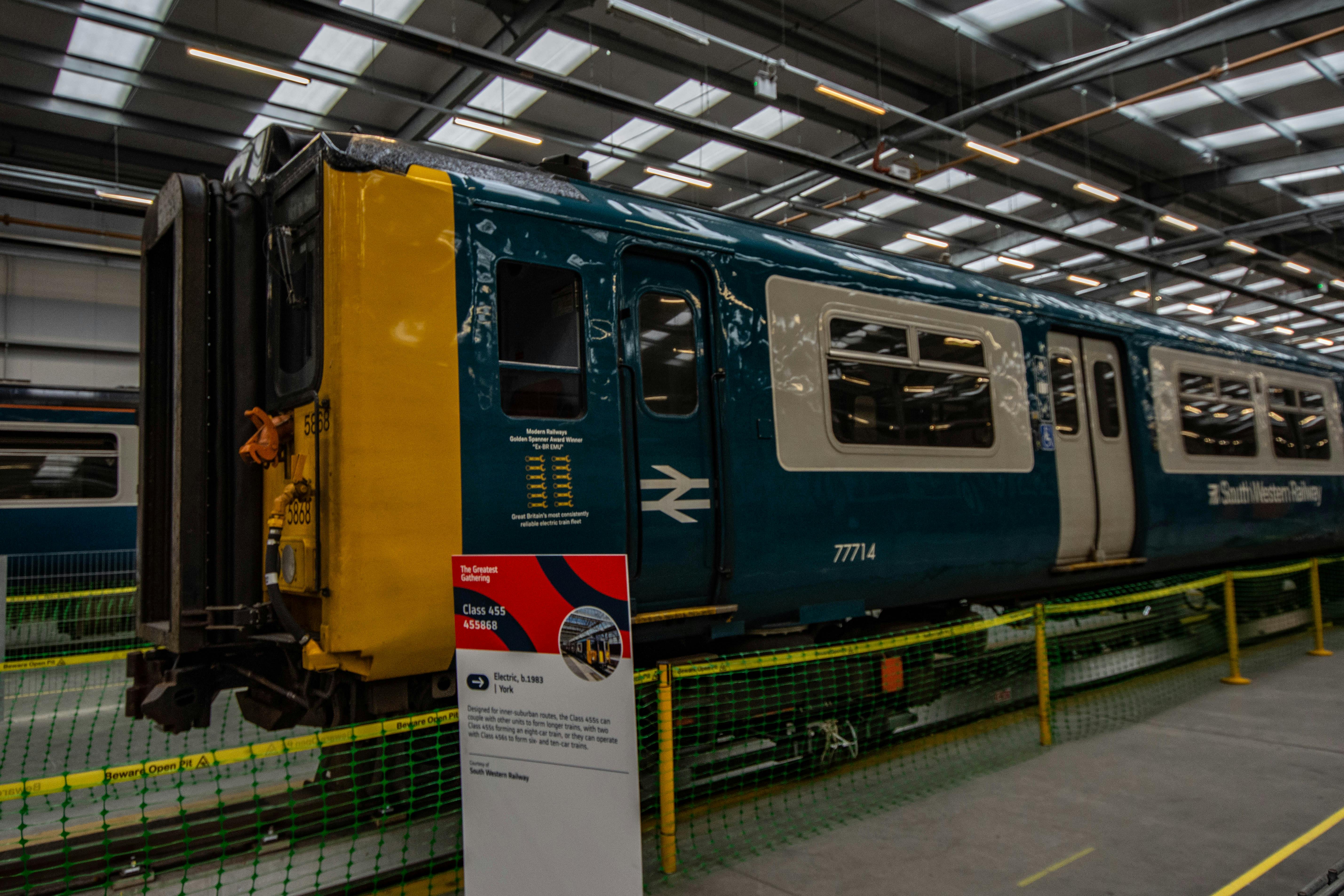
At this point, I took a wander around V Shop. Each of the warehouses on site is incredibly expansive, each with multiple tracks and room to fit a full length 8 car+ train. There’s a number of EMUs in here and the Class 455 was a bit of nostalgia for me to see as this was the exact type of train that used to ferry me to and from university from Sunbury-on-Thames to Kingston for around 3 years and then further into London on the weekends. Back then it was in the typical South West Trains livery of red, yellow, orange and blue but this particular unit was repainted back in March 2024 into its original BR blue and grey livery.
Another notable entry is the Class 799 HydroFLEX by Porterbrook. This is the UK’s first hydrogen-powered passenger train. It has been retrofitted from a Class 319 EMU and combines hydrogen fuel cell technology with existing electrical systems which allows operation both on electrified and non-electrified tracks. It’s a huge step forward in rail transportation and hopefully we’ll be seeing more of it in the future on other routes.
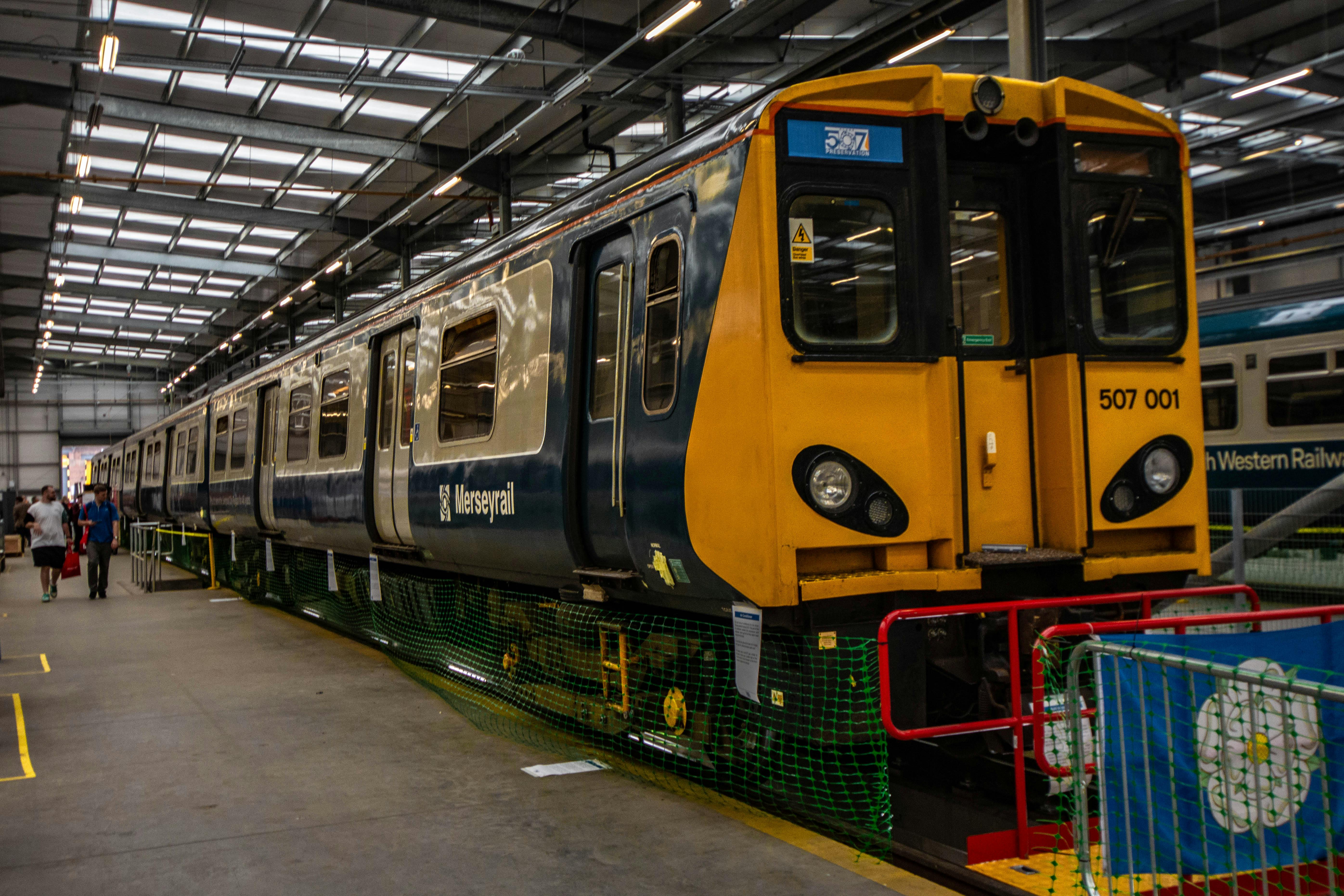


Inside this workshop there are multiple train status boards, each of which will correspond to a unique train in the workshop at a time. The idea behind this is that for locomotives being worked on, by attaching the relevant tags, engineers can quickly see at a glance important information about work done to the loco. We’ve seen similar systems before in other motive power departments and it looks like it’s a case of the simplest systems being the best to use.

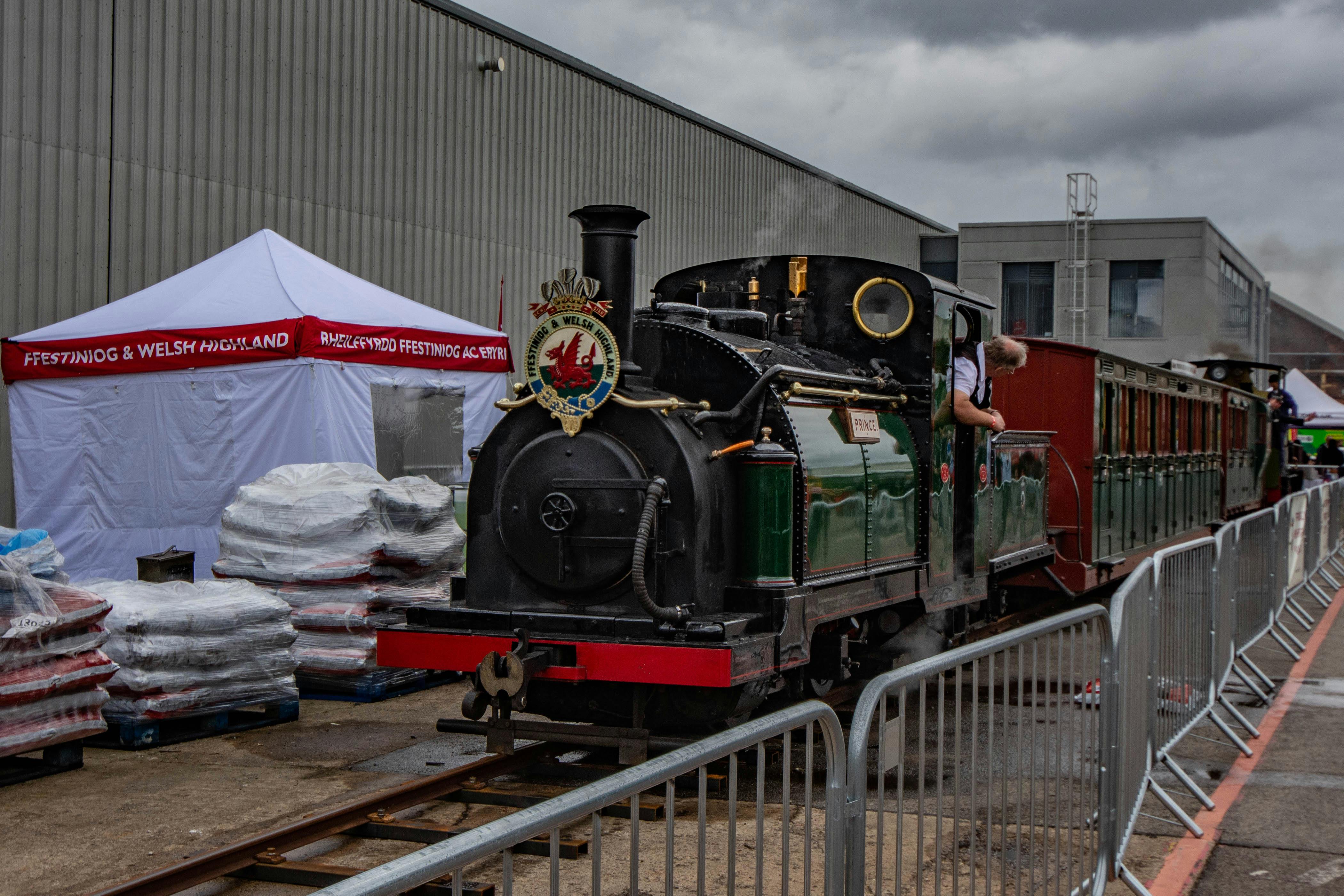
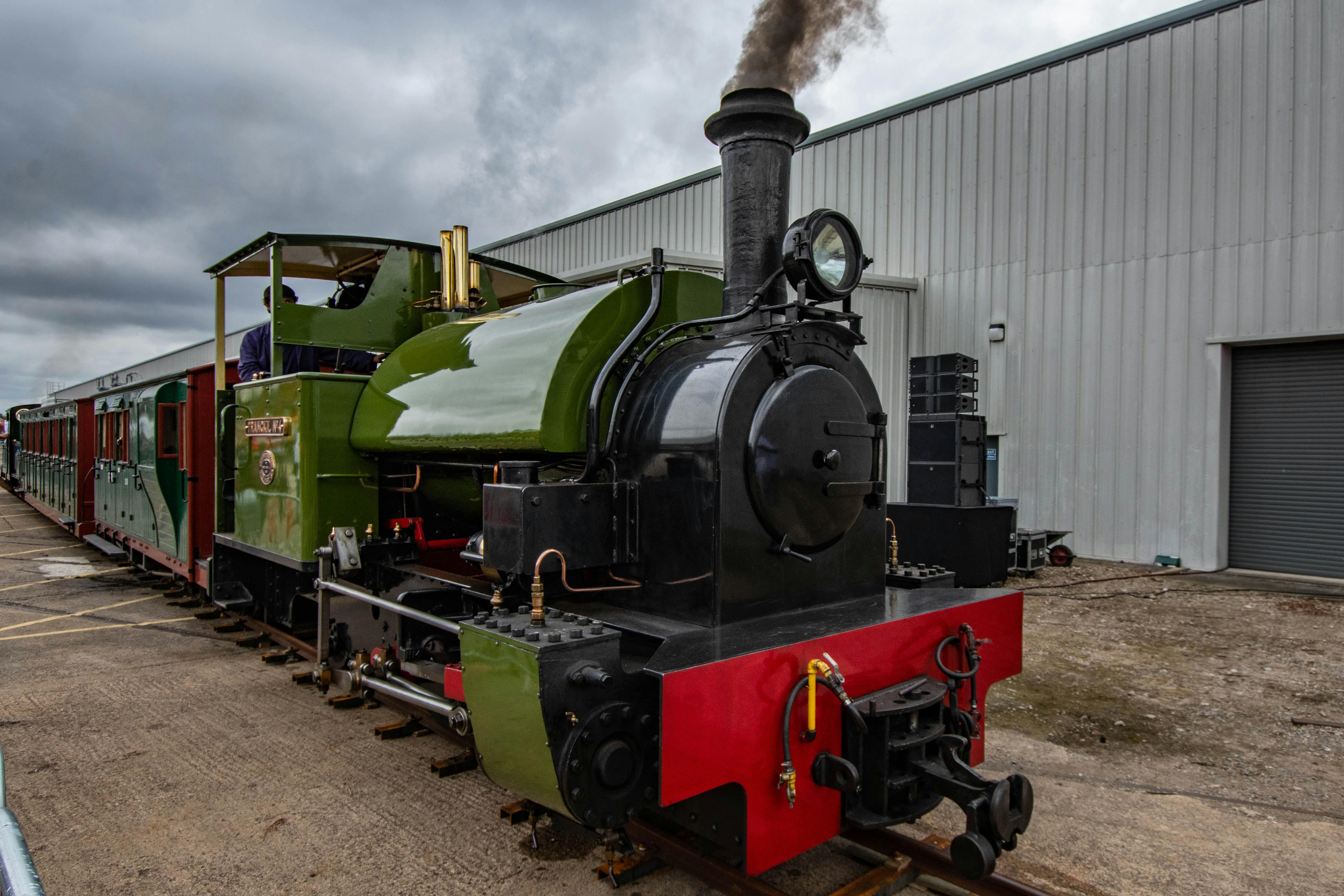
Moving outside of V Shop now, this bring me to TR3 which is a representation of narrow gauge railways and we have a familiar sight here. Prince, the oldest operating narrow-gauge steam locomotive in the world has made a visit up from the Ffestiniog Railway and is giving short rides up and down the short temporary 2ft gauge section of track. On the other end, pulling the service in the return direction is last narrow gauge steam locomotive to be built in the UK for industrial service; Trangkil No.4 whose home is the Statfold Barn Railway.
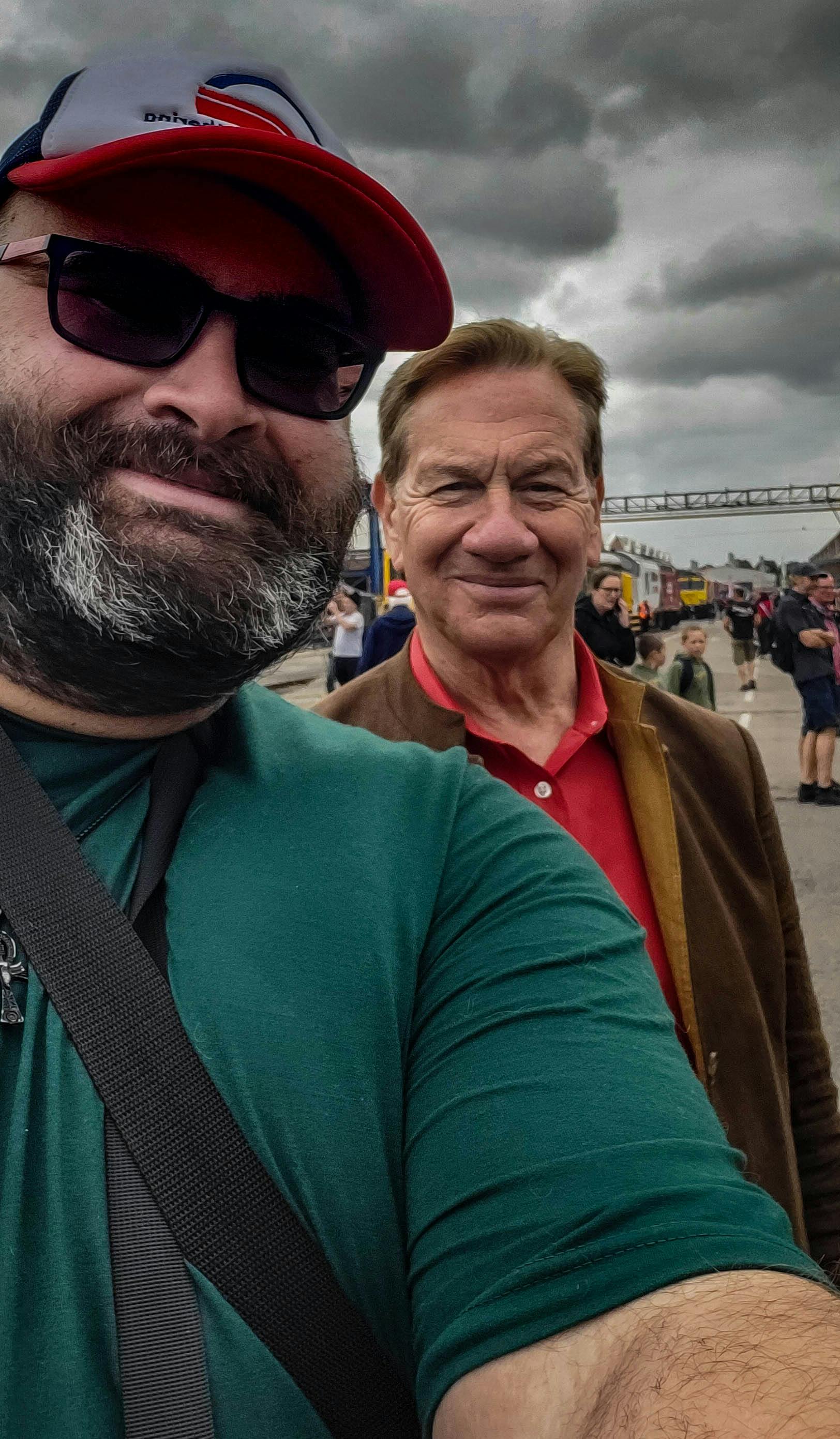
At this point, I saw my first railway ‘celebrity’. Michael Portillo was there filming a section for one of his programs. I’ve enjoyed his railway programs for many years now so as soon as I spotted the opportunity, I approached him and he was good enough to allow me to get a photo with him.
Sitting alongside the test track is another curiosity, in the form of ‘Spondon’. This is a battery-electric vehicle built in 1926 for use on the internal rail network at Spondon Power Station whose main task was to remove ash from within the power station complex. After the power station closed in 1972, she passed through multiple hands before landing with the Ashover Light Railway Society in 2012 who have completed a full restoration of the vehicle.

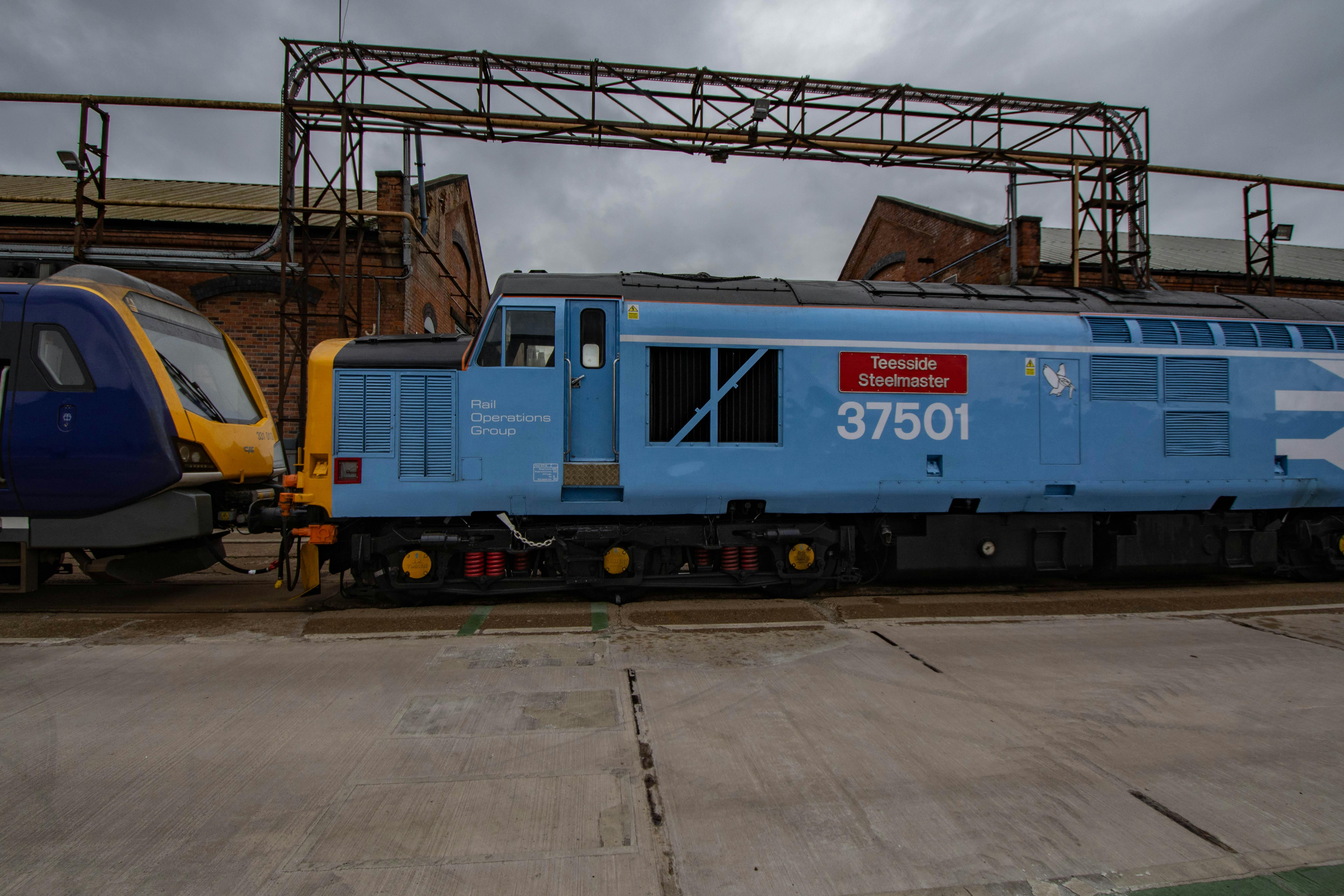
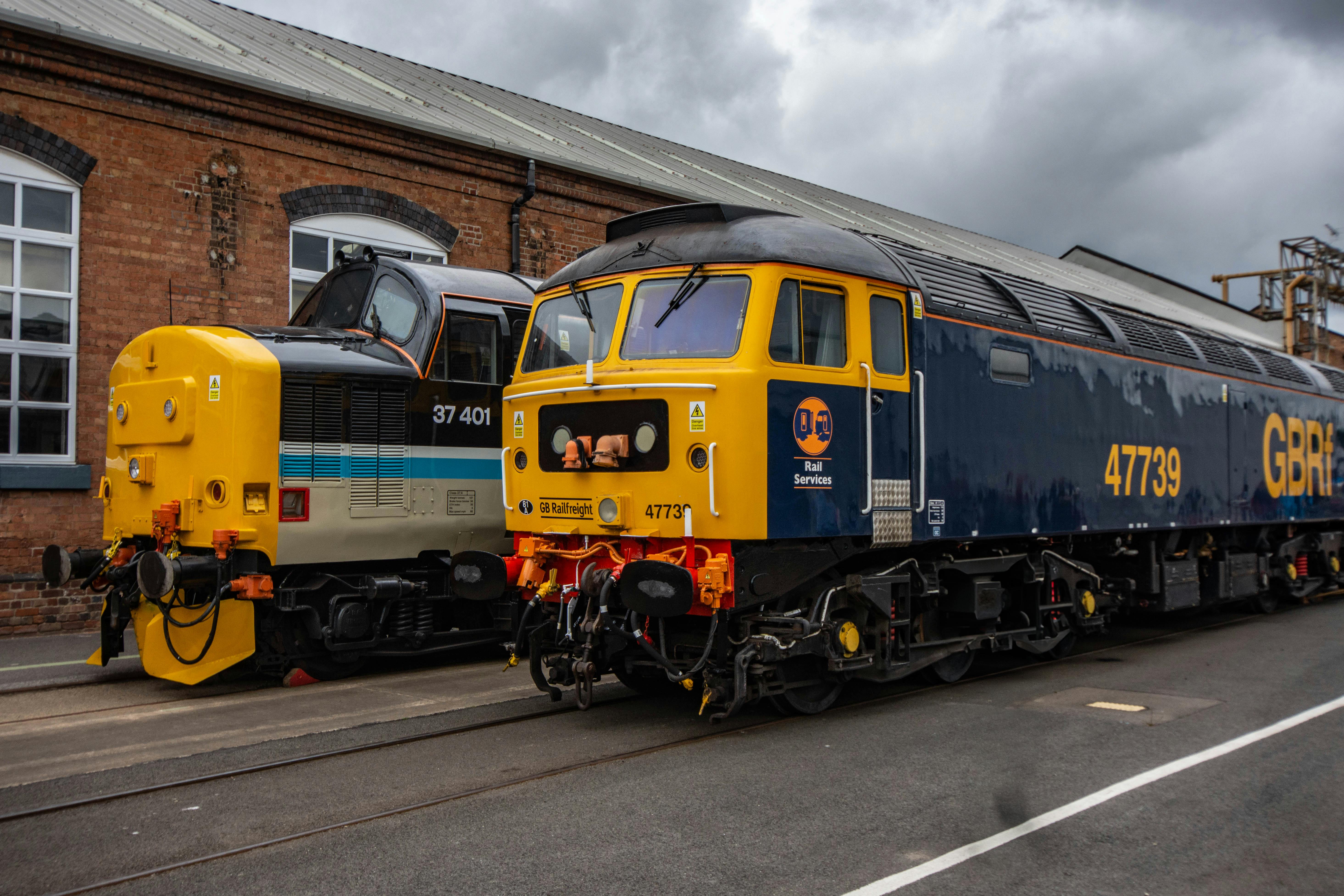
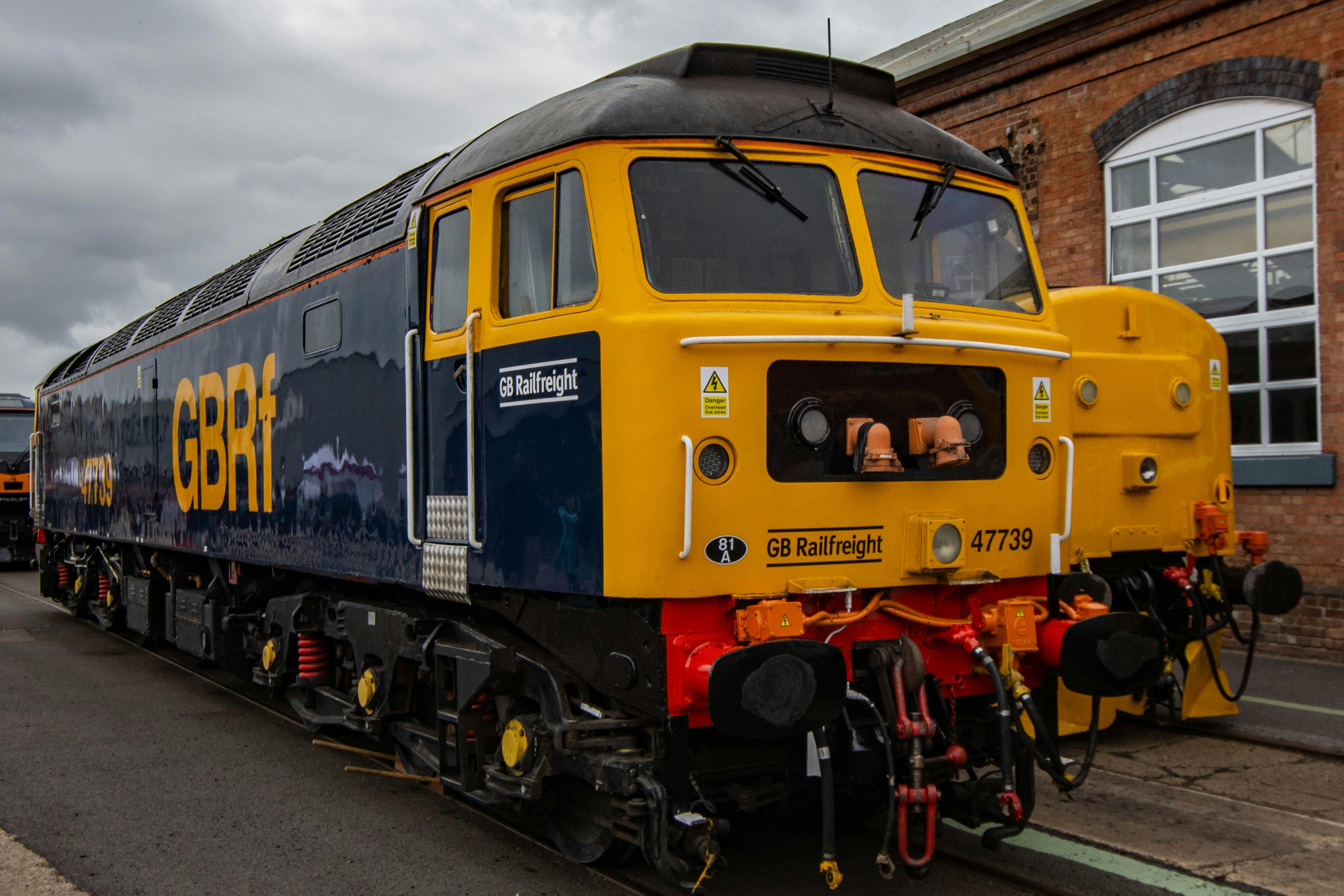
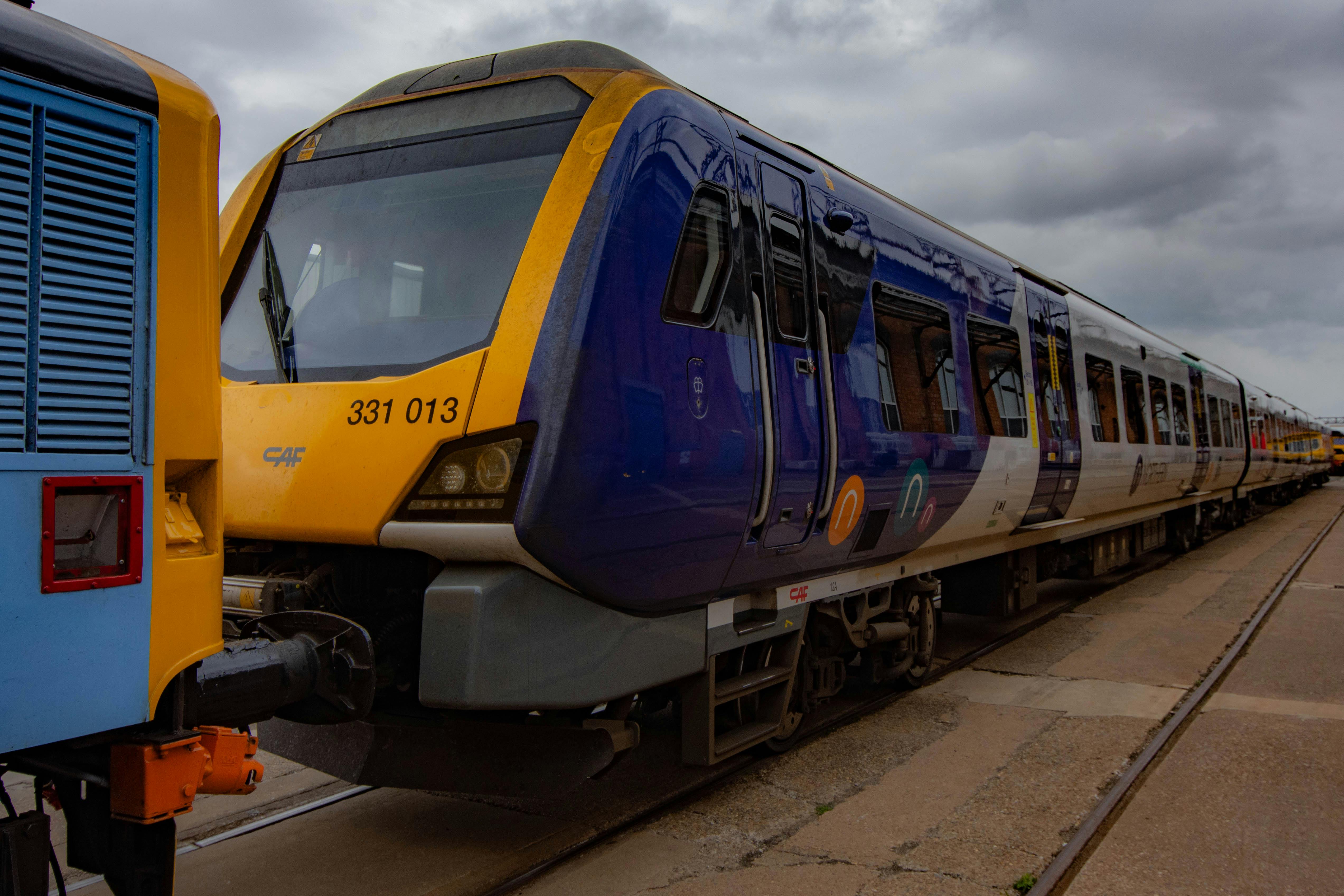
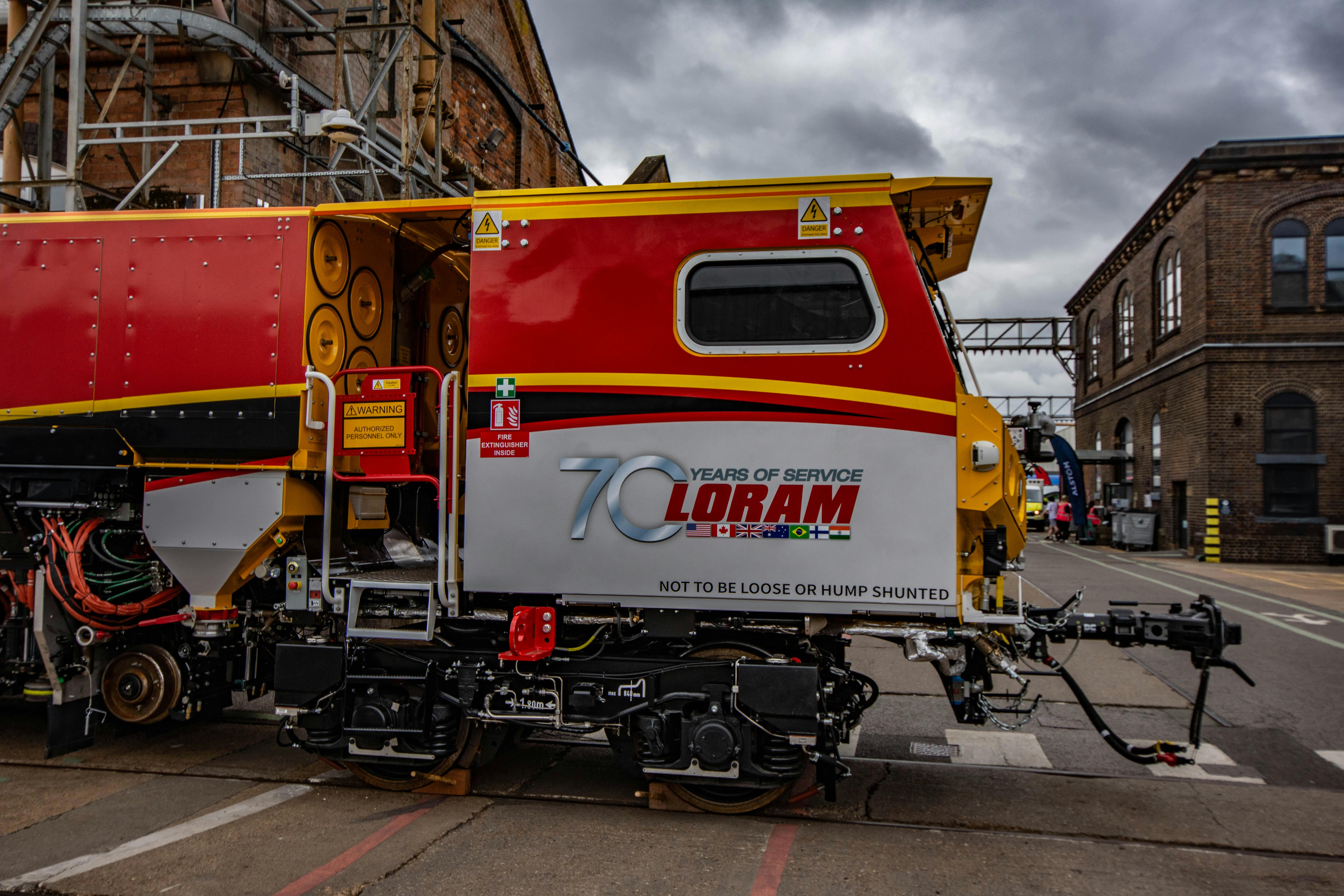
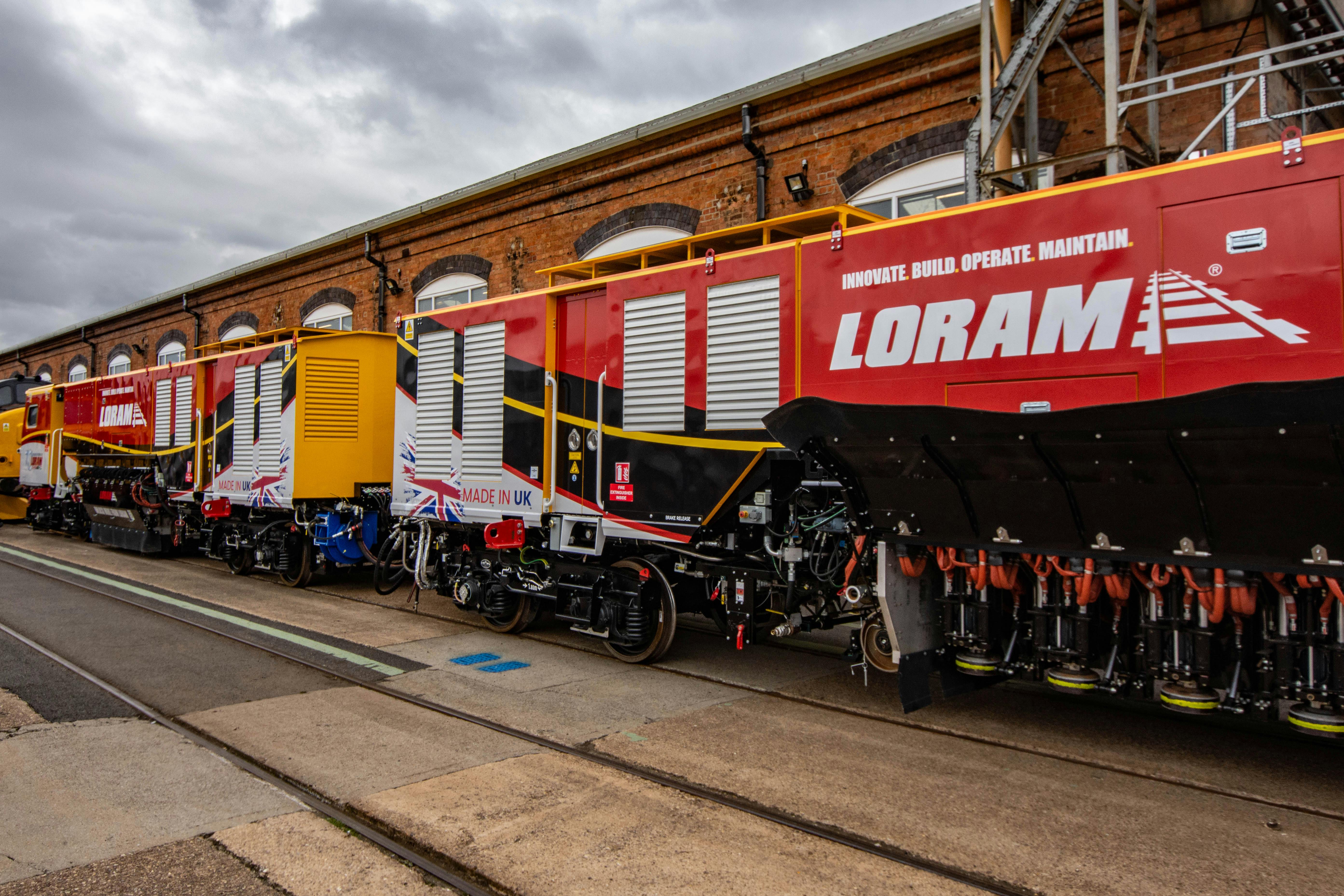
In the same corridor as the 2 ft test track, is the Power Trail. We’ve got some classics like Class 37’s (37501 ‘Teesside Steelmaster’ and 37401 ‘Mary Queen of Scots), and a Class 47 (47739), both of which are used primarily for rolling stock movements. There is also a Class 331 three car EMU operated by Northern Rail. We then see something a bit different, and that’s the Loram RGX Rail Grinder. Its purpose is to re-profile rails on the move by use of multiple grinder units equipped to the other carriages to maintain the rails to a high standard. It was only delivered in 2025 to Loram and you can tell how fresh it looks. Just behind this, we have a Class 57 (57003) and also a Class 67 (67005 ‘The Kings Messenger’). The Class 67’s were all built by Alstom at its Meinfesa factory in Valencia, Spain between 1999 and 2000. This is one of two Class 67’s to have this Royal Train Claret livery as both are dedicated to operation of the Royal Train, alongside 67006 ‘Royal Sovereign’.

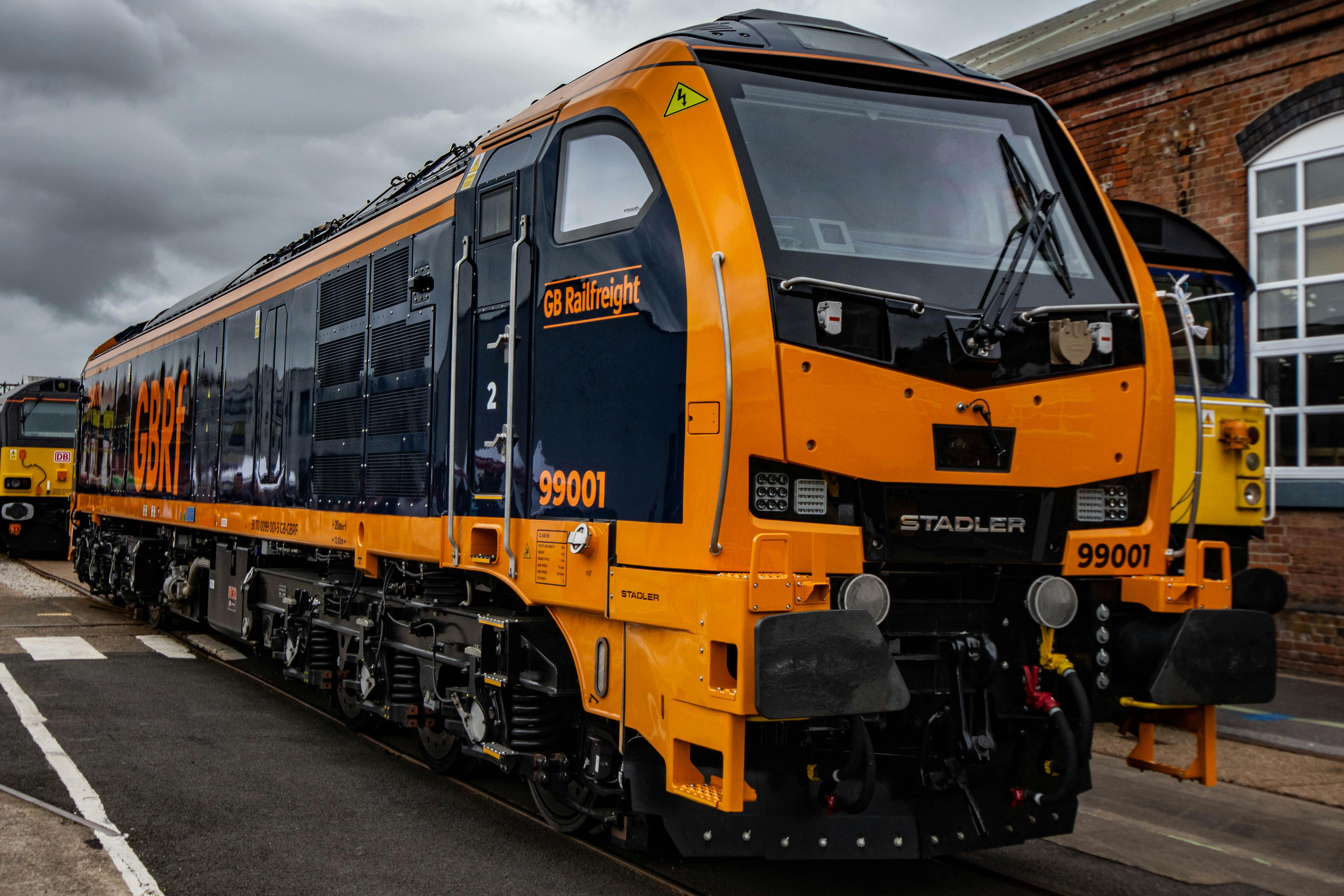
Next is something I was very excited to see. The BRAND NEW Class 99 built by Stadler. This is the first new generation of hybrid bimodal freight locomotives built for GB Railfreight. It was unveiled in 2024 and is designed to operate on electrified lines but also has a diesel engine which increases the range of applications for this engine when electrified lines are not available. Not only is this a big step forward for de-carbonisation of freight traffic, but it also has a huge tractive effort of 500Kn. In laymens terms, it can compete with the best and the heavyweights of the freight world, namely Class 66’s which are around 450Kn for tractive effort. I could gush about this train for quite a while, but it’s thrilling to see the vision finally come to life and to see it here today. 99001 is the first unit of it’s class. Behind this sits a Class 58 (58023 ‘Peterborough Depot’), which was the first of its class to return to operational condition in preservation.

Making our way back behind V Shop where there are further displays and it’s here where the two main test tracks are running. On TR1, an Alstom built Elizabeth Line train is giving rides on their 1.5 km test track. You can see from the video below just how extensive the Alstom site is.
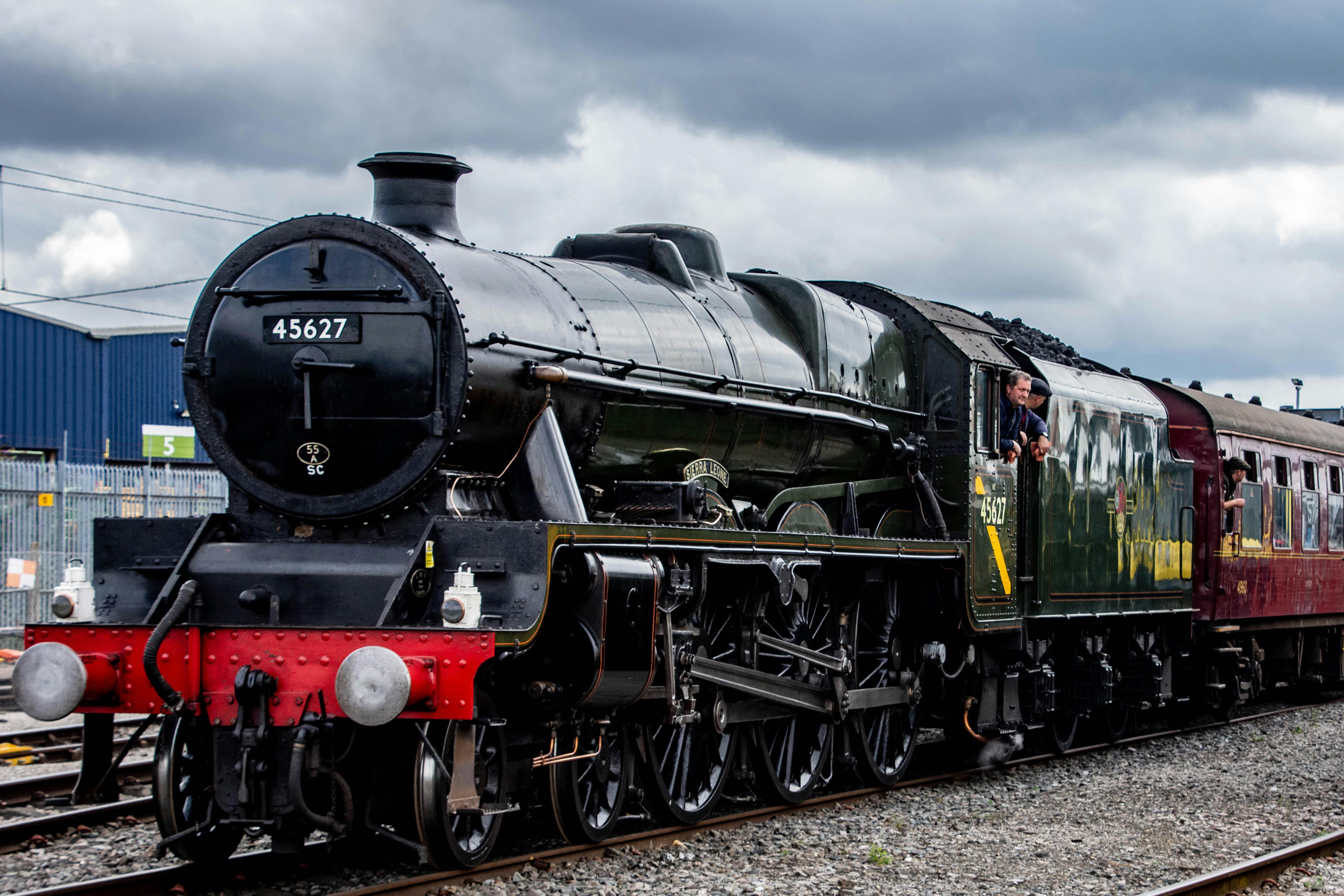
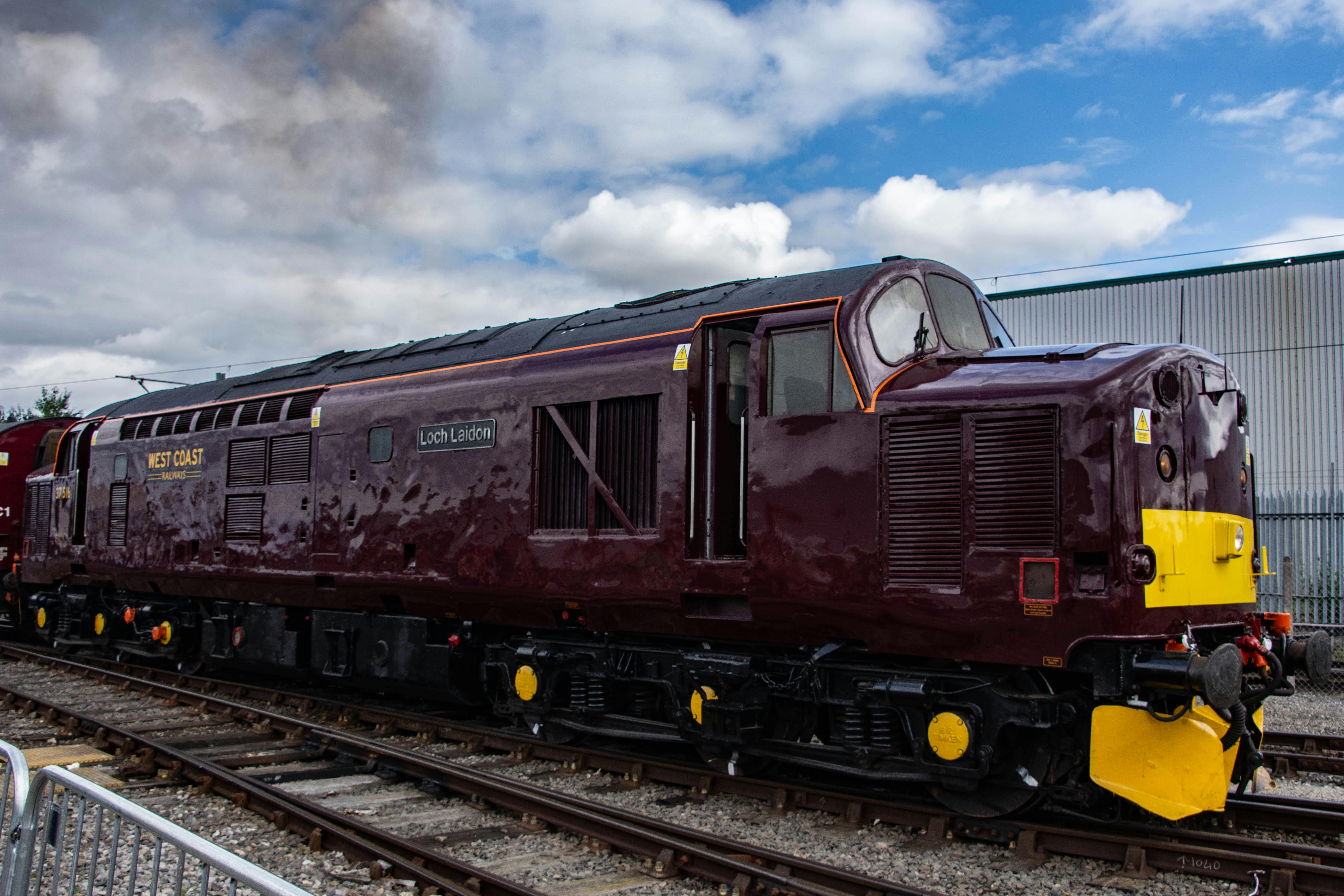
TR2 is the smaller test track and is running a push-pull service today topped by an LMS Stanier Jubilee Class, 45627 Sierra Leone and tailed by a Class 37, 37516 ‘Loch Laidon’ who is owned by West Coast Railways. Sierra Leone has had a bit of an identity crisis over the years as the original locomotive was actually numbered 45699 and held the name of ‘Galatea’. She was in operation from 1936 through to 1964 before being transferred to Barry scrapyard in 1965. In 1980, she was purchased for preservation and in 2013, she was restored to working order, but emerged from this being renumbered as scrapped ‘Alberta’ 45562 and repainted in BR Brunswick green livery. In 2021, she had ANOTHER change of identity and began to run as 45627 and named as ‘Sierra Leone which is the form we see her in today.
Next to TR2 is the ‘Made in Derby’ collection. We’ve got a Class 33 (33012), a Class 40 (40106 ‘Atlantic Conveyor’) and a Derby Lightweight DMU (79900 ‘Iris’). ‘Iris’ is the only single car unit of the Derby Lightweight to survive into preservation. There is an example of a two car unit which is also in preservation but it is not in service. Both of these are owned by the Ecclesbourne Valley Railway.

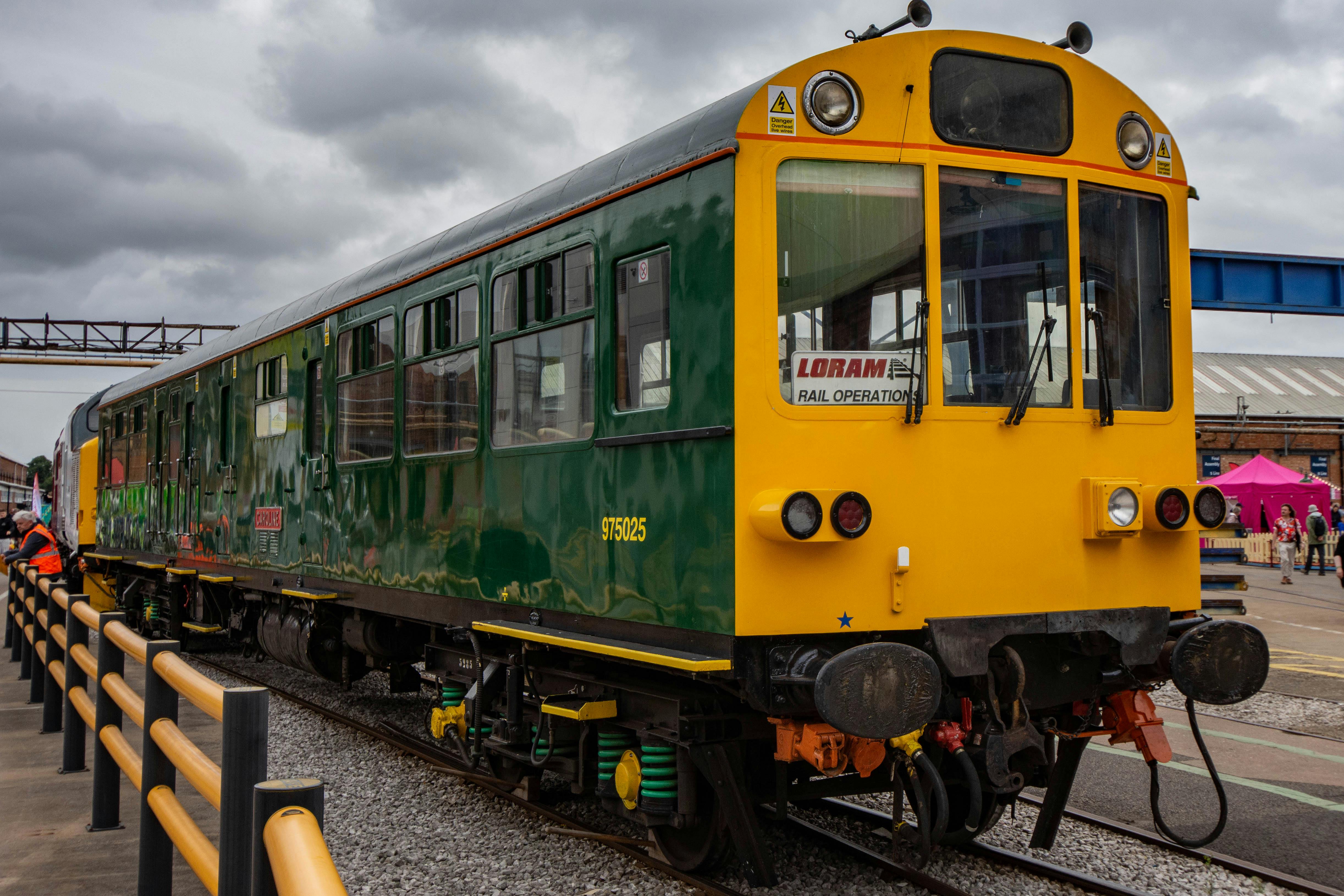
Adjacent to this section, we have some more historic vehicles. 975025 ‘Caroline’ is an inspection saloon used for rail inspection duties on the railway network. She’s also historically been used as a VIP excursion train, carrying royalty such as the late Princess Diana and the then Prince Charles as part of their honeymoon trip in 1981. In 1982, it was the transport for Pope John Paul II’s visit to the UK between Gatwick Airport and London Victoria. As if that wasn’t enough, she also formed the first standard gauge passenger service into the Channel Tunnel on 22 October 1992. She’s certainly seen some distinguished guests over her time and was designated for preservation in 2008.
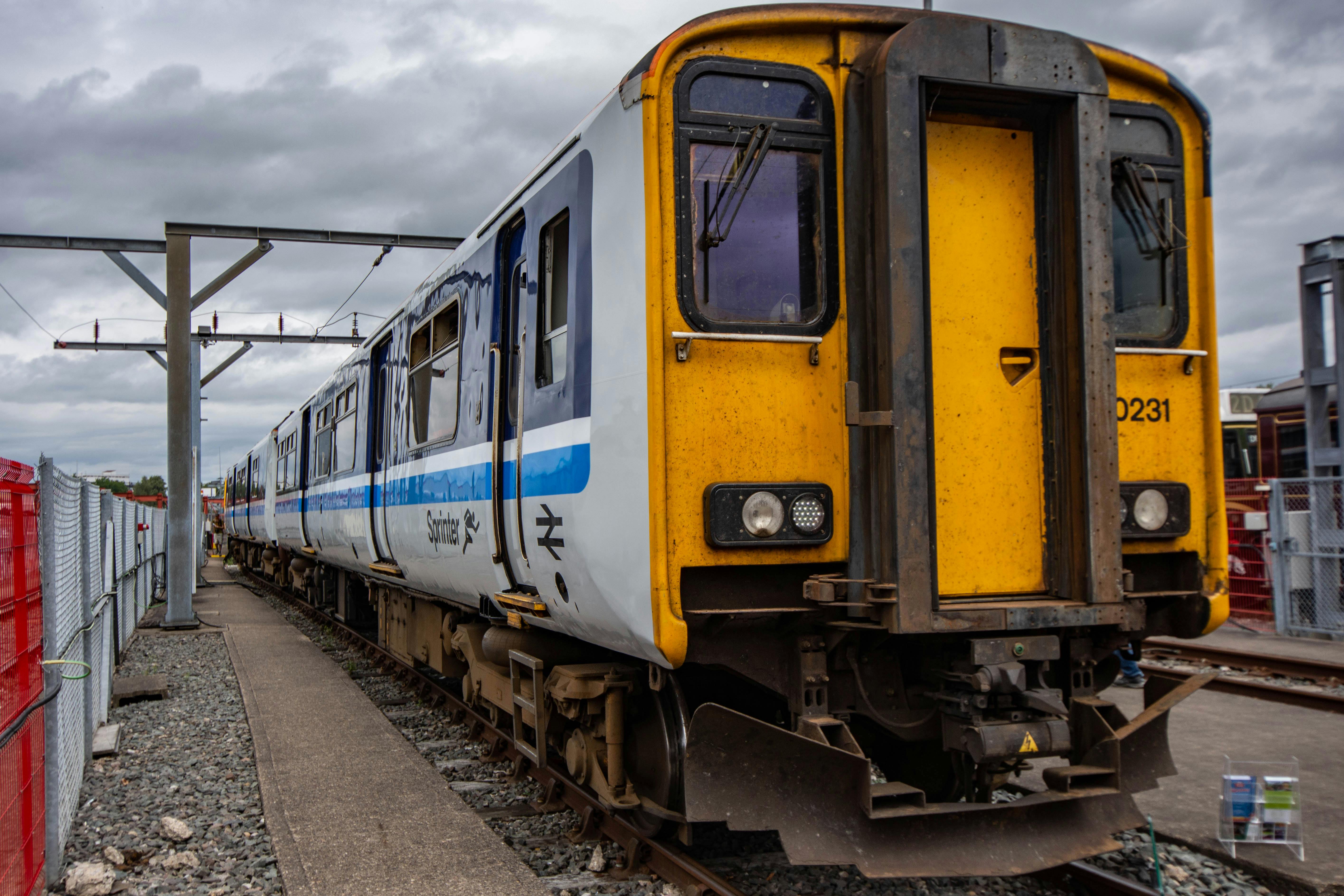
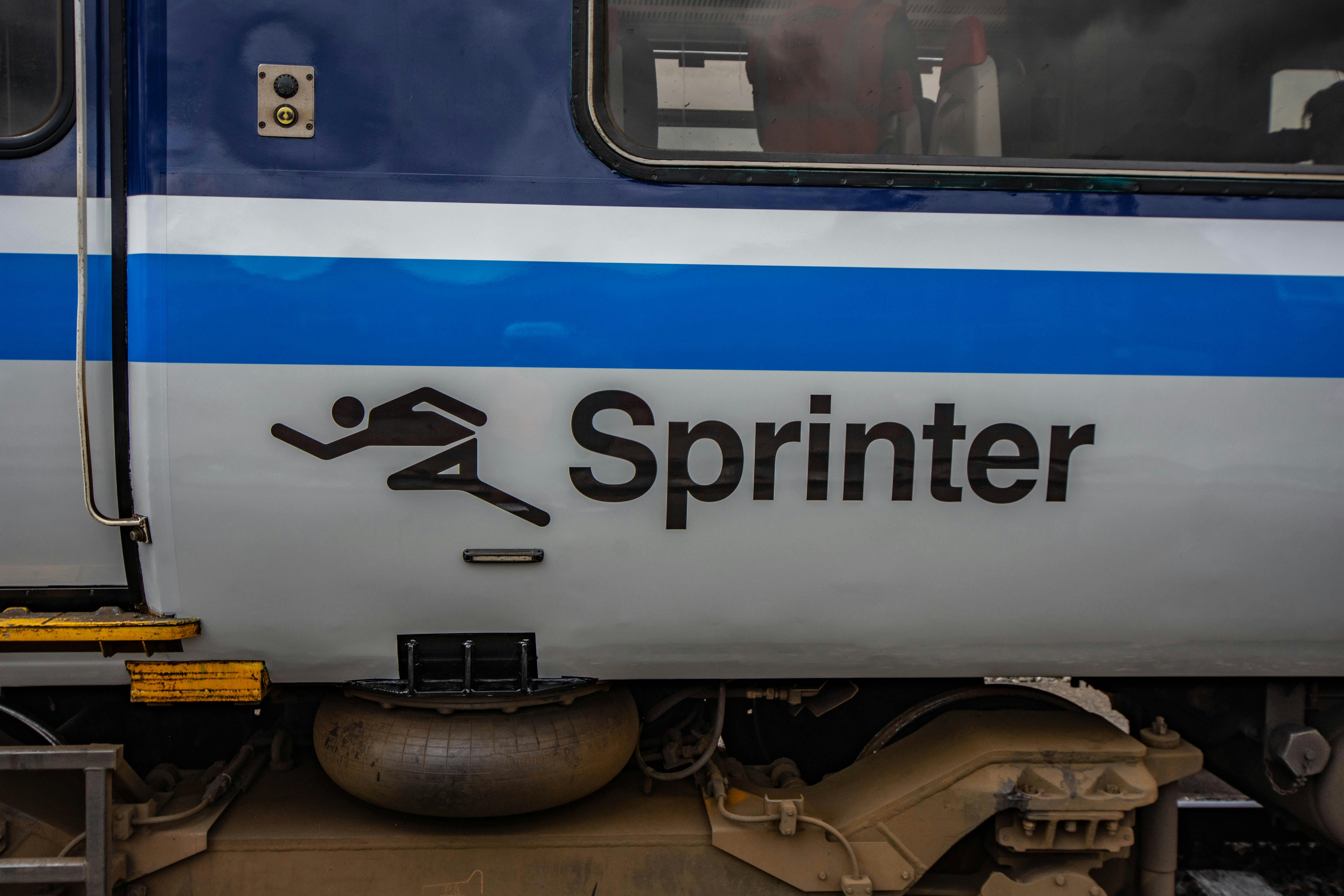
Starring alongside this is a Class 150 Sprinter. 150231 is the first Sprinter to enter preservation and is owned by the Watercress Line. She has been restored back to the original 1987 external livery and it looks splendid. You can still see some Class 150’s on commuter and rural routes today.
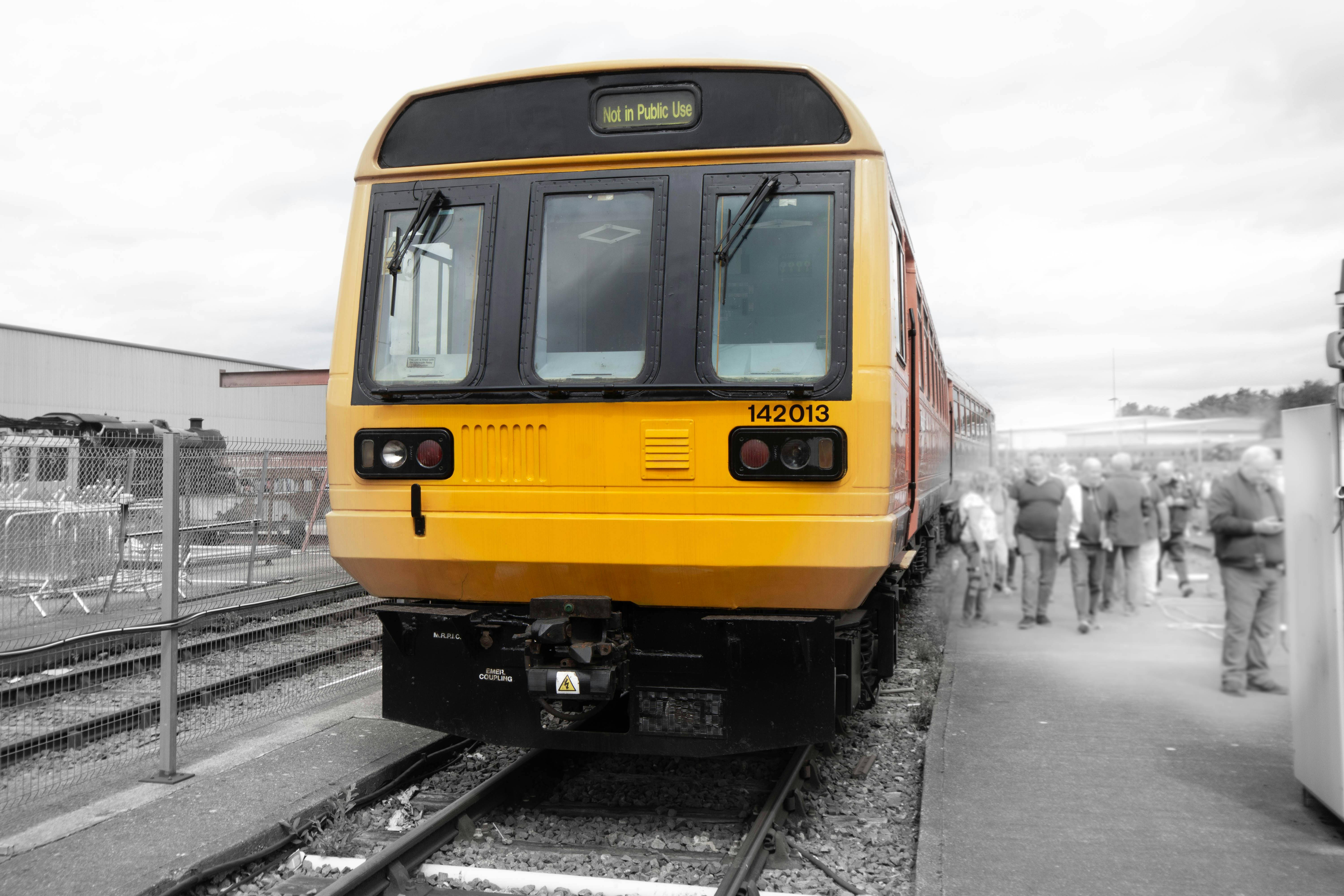
Of course, what gave rise to the Sprinters was the Pacers and we’re lucky enough to have 142013 here representing that. Pacers were built between 1979 and 1987 and were inexpensive to develop as the passenger body was based on the Leyland National bus. It was quite literally a bus and train chassis fused together. This particular Pacer is based at the Midland Railway Butterly today.
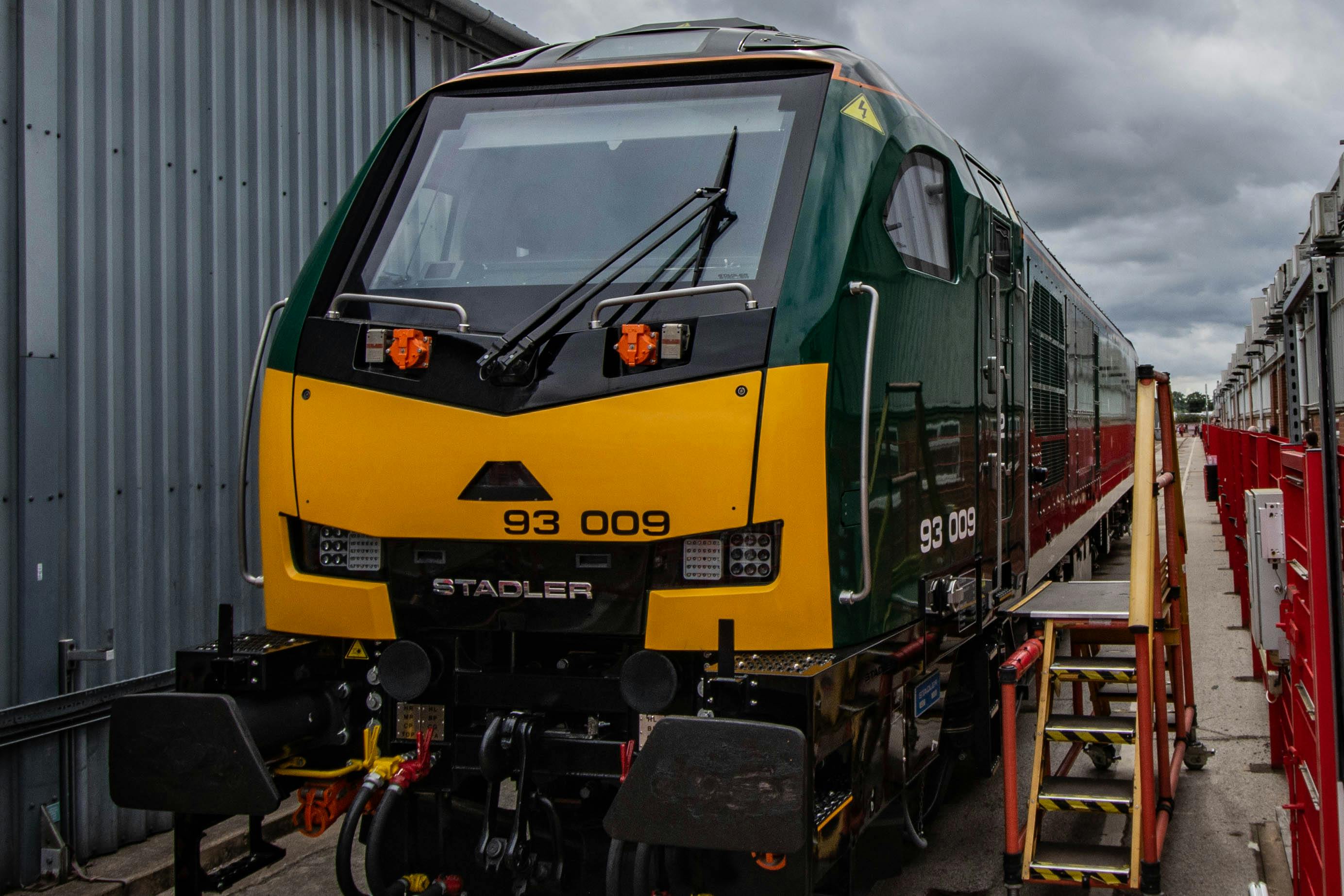
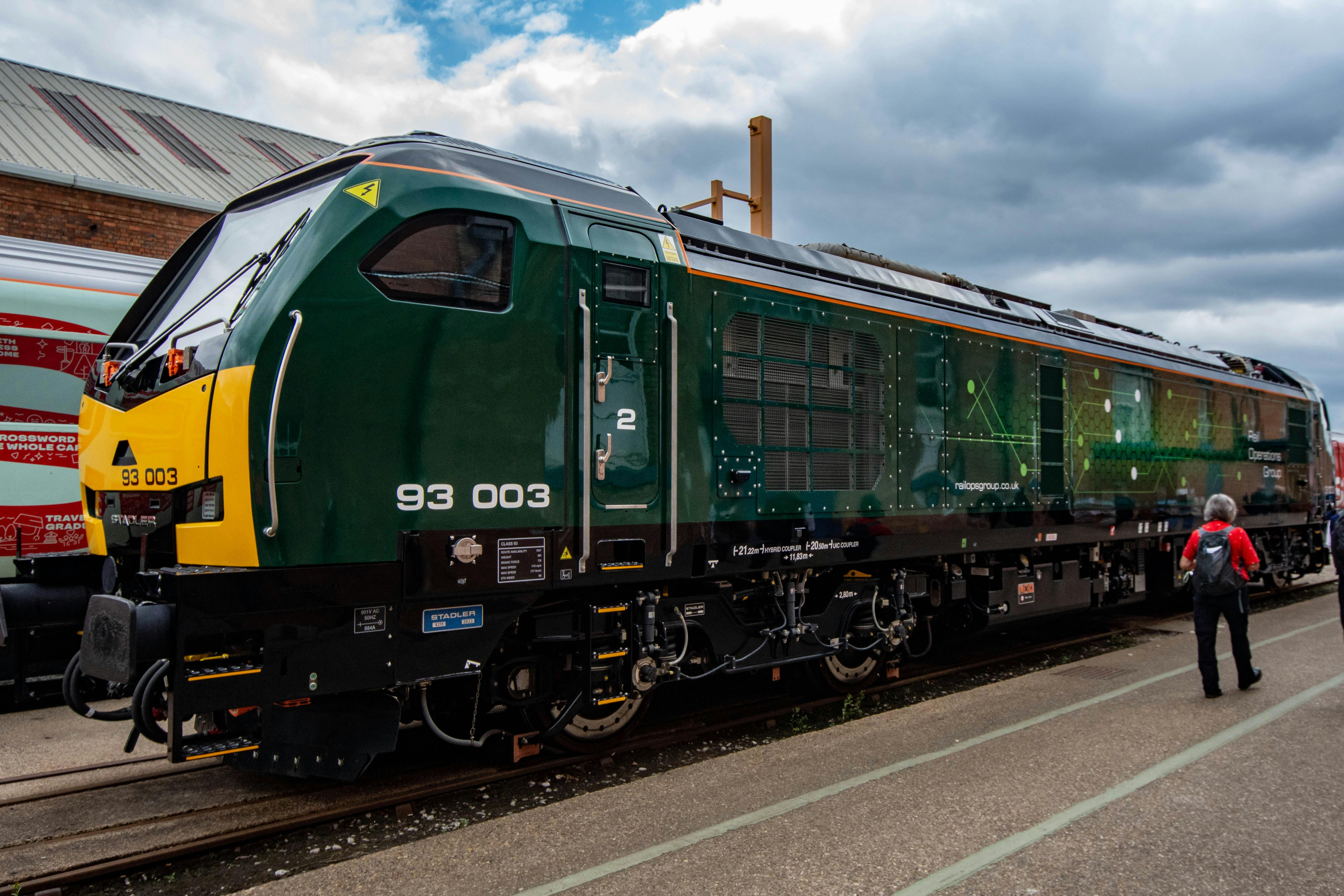
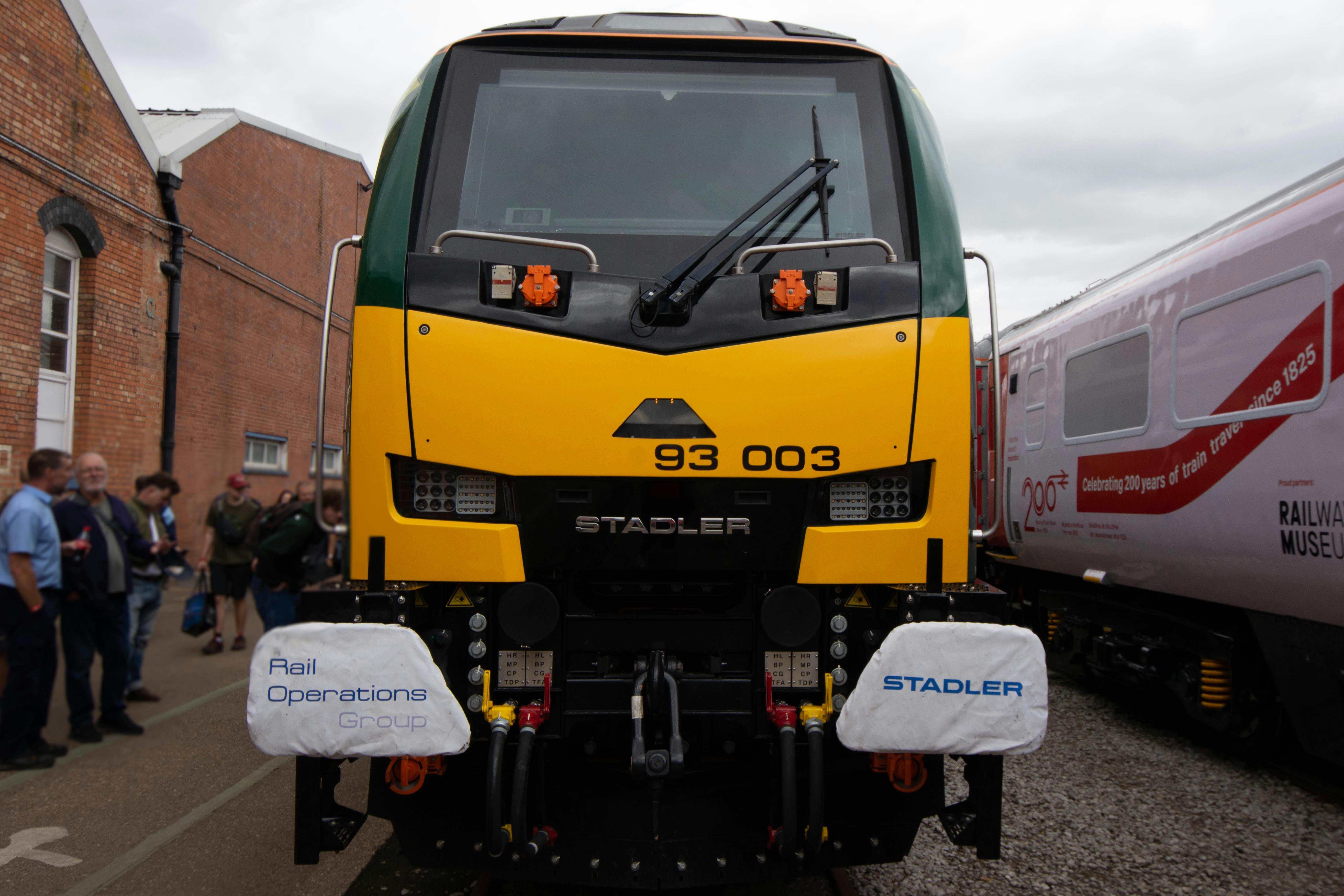
Moving on from this section and just outside of S Shop is a small test track where the Class 93 is giving cab driving experiences. Cosmetically, she looks quite similar to the Class 99, but this is the first of a new generation of tri-mode locomotives developed by Stadler again and an evolution of the Class 88 bi-mode locomotive which was also built by Stadler for Direct Rail Services. She can operate on electrified lines, has a diesel engine AND can use lithium-titanate-oxide batteries. These locomotives have only just come off the production line and are still in the testing phase before mainline use.
I then took a wander inside the S Shop and U Shop. The facilities are impressive and there is also a collection of locomotives and rolling stock on display. Of course, it wouldn’t be a celebration with Locomotion Number 1, the original locomotive which started it all. We’ve also got a King Class (6023 ‘King Edward II’), the titan that is the BR Standard Class 9F (92214) as well as the first Midland Railway 1000 Class, Number 1000. Nestled in-between these was a Class 720 EMU for Greater Anglia which was also built by Alstom here at Derby.
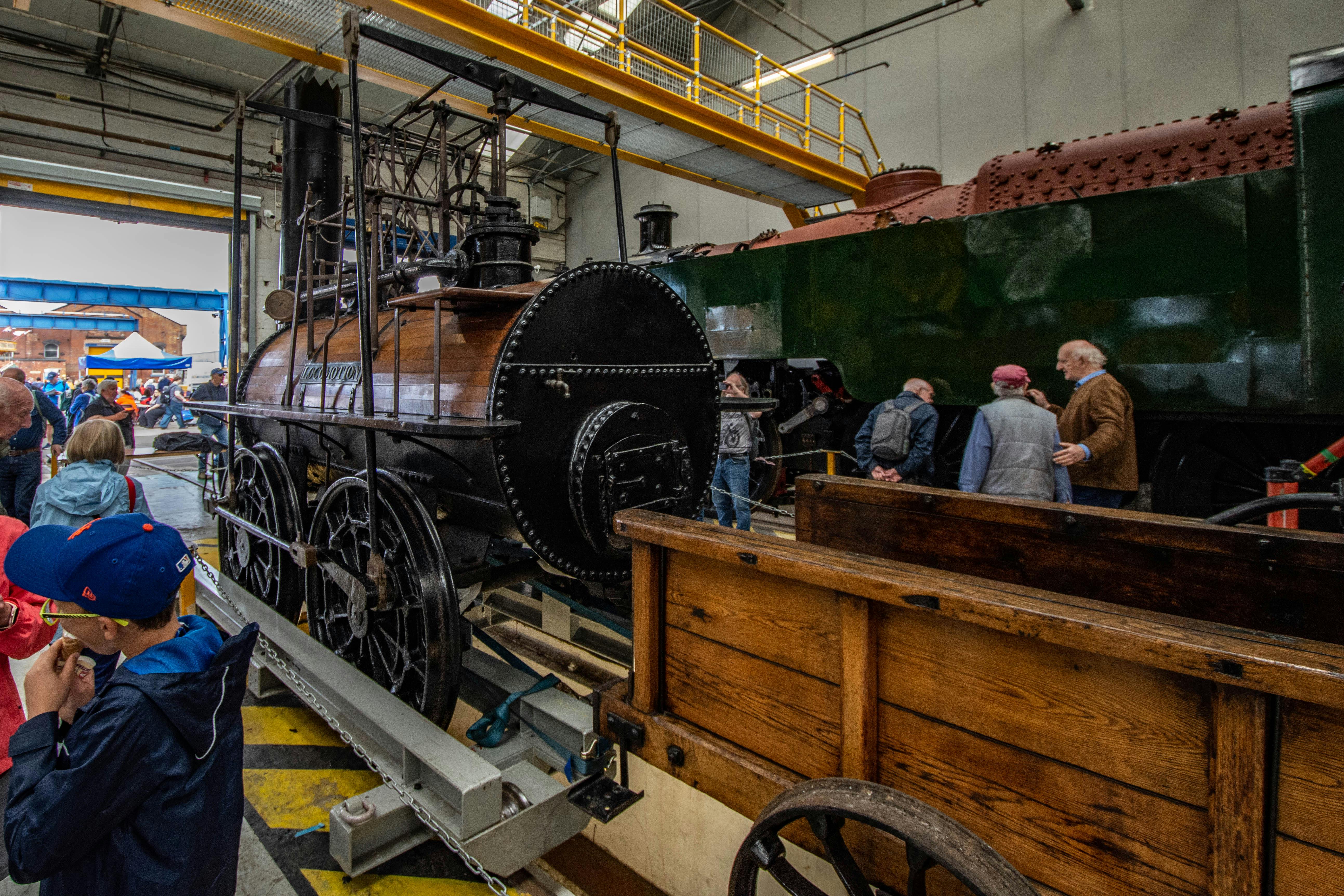

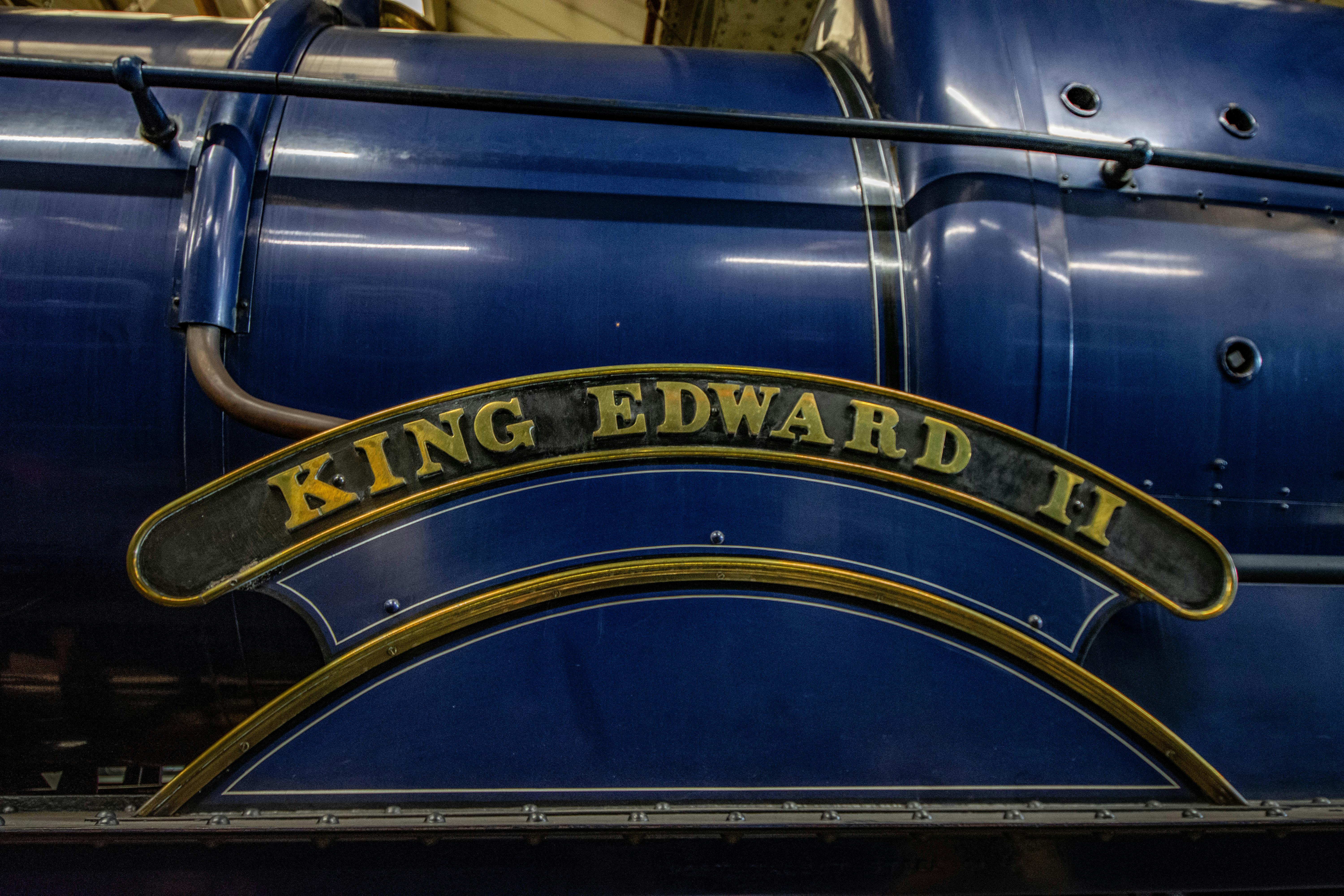

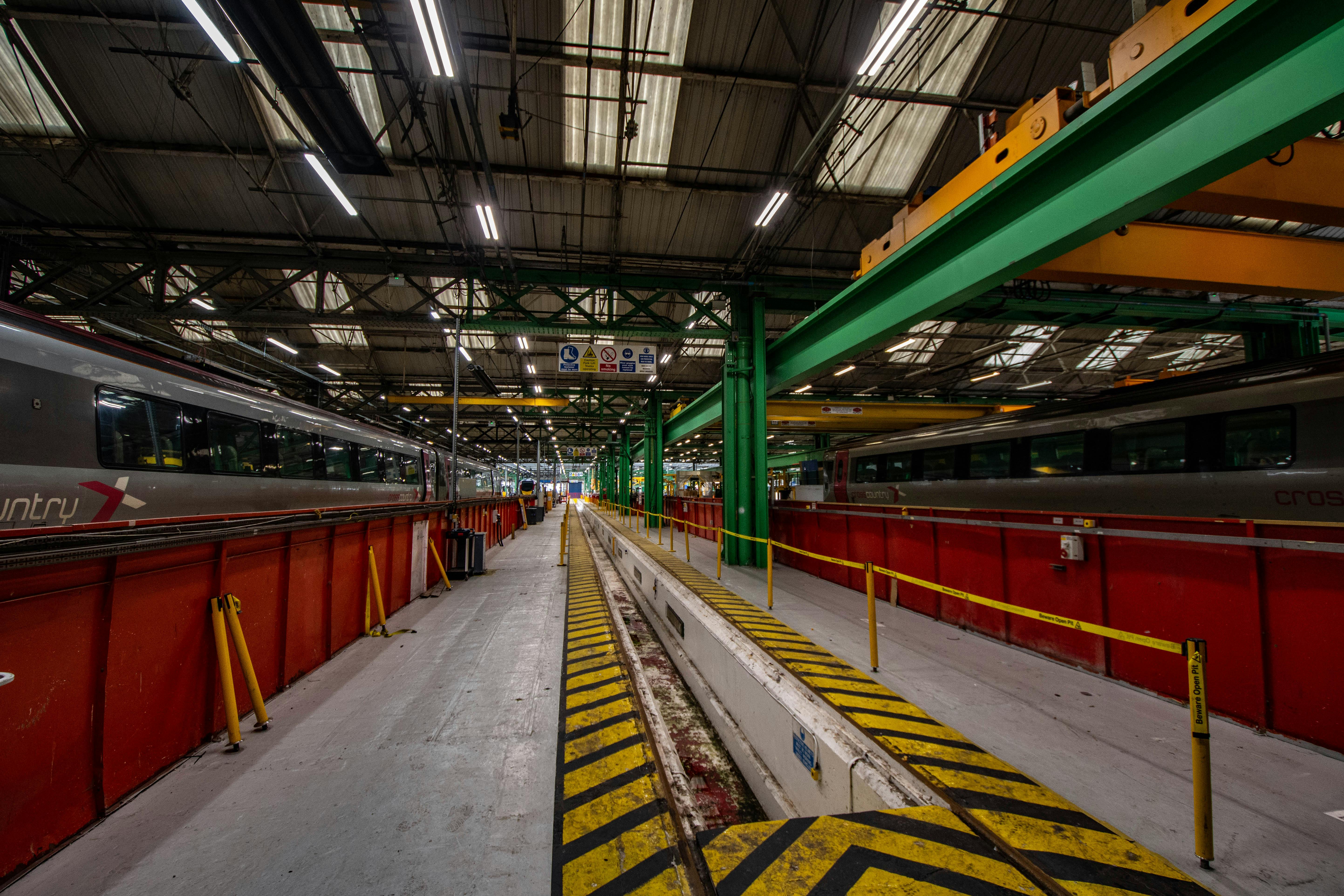
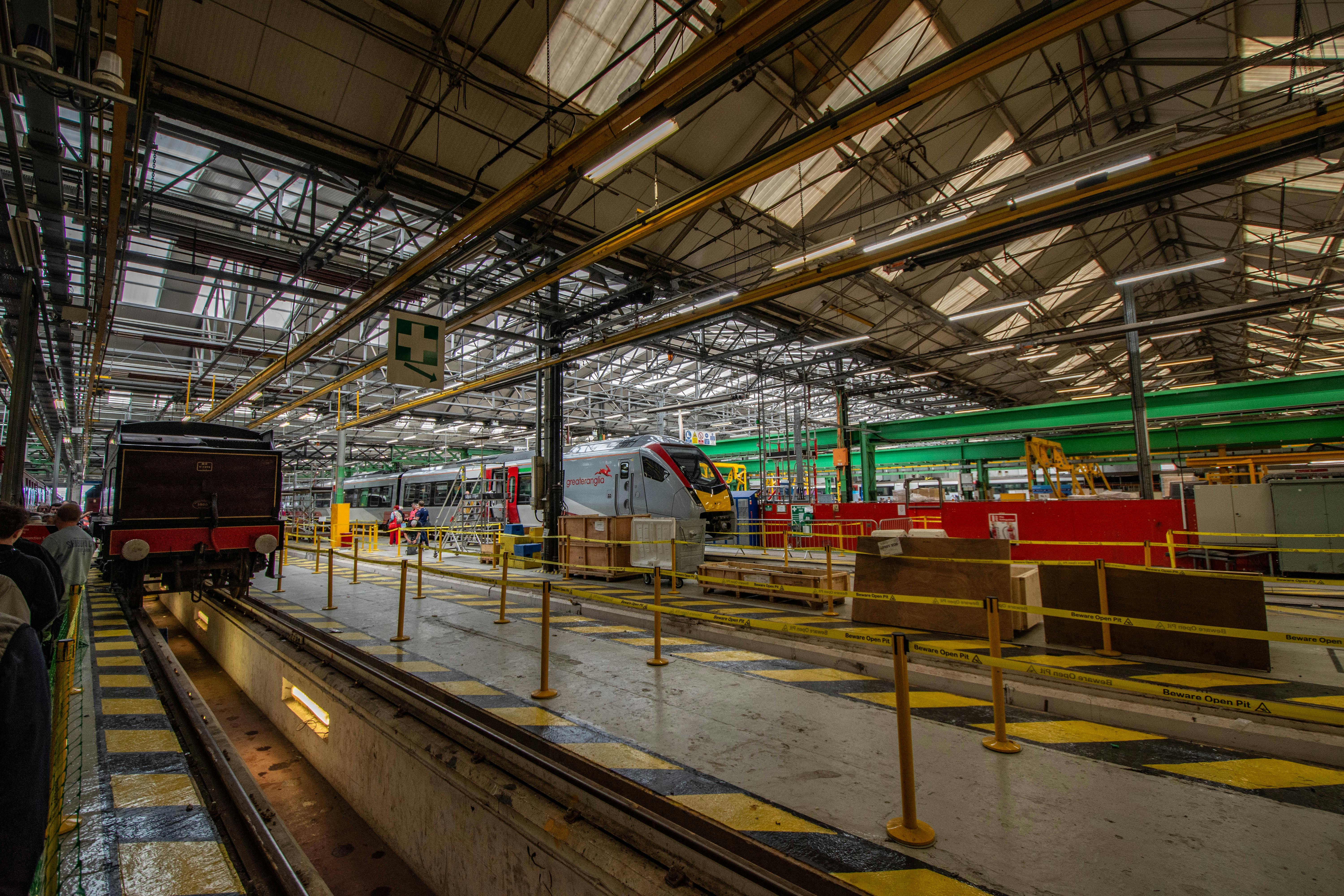

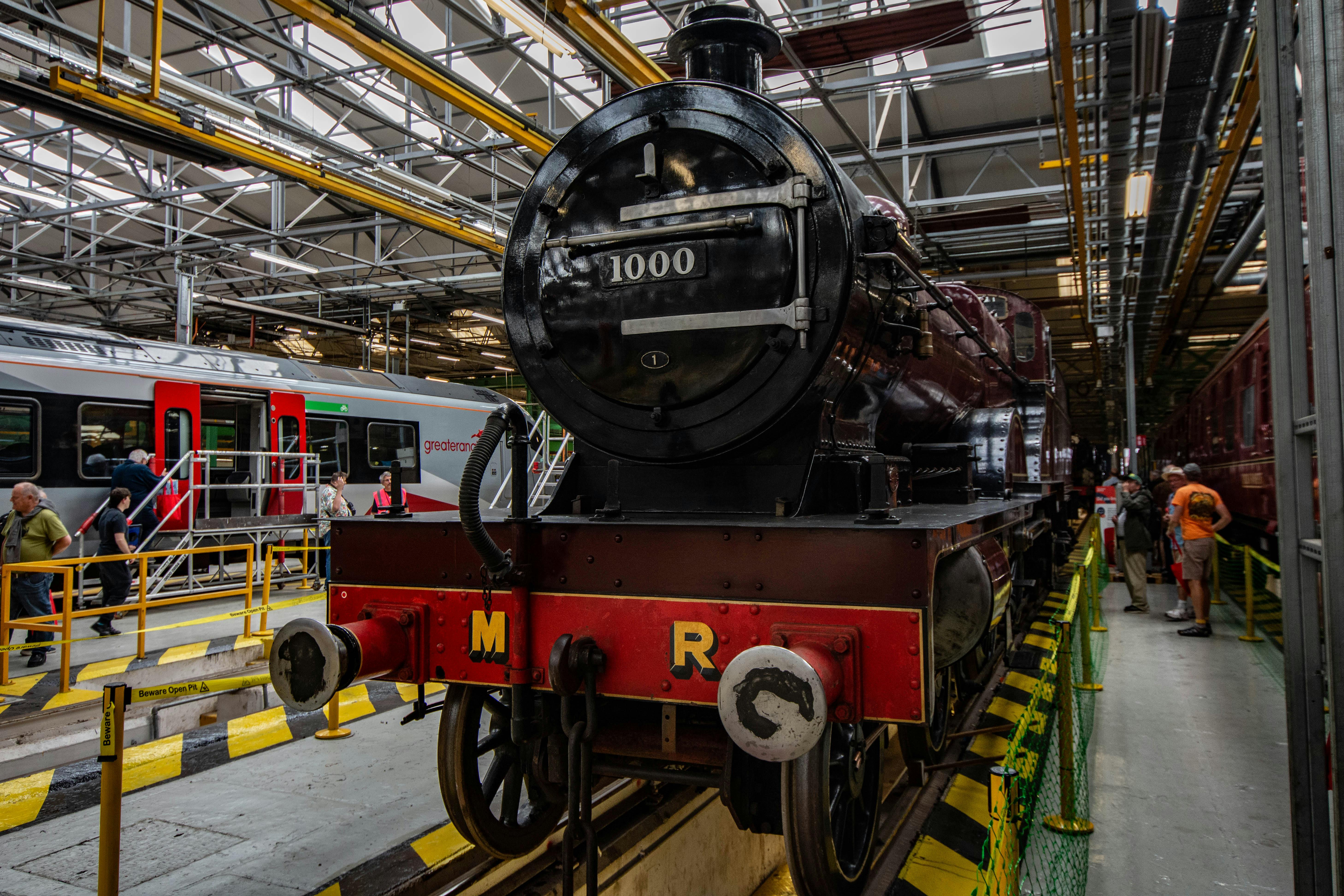
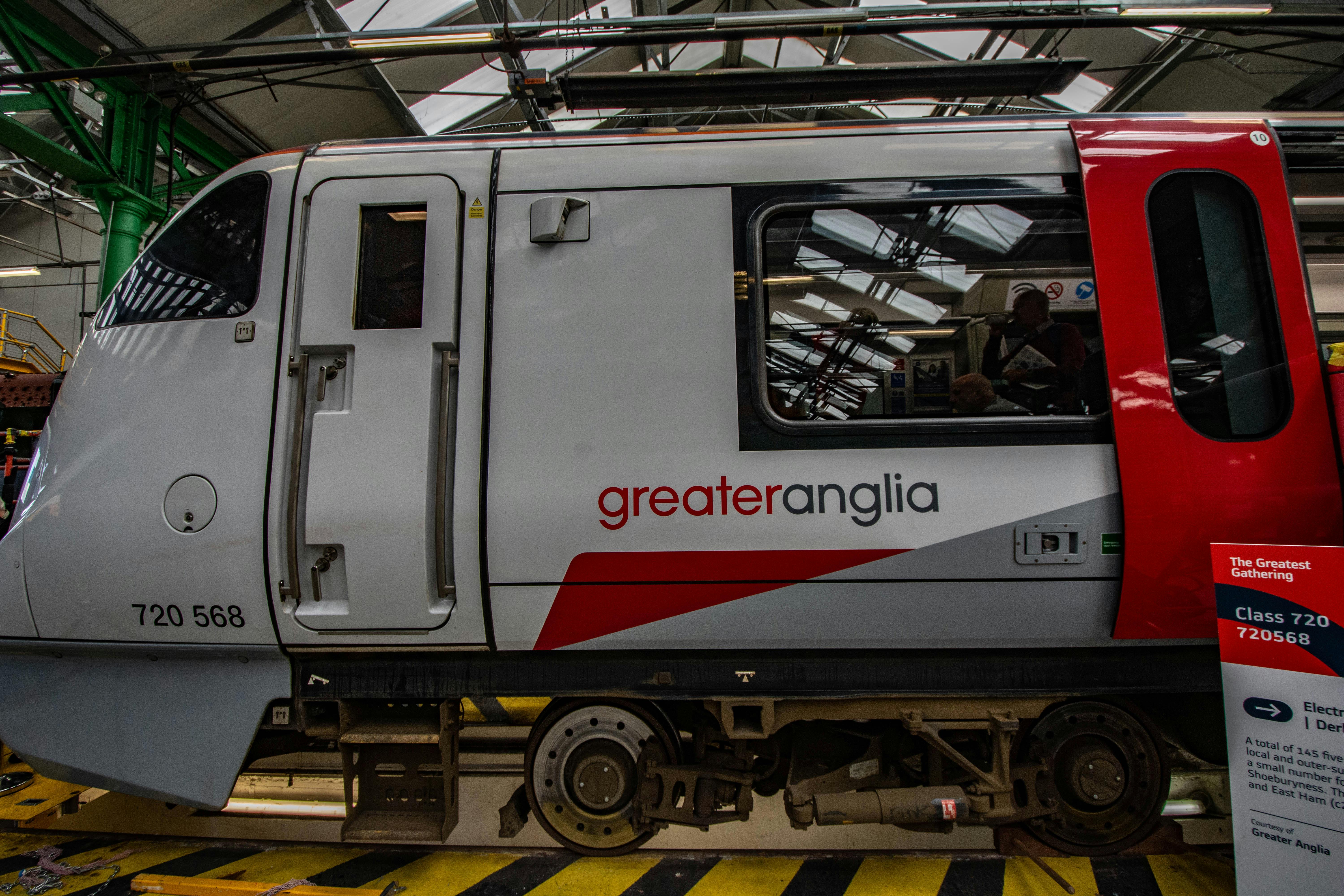
U Shop also has an example of a locomotive currently undergoing restoration which is the BR Standard Class 3 2-6-2T 82000 tank class (82045). By July 1967, all locomotives of the class had been withdrawn and subsequently scrapped. The 80245 Steam Locomotive Trust are here to drum up interest and support in recreating this now extinct class.

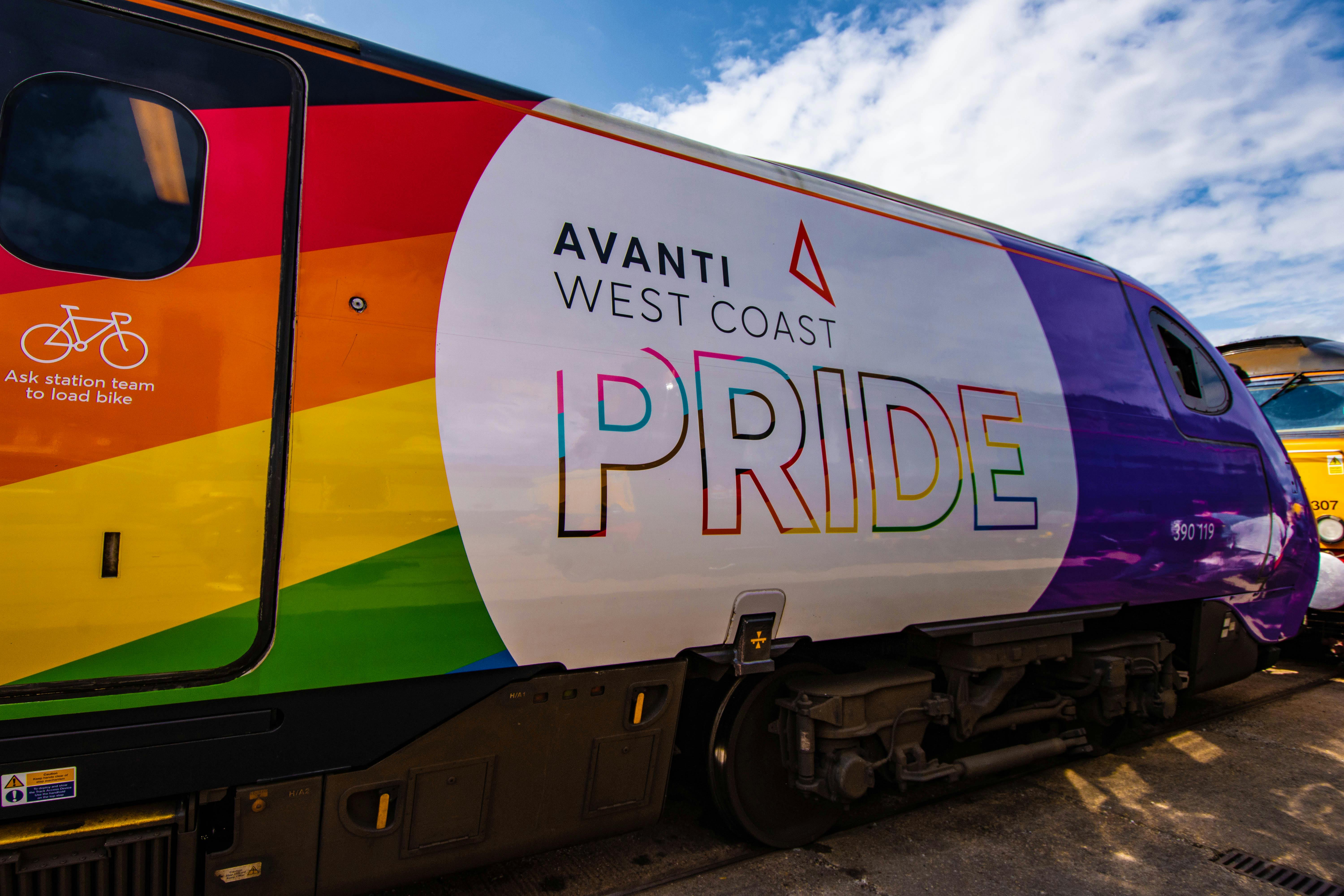
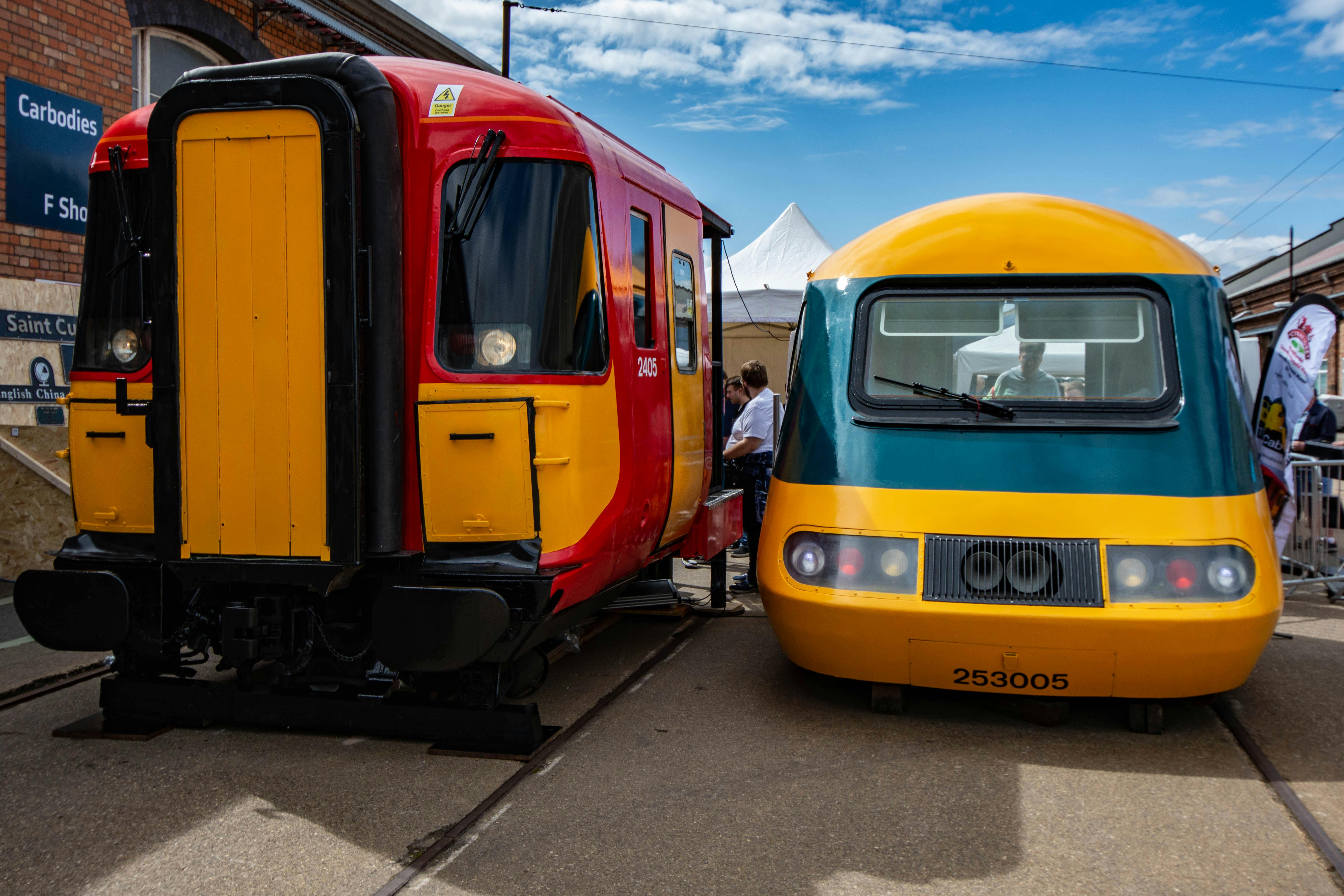
After finishing looking around S and U shop, it’s time to head over to Stephenson Way where we are greeted by some real heavy weights of high speed travel. First is a Eurostar Class 373 power car which has accumulated only 38,000 km in service which is significantly less than the over 7 million km logged by other sets. Rarely seen outside of its international routes, this is its first public debut beyond operational service. Next to it we have another icon, the Class 43 HST 125 which derives its name from the top speed it can achieve on the mainline. Only four sets remain in operation as they are slowly being replaced by the Class 800. You can’t miss the next train, this is the Avanti Class 390 Pendolino presented in it’s striking PRIDE livery. Operating as part of the Avanti West Coast fleet, the livery symbolises support for the LGBTQ+ community. Sitting alongside this is the electric Class 91 which currently operated by LNER on the East Coast main line.

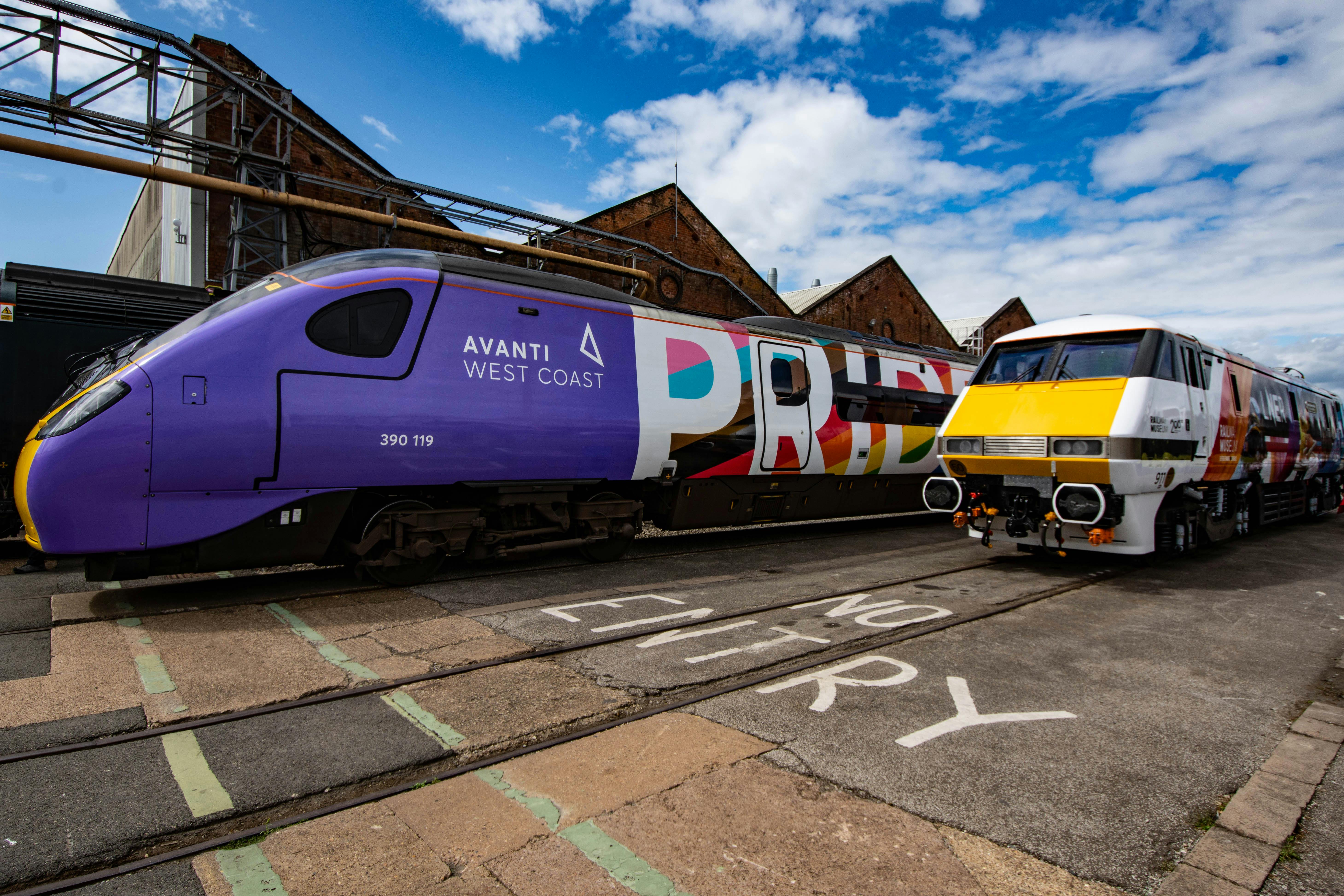
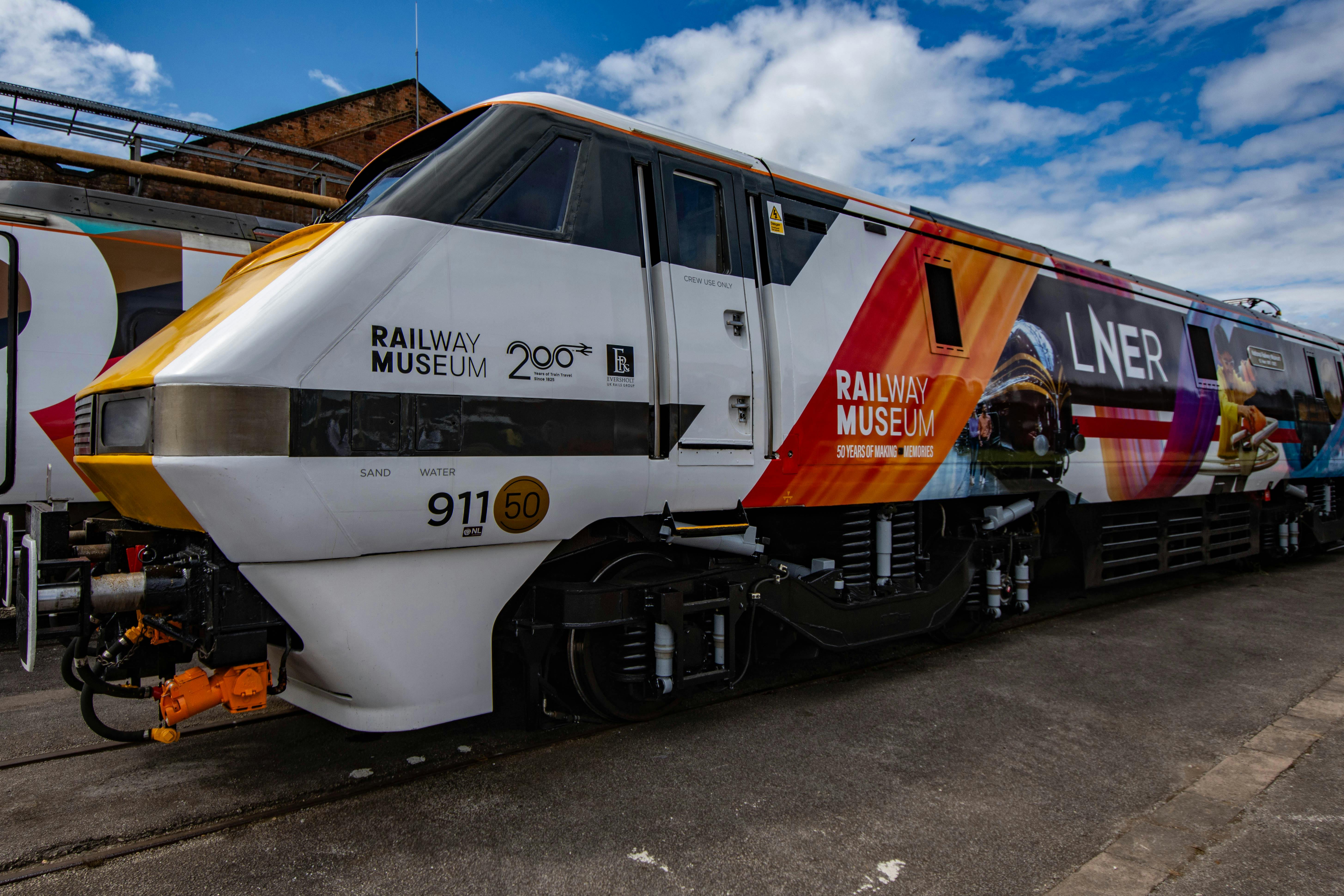
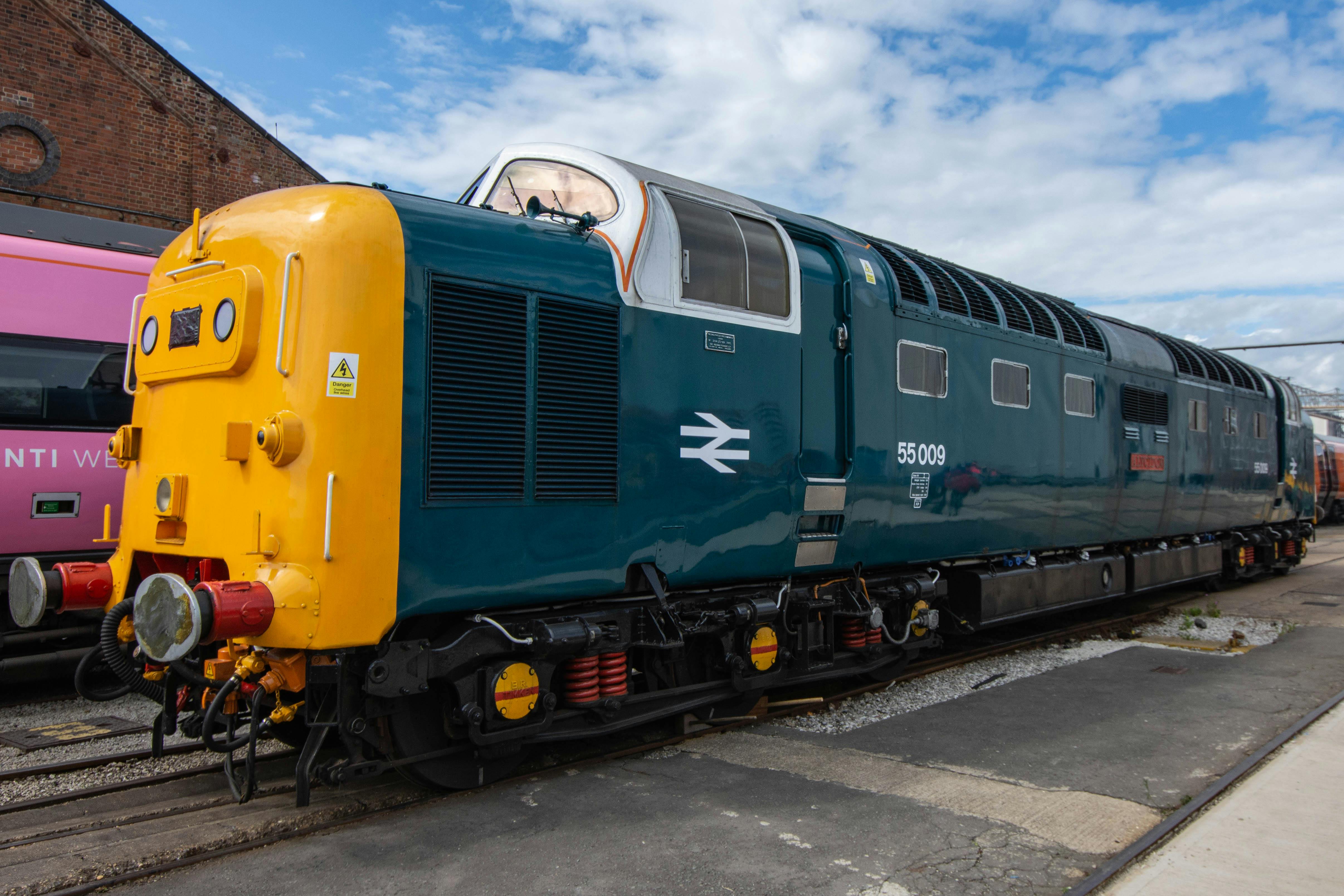
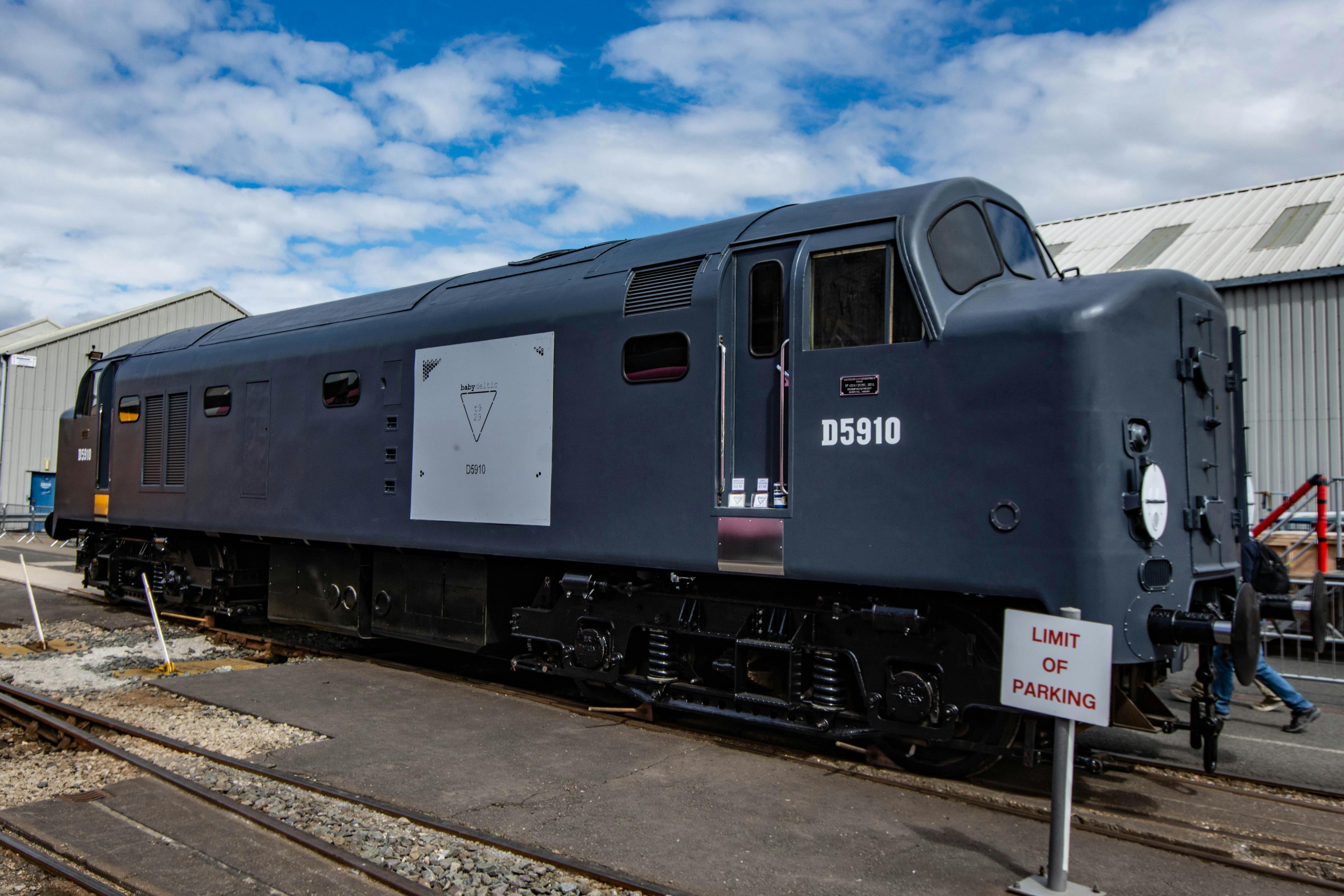
The joy doesn’t stop there though, as behind these, it’s party time, and it’s a party of Class 55 ‘Deltics’. There are four Deltics on site and considering there are only six in preservation, that’s impressive. Not only have the big boys come out to play but even the Class 23 Baby Deltic is here! The last time I saw Tulyar, she was stripped down and the paint had all mostly been sanded off. To see her here five years on, fully operational is a fantastic sight and a testament to the volunteers work of the Deltic Preservation Society at Barrow Hill. Similarly, the Baby Deltic is actually a Class 23, but is referred to as a ‘Baby Deltic’ due the design and external appearance being very similar to the Class 55. Deltics get their name from the Napier Deltic engines which power them. In the Baby Deltic, the T9-29 9 cylinder diesel engine used is half the size compared to what is used in a full size Deltic, but you can’t deny, apart from being a bit shorter, it’s still a Deltic. Only ten Class 23s were ever built, and all of them were scrapped. This Baby Deltic has been built from scratch using a sole surviving original T9-29 engine from an original Class 23.

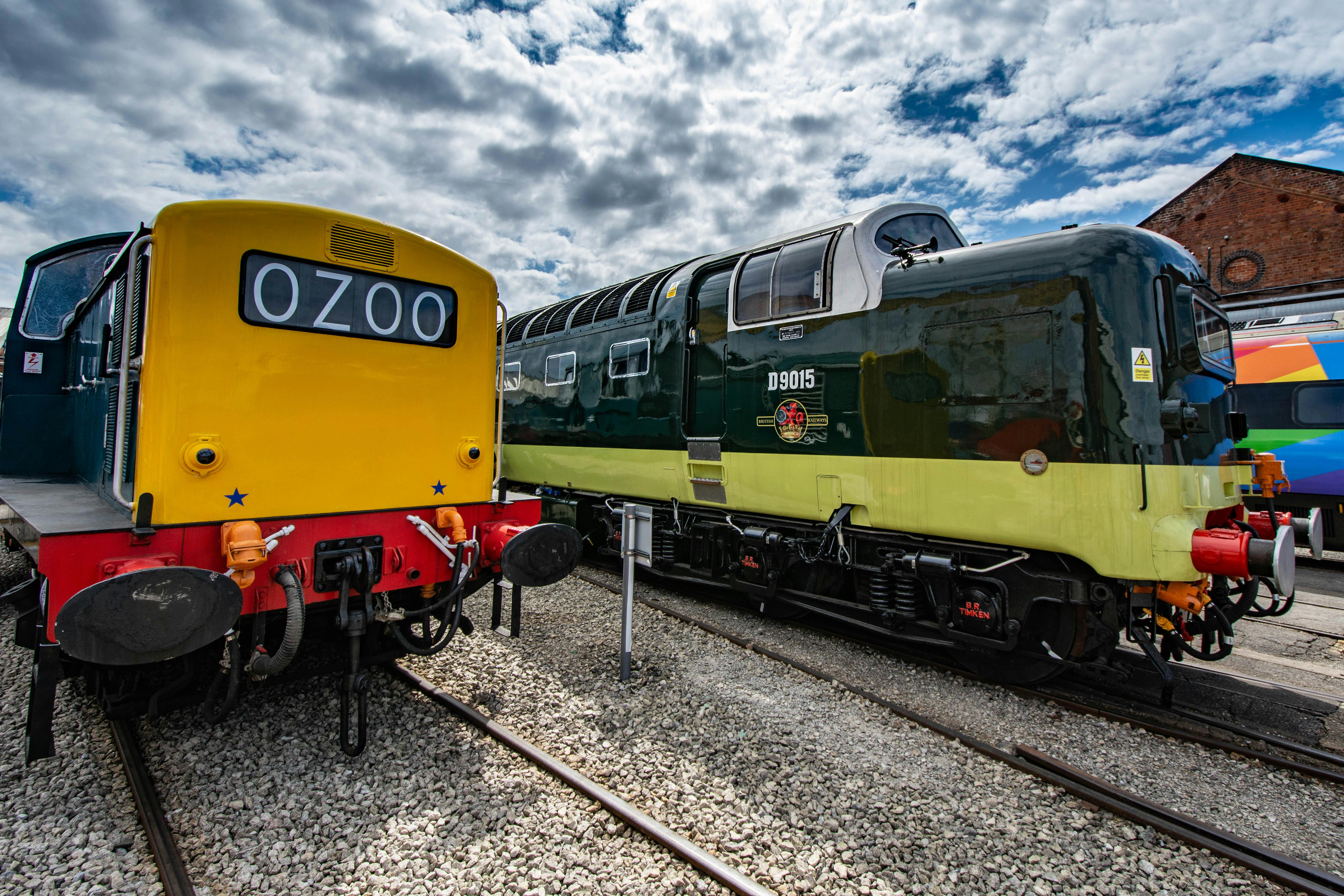
Next door to the Deltics is another rarity and the last of its kind; a Class 17. This is the sole survivor of its class from an original fleet of 117. It was intended to become the standard Type 1 diesel locomotive but they were not successful and instead the English Electric Class 20 took that place (which was due to make an appearance this weekend but is sadly absent).

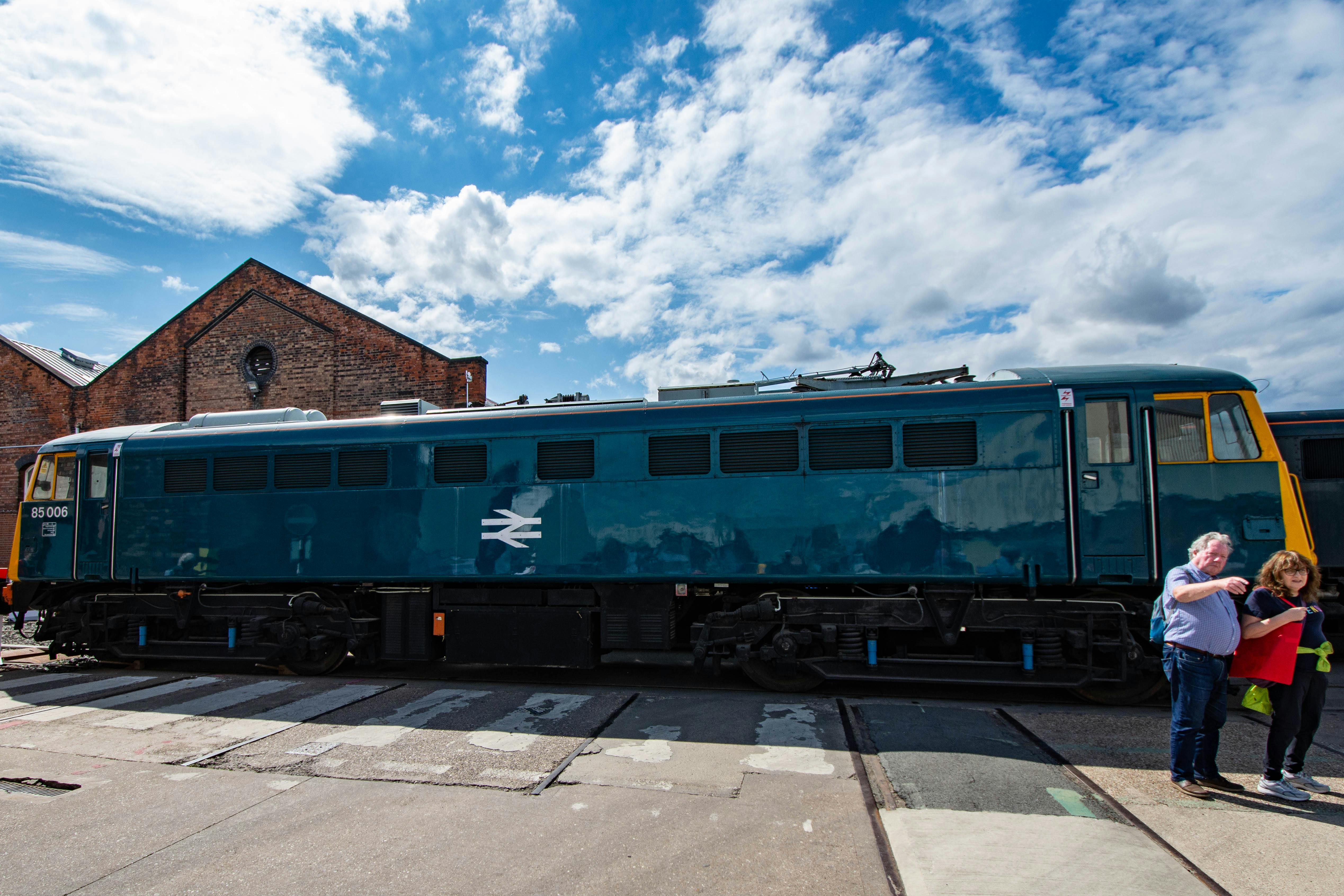
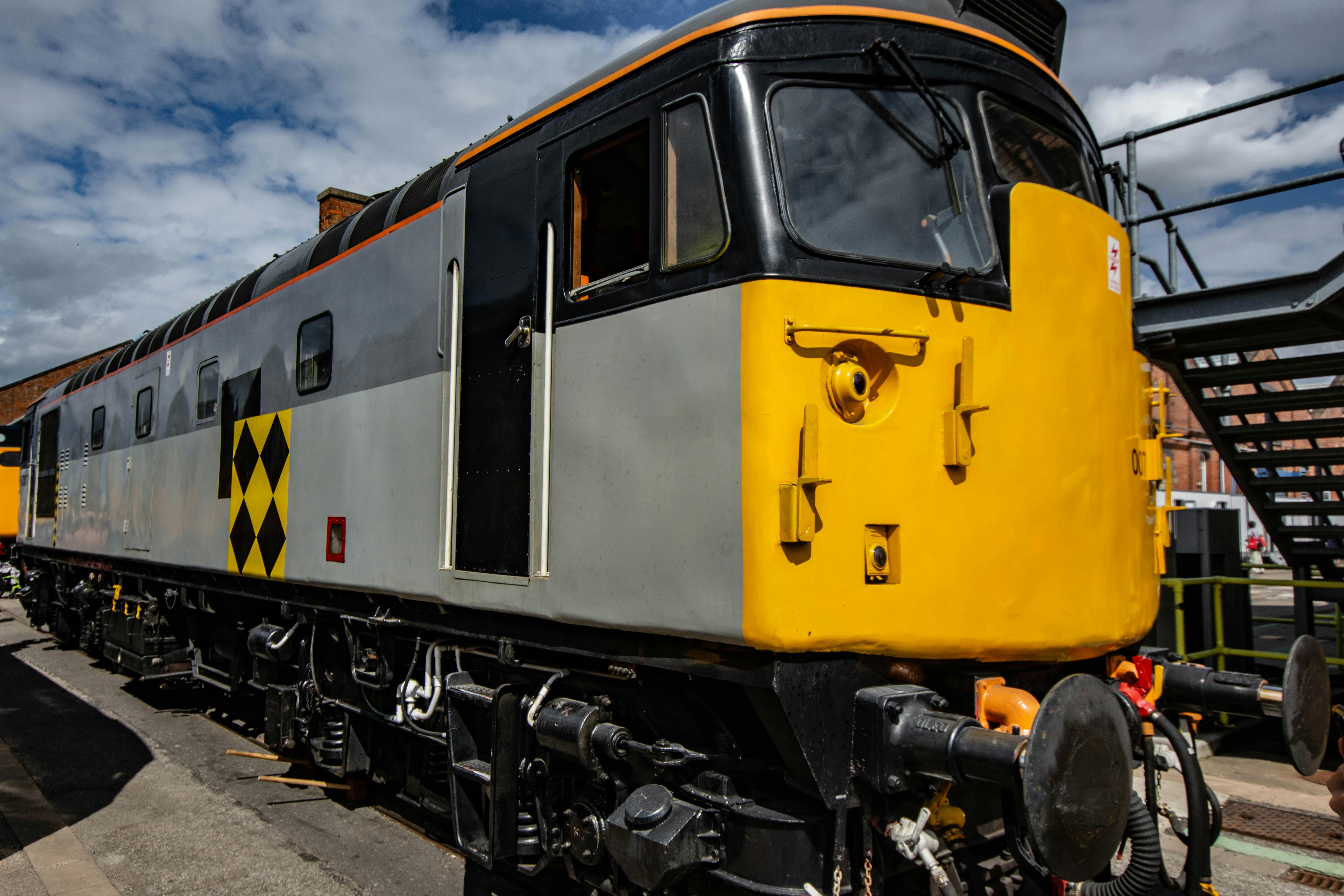
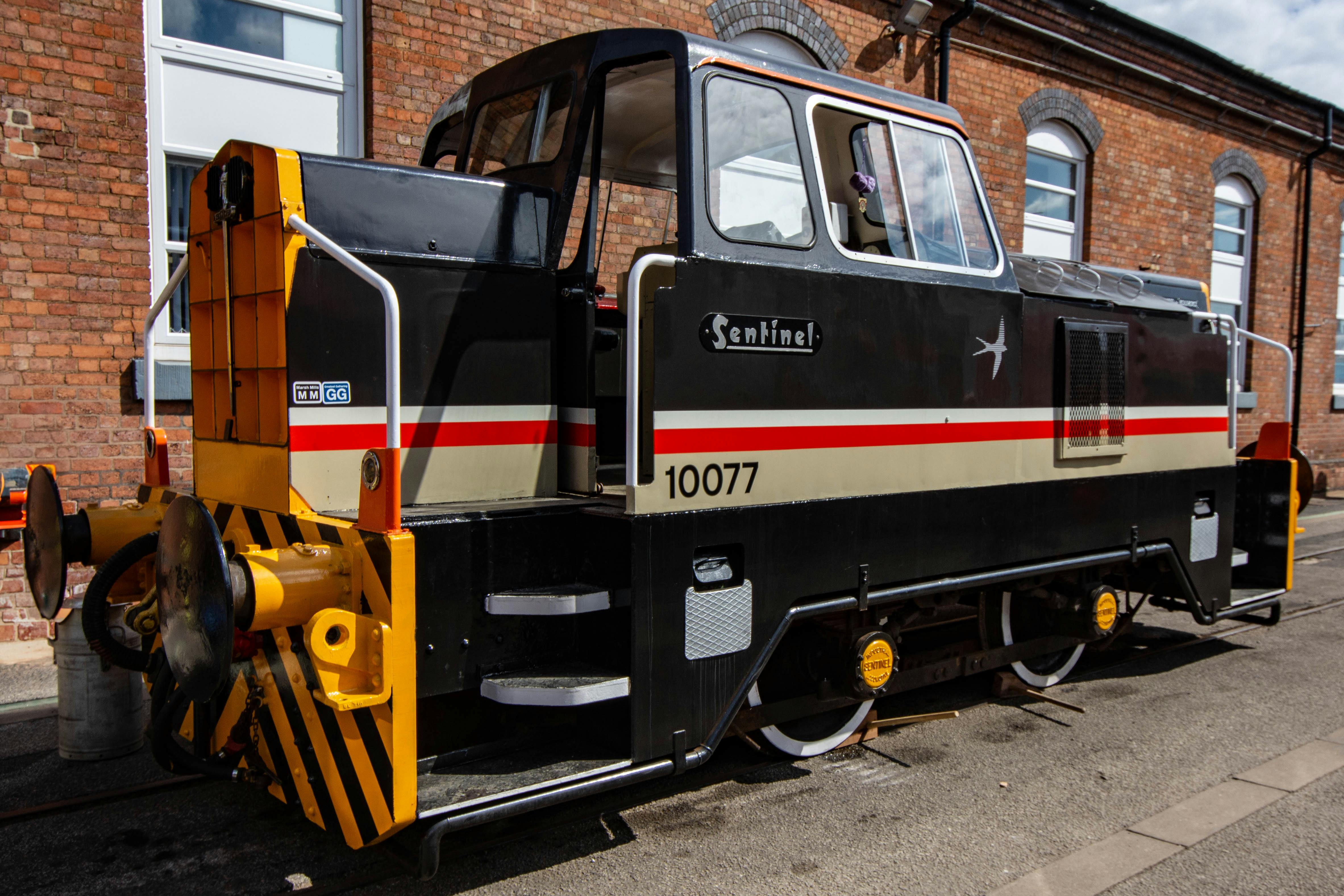
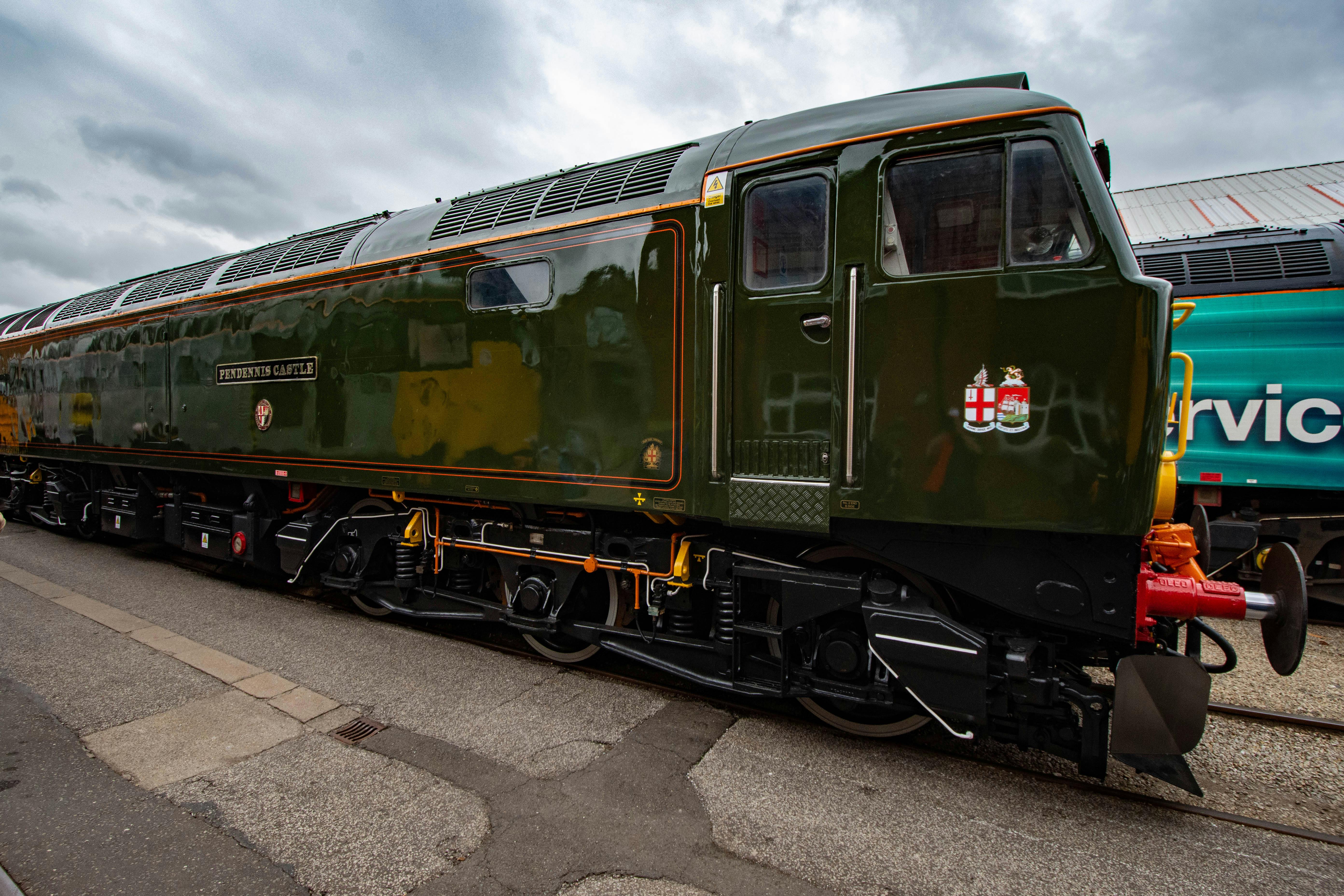
Speaking of important preserved pieces, the Class 85 on display is the last of its kind, with all others having been scrapped. Interestingly, this one was actually preserved by Pete Waterman and is now owned by the AC Locomotive Group along with the Class 86 ‘Mons Meg’ which sits behind her. Beyond these, there’s a Class 26, A Sentinel 4wDH, and a Class 37, but not just any Class 37, it’s the first one ever built. The Class 37 is one of the most successful diesel-electrics ever built for the British railway network and the most popular. 309 were built in total and D6700 was the first. It now forms part of the national collection at the National Railway Museum. We’ve also Pendennis Castle here…but not the one you are probably expecting. Rather than the steam locomotive which bares the same name, this is the diesel Class 57 57604, displayed here in her GWR Brunswick green livery. Interestingly, she was originally built as a Class 47 in 1965. Her conversion to a Class 57 came in 2004 so that she could be used on the Night Riviera sleeper service down to Penzance from London Paddington.


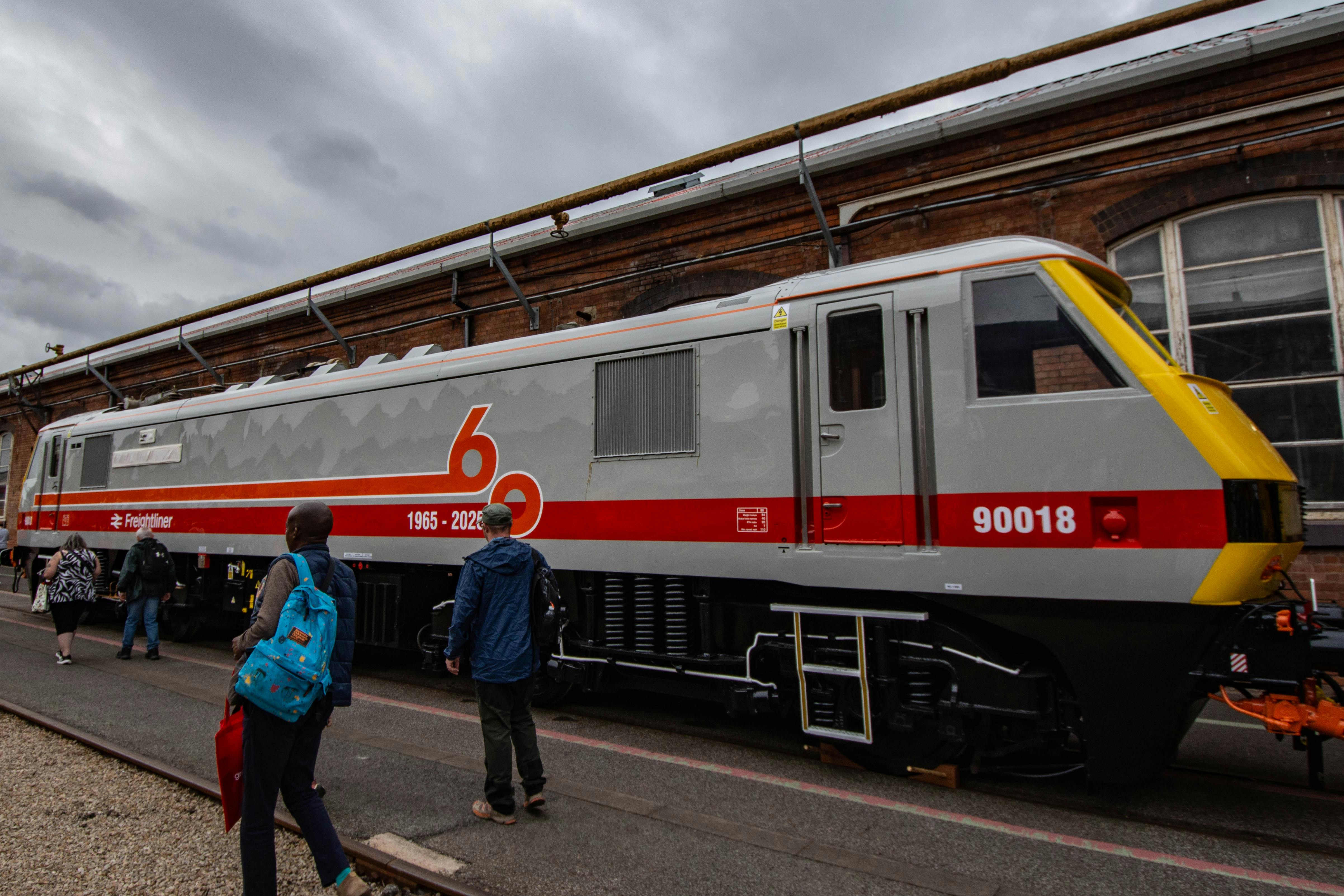
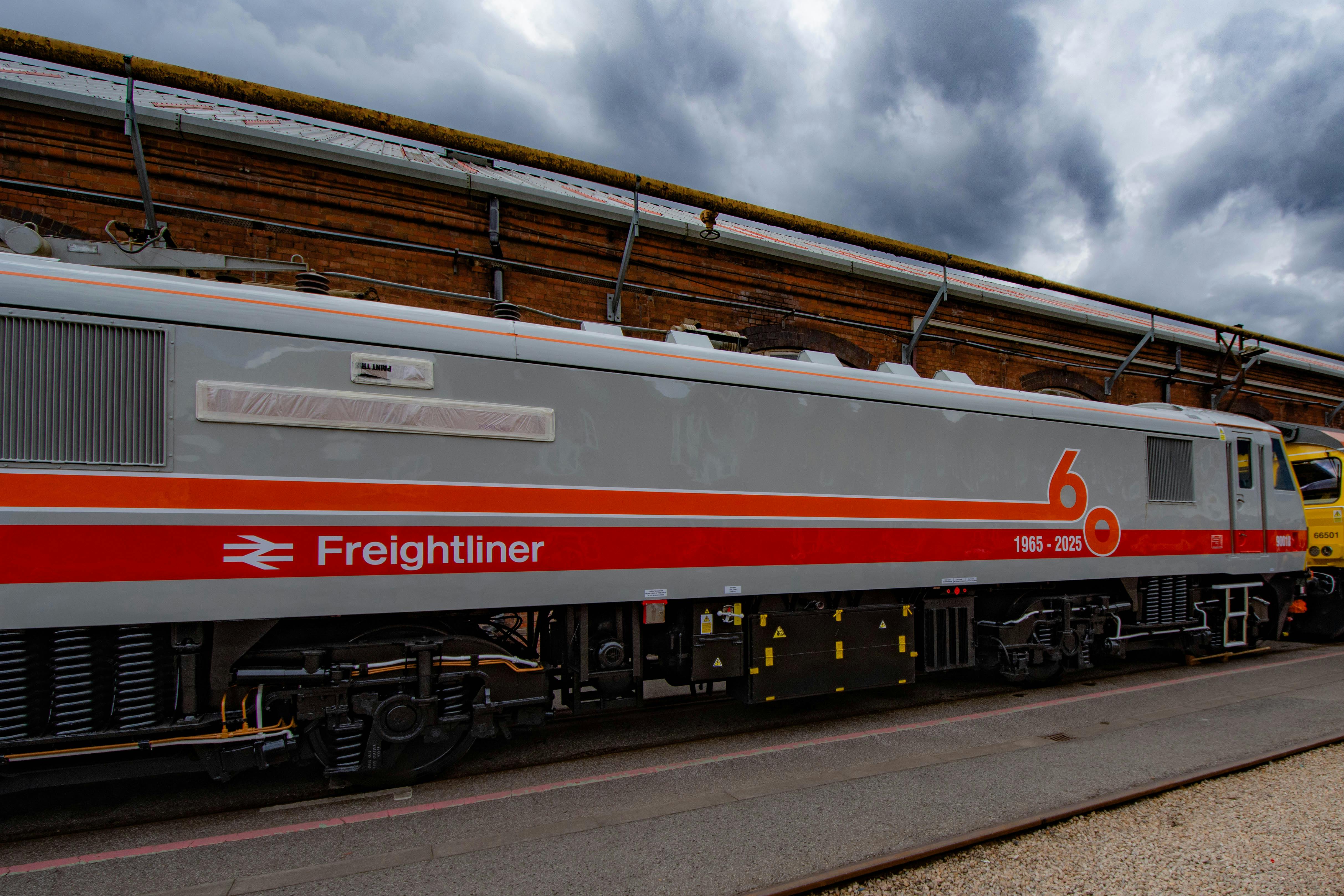
It’s time for ‘guess the name of that loco’. Throughout the weekend, there have been a number of locomotives which are having new names unveiled as part of this historic celebration in Derby. The Class 90 90018 is one of those. Originally operated by DB Cargo UK, it was sold to Freightliner in April 2024 and has been stored since then and done up in the Freightliner 60 livery. The Greatest Gathering is one of its first public appearances since and we can now reveal, the name of this locomotive. 90018 will henceforth be known as…The Greatest Gathering! It couldn’t be anything else could it.
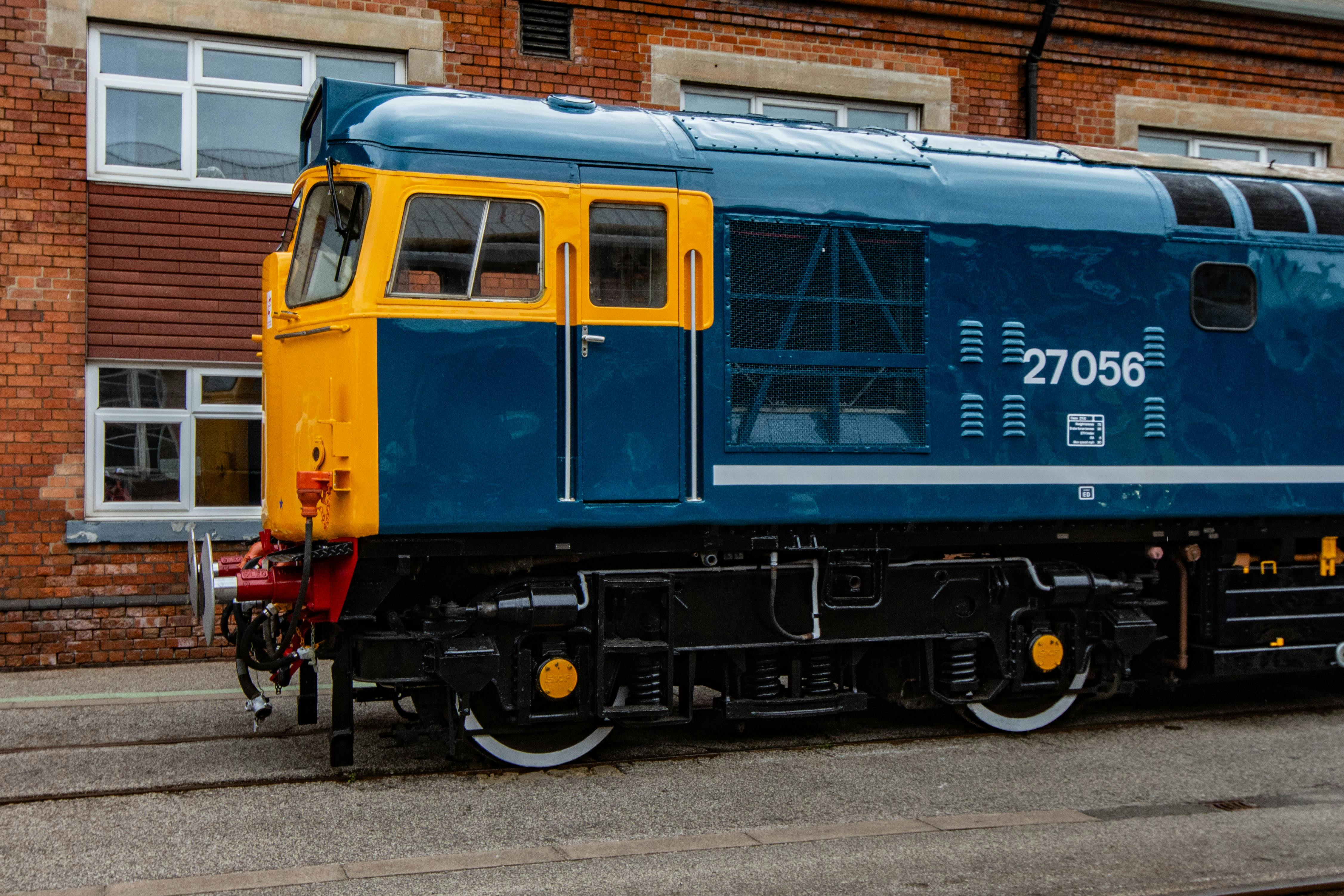
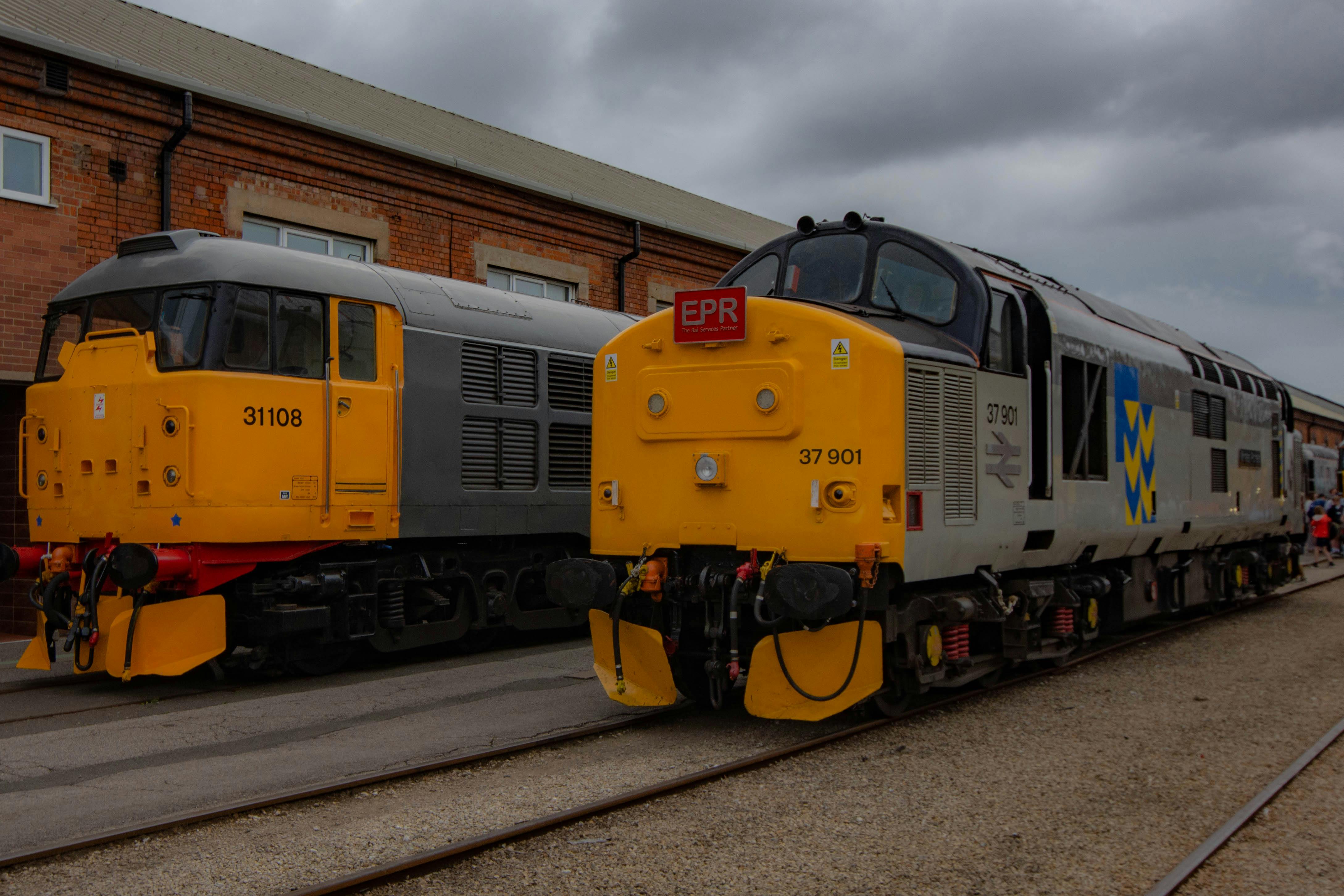
Before we reach the end of Stephenson Way, we see an example of a Class 27 (27056), Class 31 (31108) and Class 37 (37901) ‘Mirrlees Pioneer’.
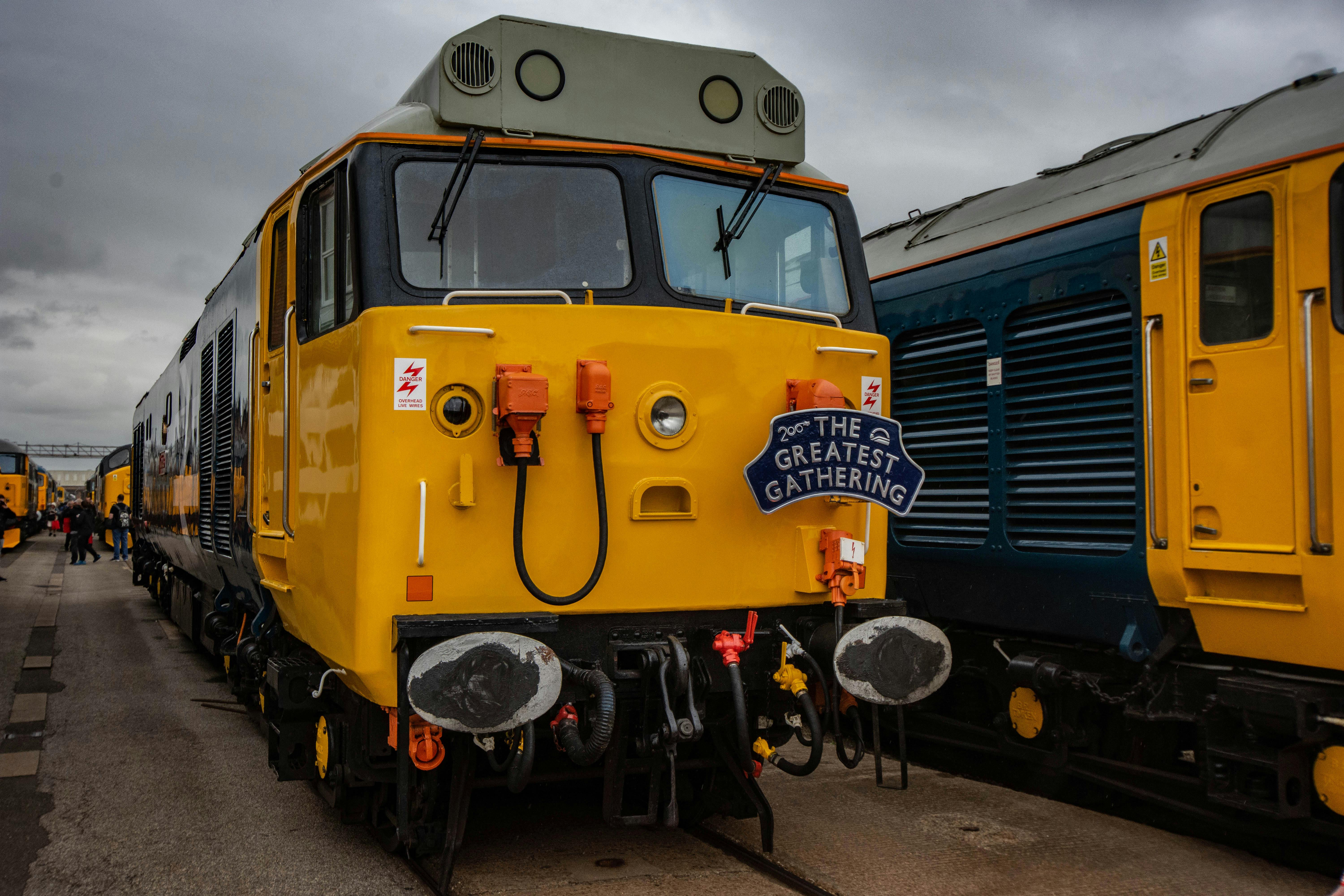
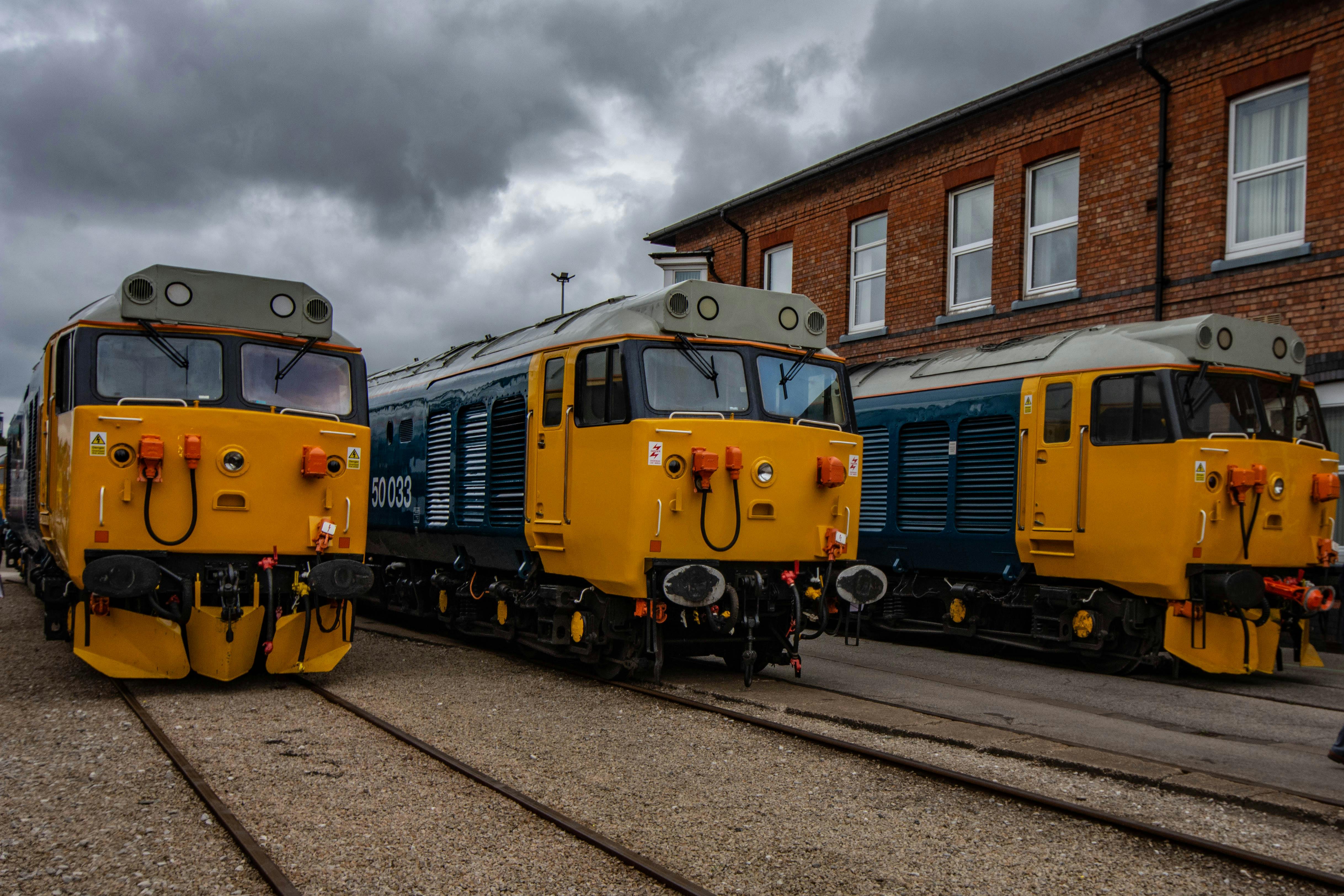
Coming to the end of Stephenson Way is an impressive collection of Class 50’s. The Class 50 Alliance who own and maintain them are showing off five of these this weekend. 50007 ‘Hercules’, 50033 ‘Glorious’, 50035 ‘Ark Royal’, 50044 ‘Exeter’ and 50049 ‘Defiance’. Below you can see Hercules, Glorious and Defiance.


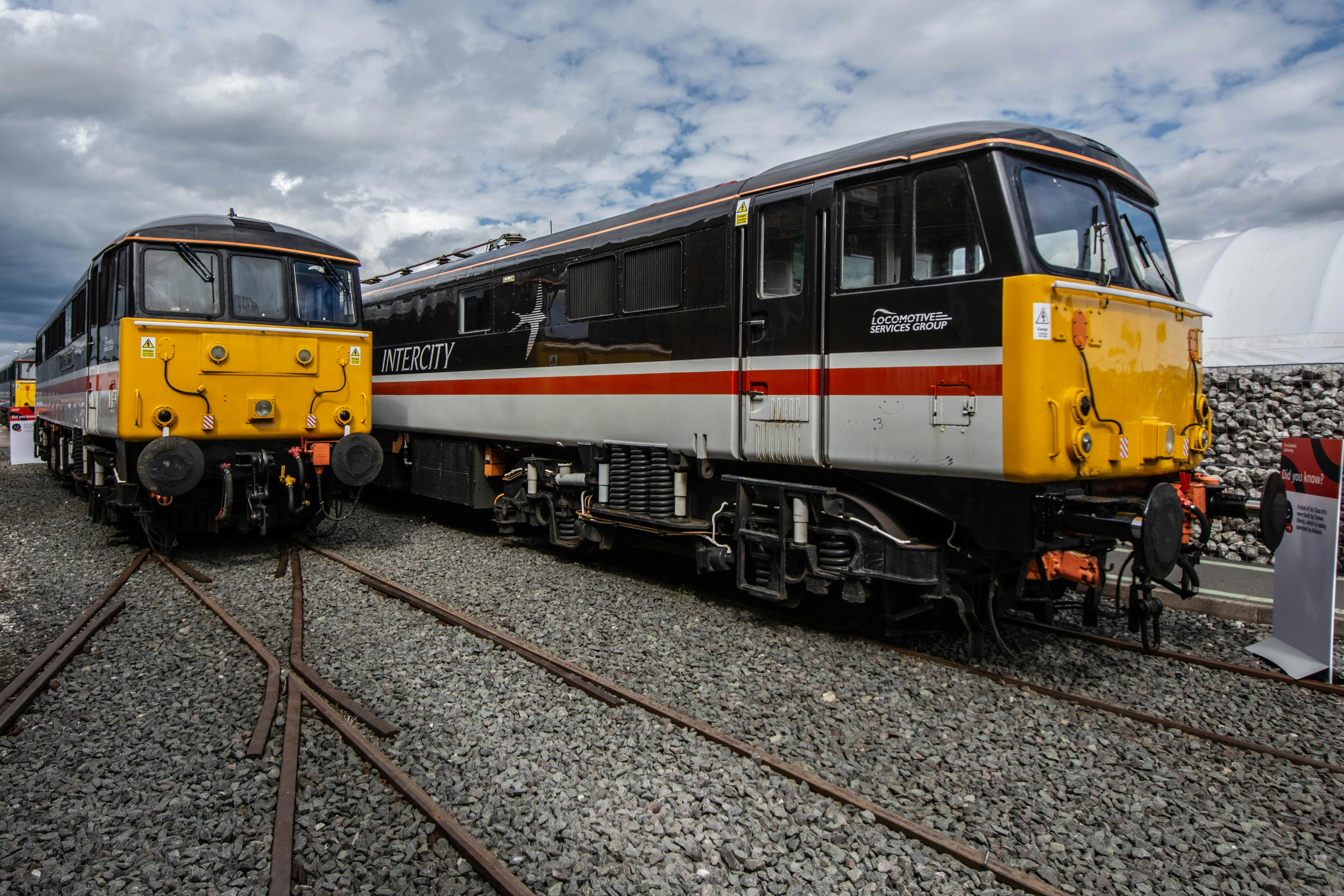
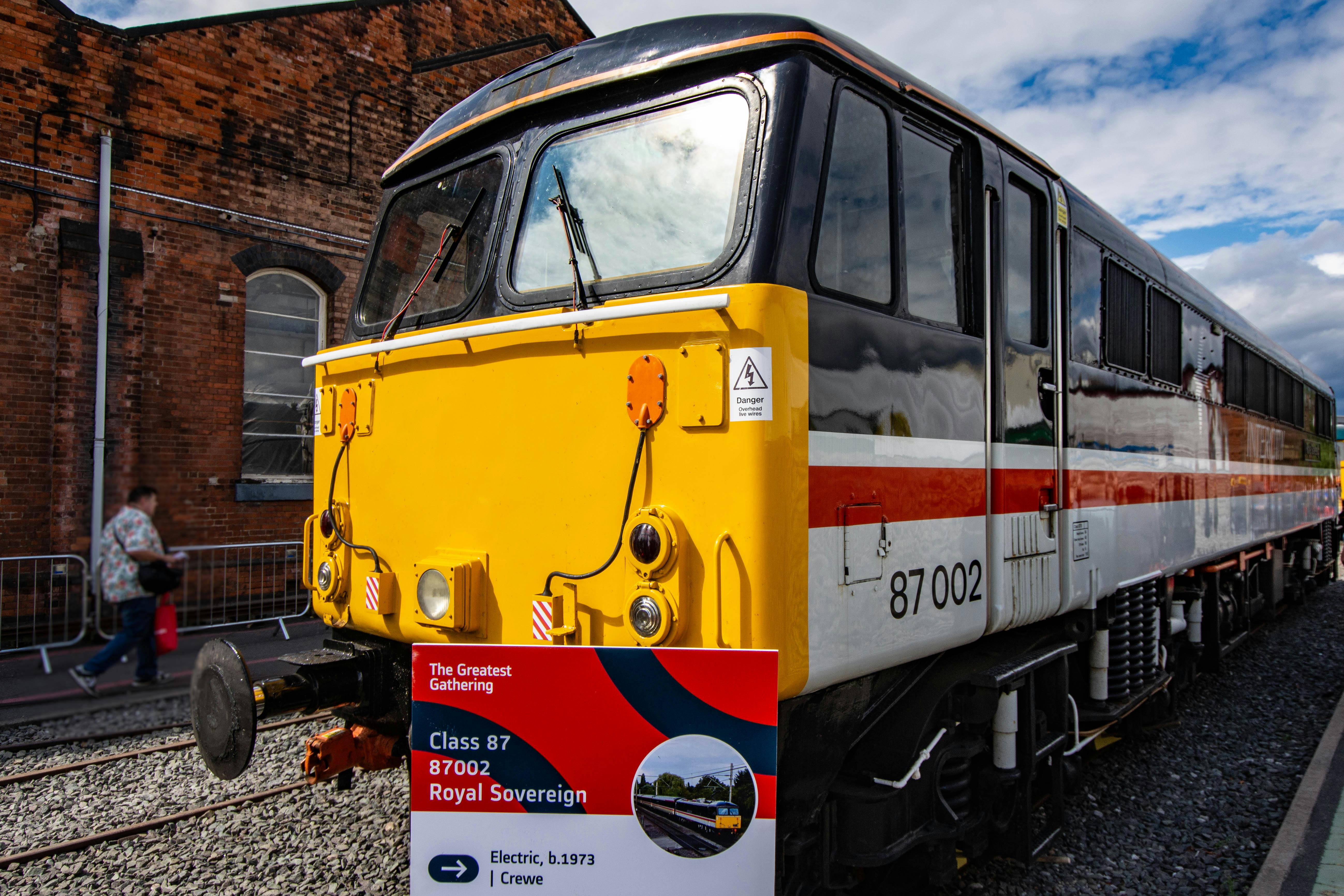
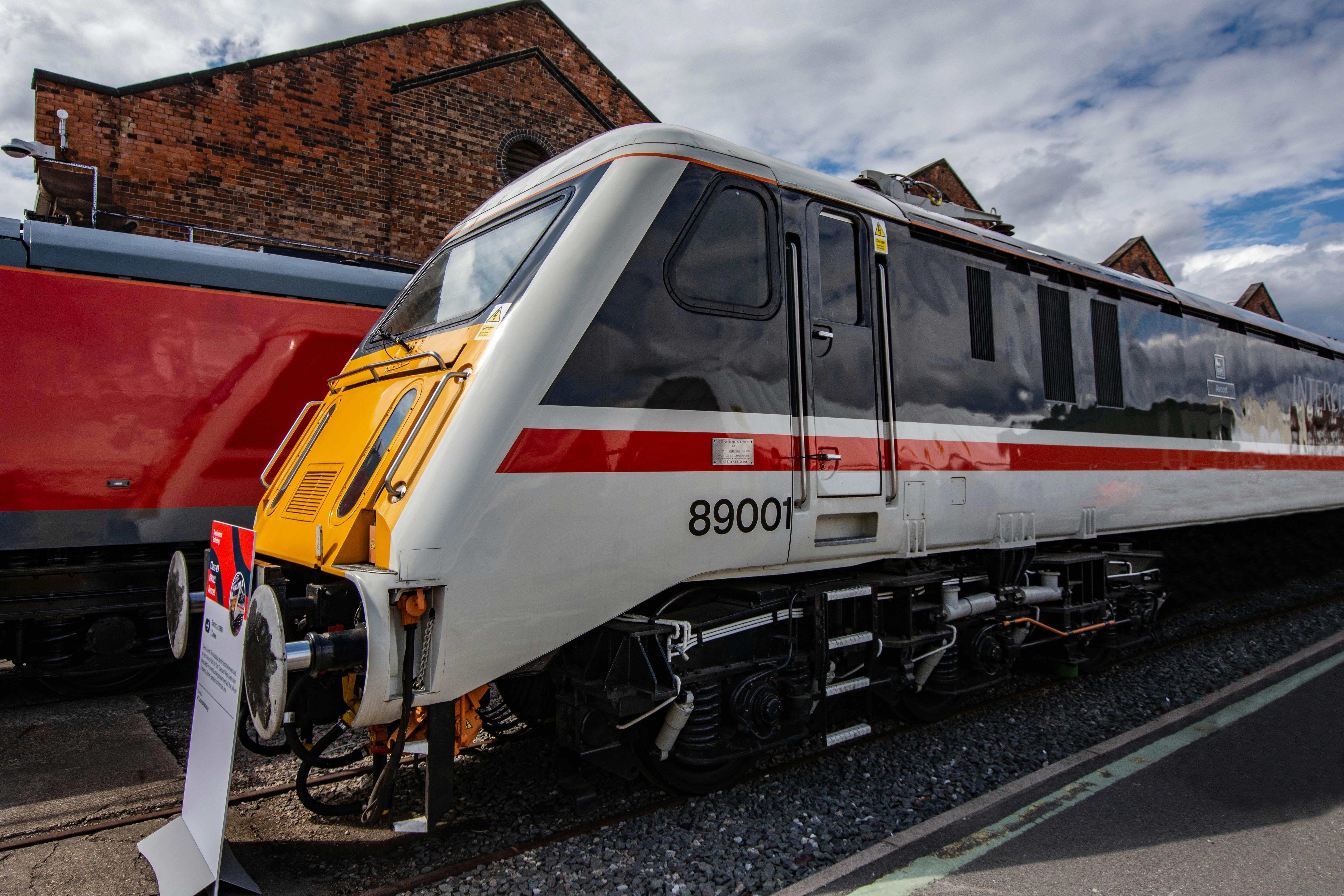
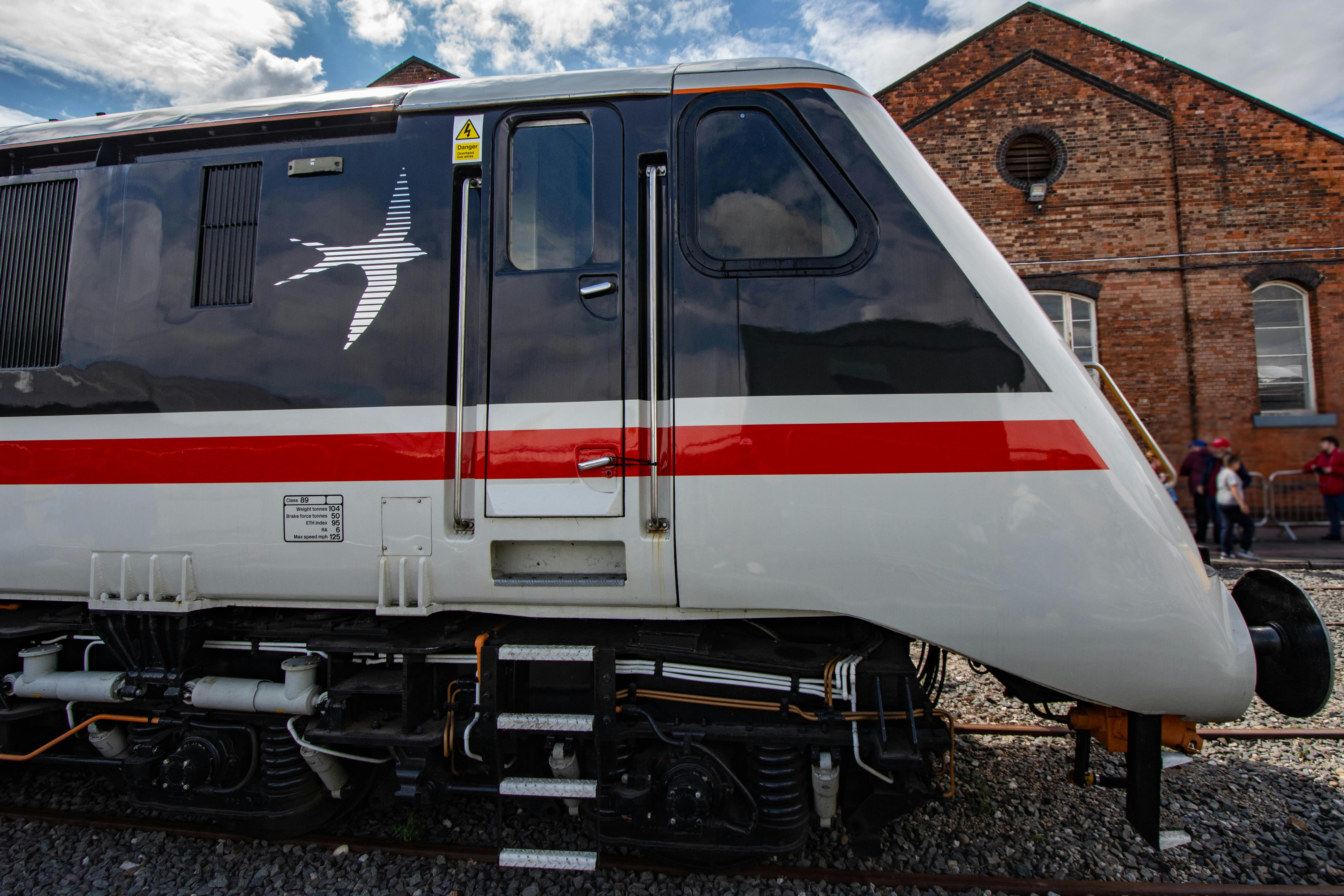
Rocking down to Electric Avenue now and this is where we have a showcasing of electric locomotives. The Class 83 83012 is the sole surviving member of its class and was painted into this InterCity Executive livery in 1985. Withdrawn from service in 1989, it’s another which was preserved by Pete Waterman before passing hands to the AC Locomotive Group. We then have a Class 86 (86101 ‘Sir William A Stanier FRS’) in the InterCity Swallow livery and is the first preserved AC electric to return to mainline operation in March 2007 pulling charter trains and rail tours. In the same picture is a Class 87 (87002 ‘Royal Sovereign’) which is the only working class 87 in the UK. Finally we have the one and only protype Class 89 (89001 ‘Avocet’). She entered service in 1989 but had a short lived working life and was eventually stored in 1992 before being preserved by the AC Locomotive Group in 2006. In mid-2024, she ran under power on all six traction motors for the first time in around 25 years.

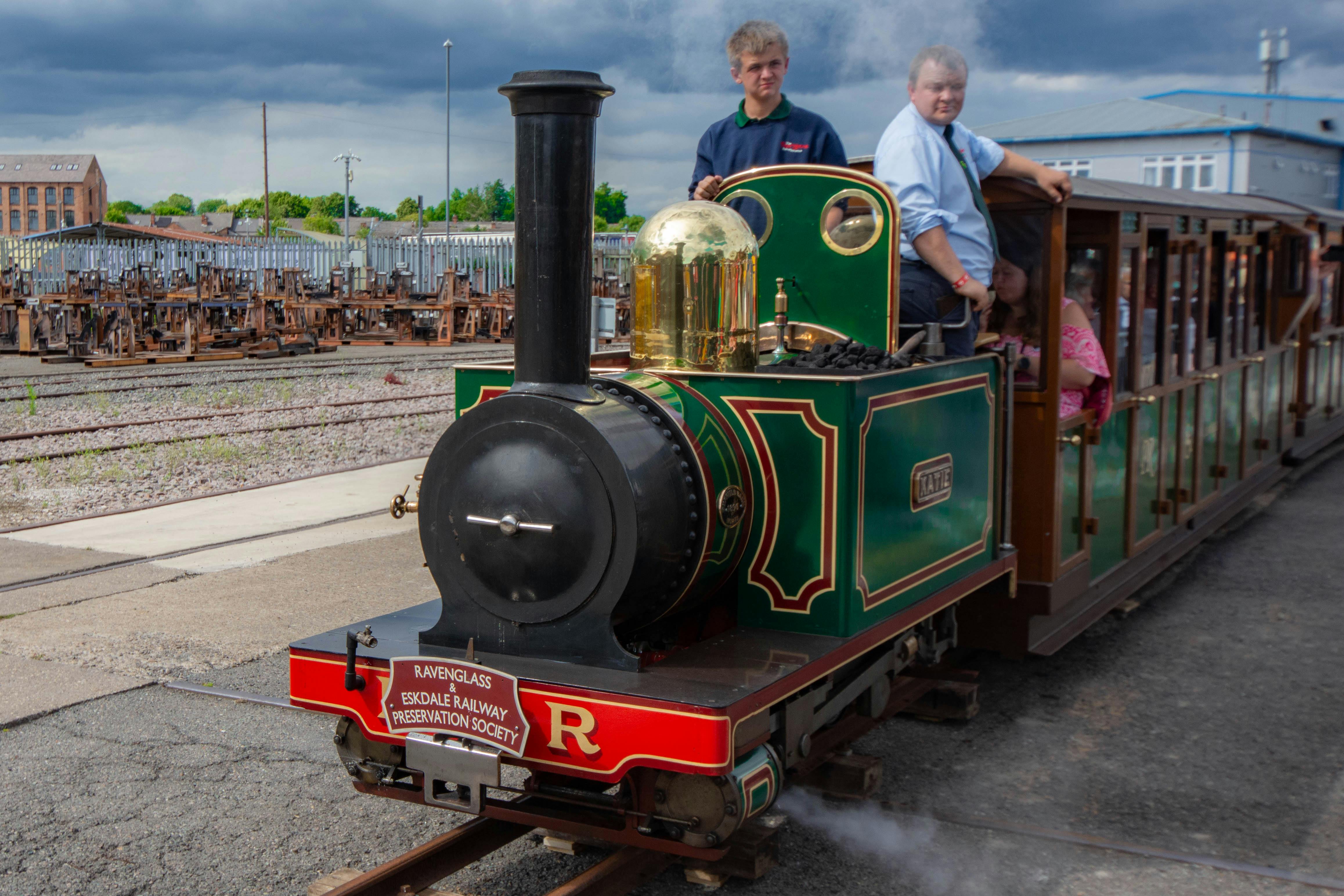
Running alongside Electric Avenue is TR4 and this is a representation of 15 inch gauge miniature railway. On this track, we have another push-pull service being operated by 0-4-0 ‘Katie’ of the Ravenglass and Eskdale Railway and on the other end is 0-6-2T ‘Anne’ which is 100 years younger than Katie and calls The Perrygrove Railway home. Katie was built in 1896 and after a series of sales and changing hands, was dismantled in 1929. In the early 1990s, restoration of the loco began and concluded 25 years later in 2017. ‘Anne’ was built in 2004 by the Exmoor Steam Railway and was originally called ‘John Hayton’ and worked on the Longleat Safari Park Railway. She was bought by The Perrygrove railway in 2015, renamed (after her new owners late mother) and repainted in a new striking colour.

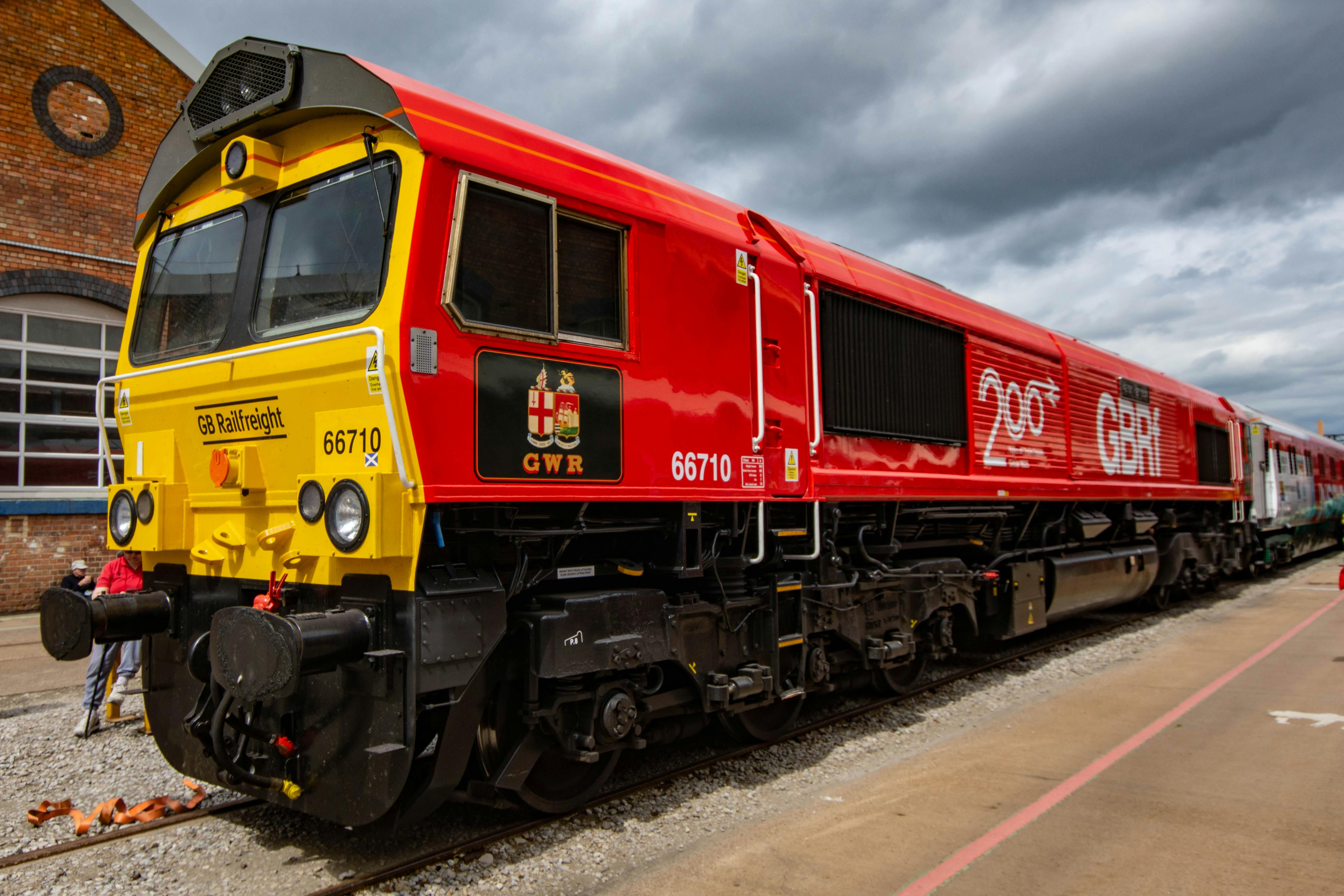
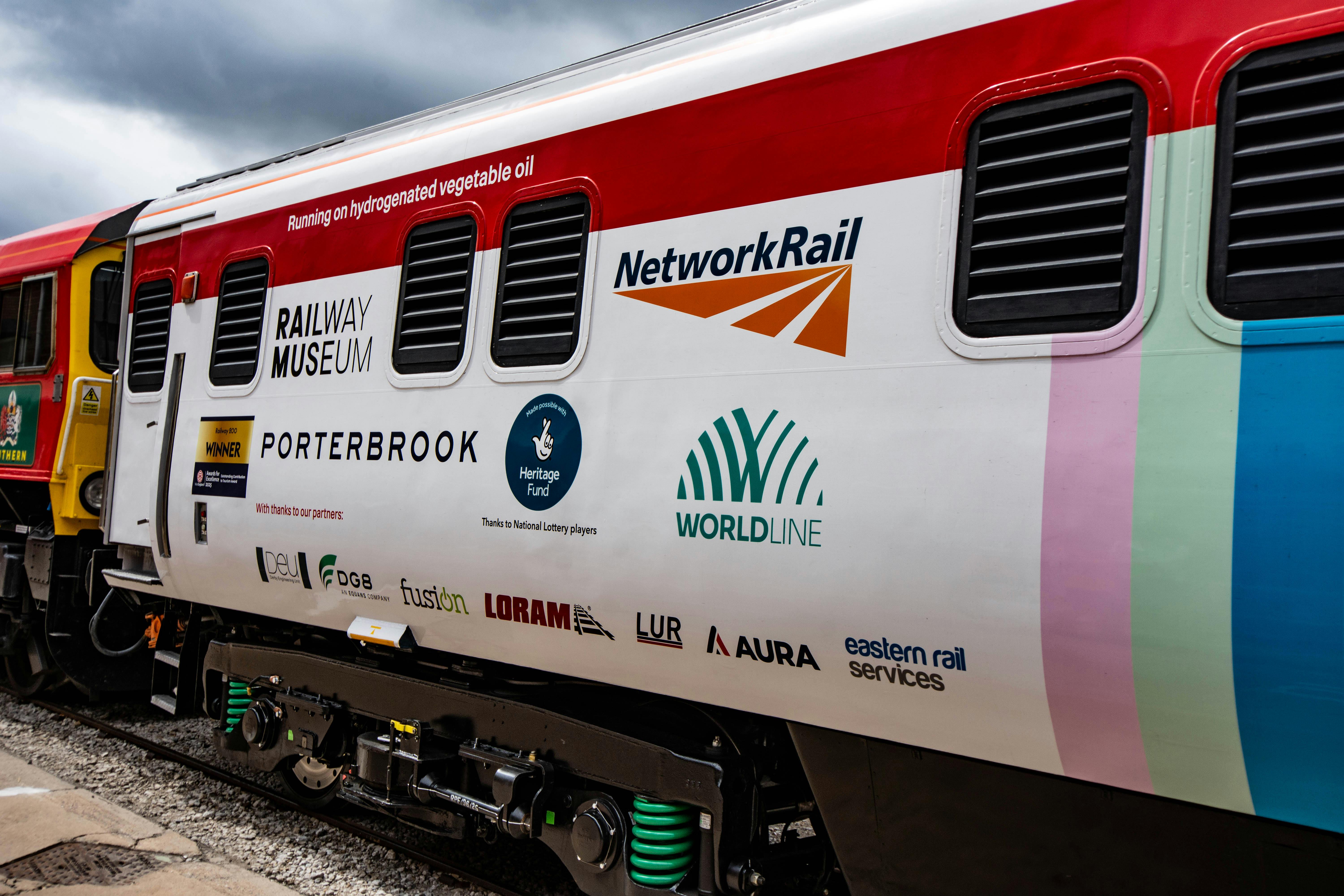
After this short ride, I headed over to the Modern Machines area. Here is where the Railway 200 ‘Inspiration’ train was for the event. The Inspiration train is touring the UK this year and aims to inspire the next generation and showcase the different types of roles that exist on the railways as well as a host of interactive exhibits. She is topped and tailed by two Class 66s; 66710 ‘Phil Packer Brit’ and 66719 who has been renamed this weekend as ‘Michael Portillo’.
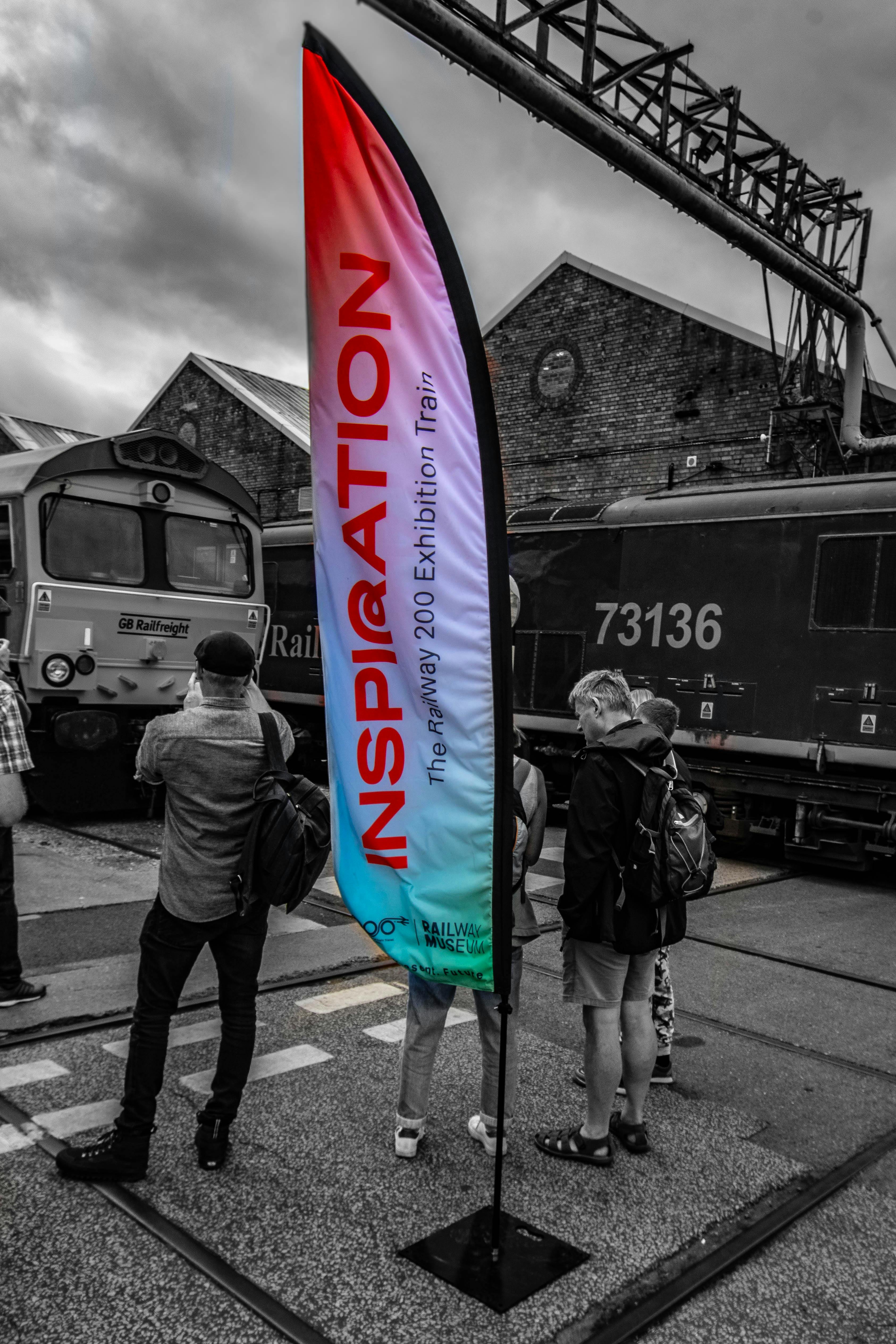

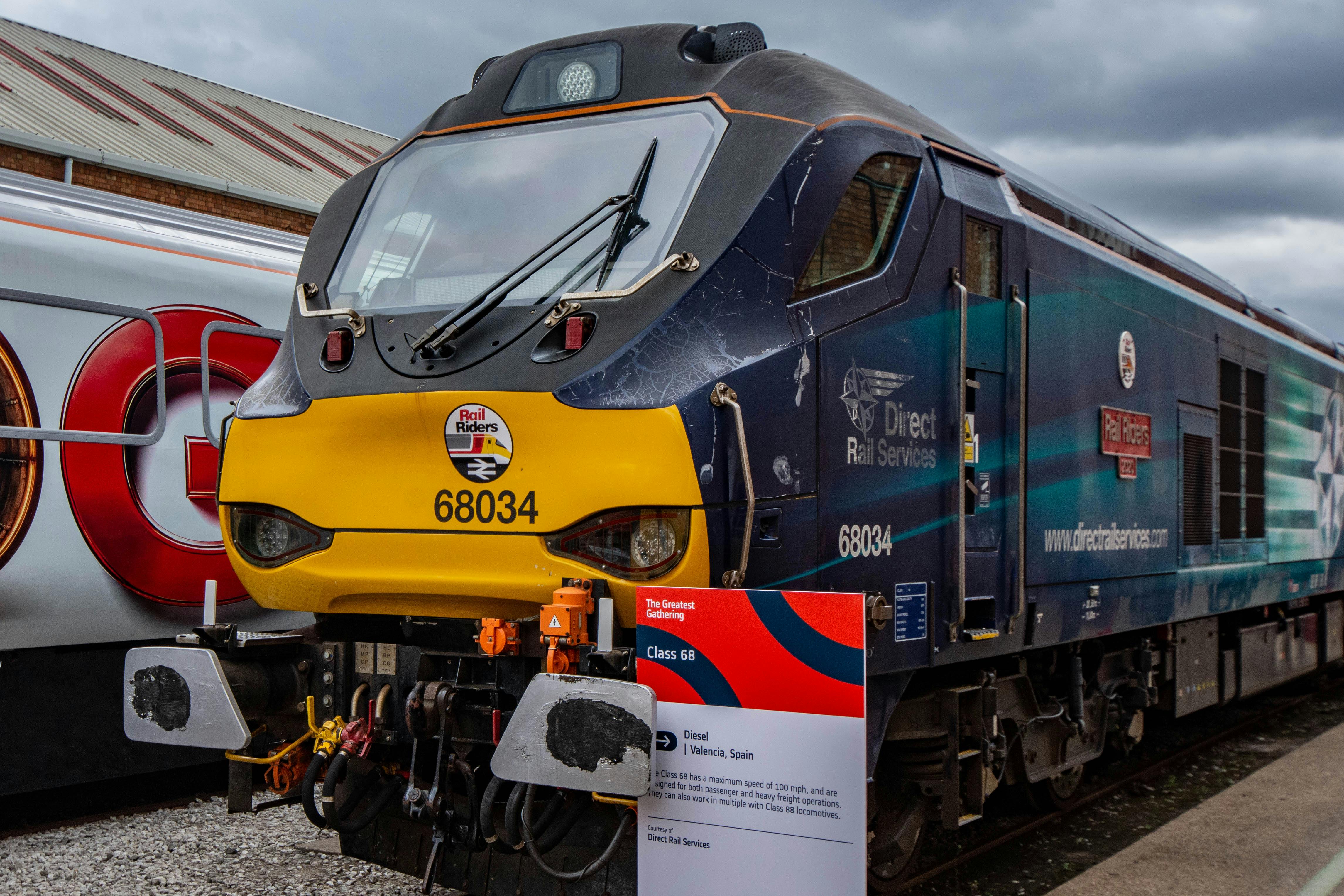
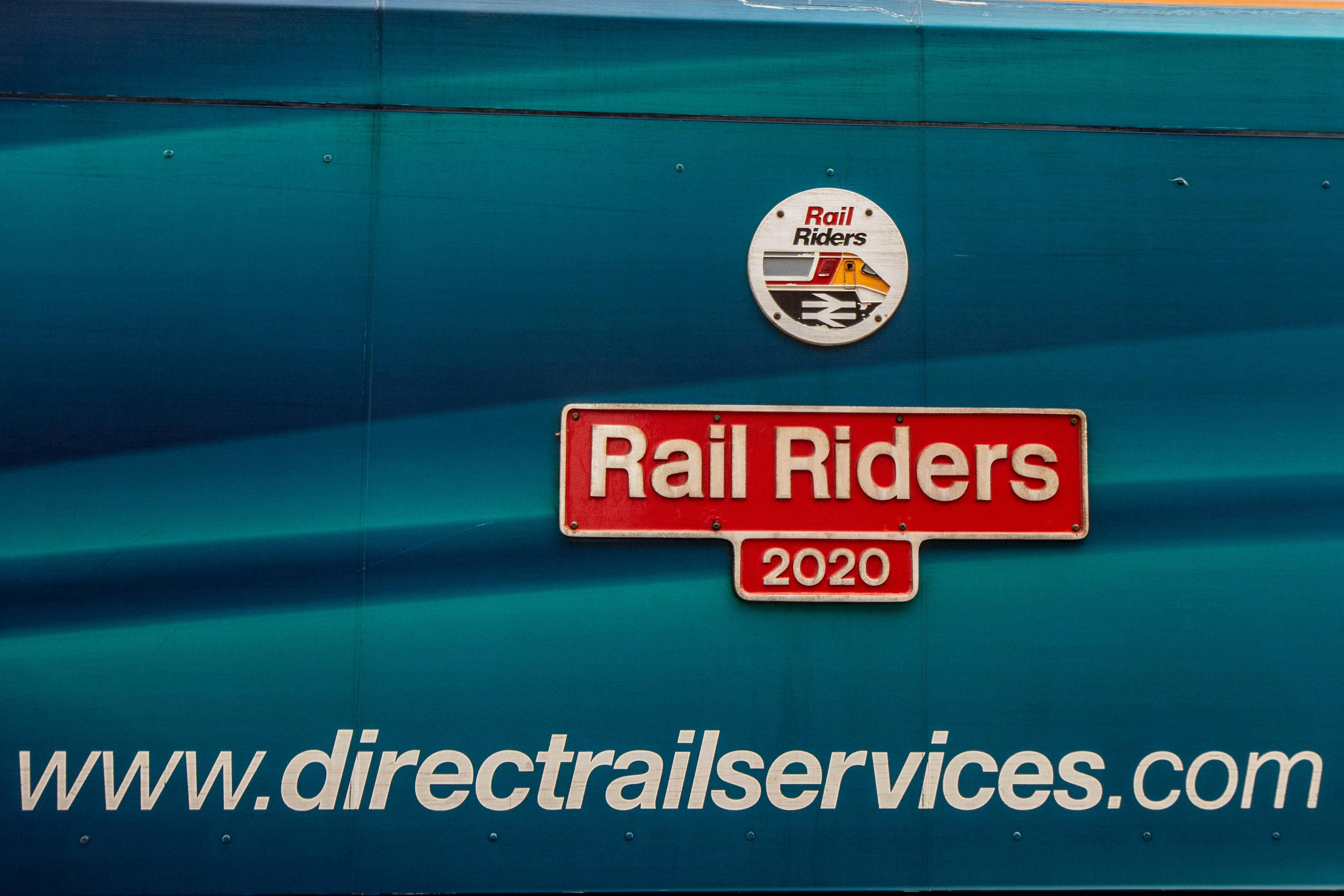
Also present here are two Class 73s; 73136 ‘Mhairi’ in GB Railfreight house colours and 73119 ‘Borough of Eastleigh’ presented in ‘Dutch’ grey and yellow. Alongside those we have a special Class 68 (68034) and it bares the name of ‘Rail Riders 2020’. Rail Riders was a club launched by British Rail in 1981 aimed at young rail enthusiasts which offered discounted travel and a regular magazine. The club closed in 1991 but saw a revival in 2018, now being opened to all ages and still producing a magazine, but with the addition of organising exclusive depot tours for club members. 2020 saw the official launch of the club once more. 68034 is named in honour of that event and sponsored by the club. She wears the Rail Riders logo proudly above the name plate. A Class 88 (88010 ‘Aurora’) and Class 93 (93003), both built by Stadler complete the line-up in this area.



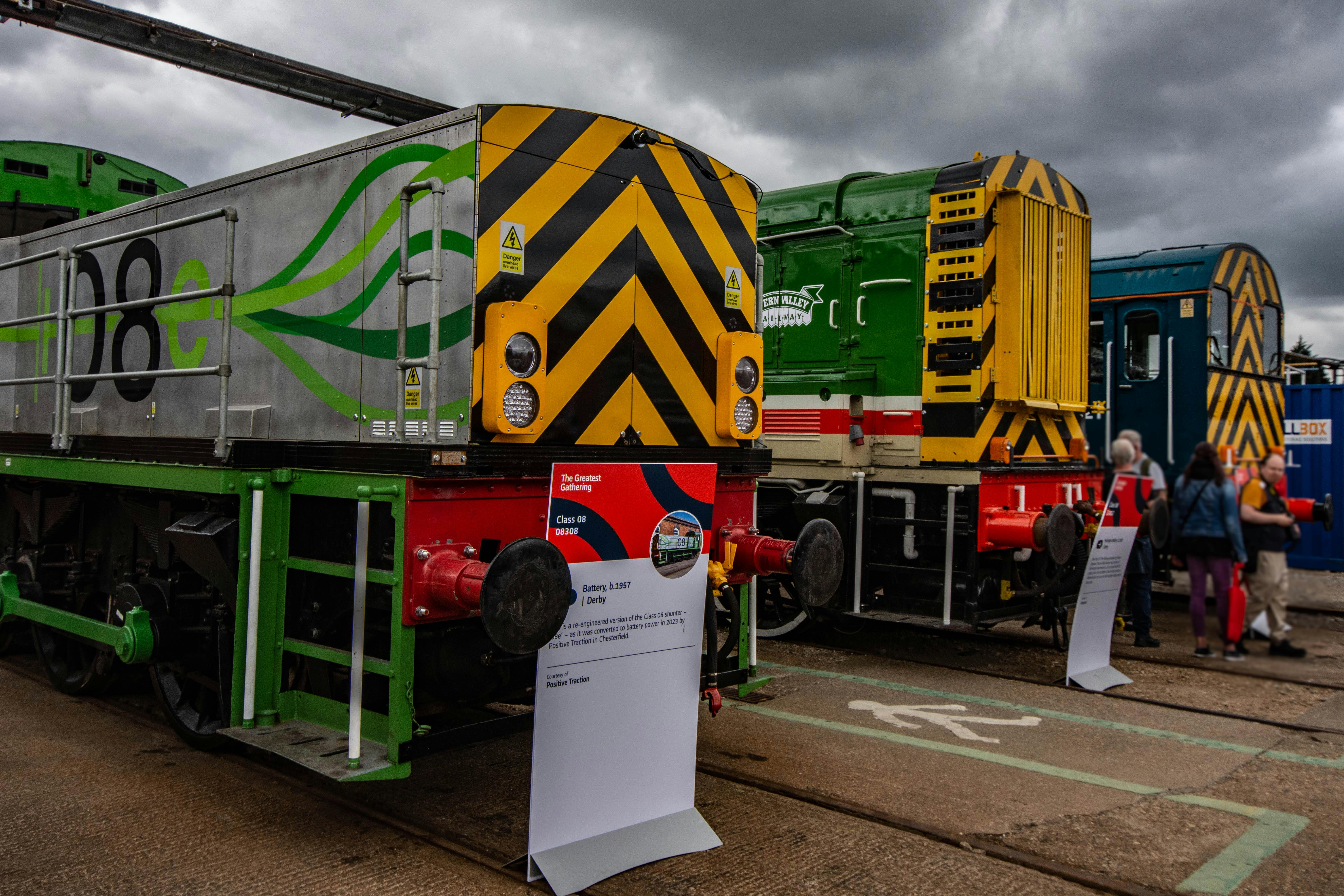
This brings us to the back of the site where we find the industrial section and the first three locomotives showcase the evolution of the Class 08. We’ve got a standard Class 08 (08721 ‘Ken Davies’) owned by Alstom, followed by another Class 08 (D3802) with a twist. This is the UKs first Hydrogen powered shunter locomotive. The hydroSHUNTER project has retrofitted a Class 08 to run as a bi-mode hydrogen-battery electric locomotive. To complete the line-up is a Class 08e 08308. It’s essentially a Class 08 with the diesel engine stripped out and replaced by battery power in a move to reduce carbon emissions. Very interesting to see the various evolutions on a classic design.
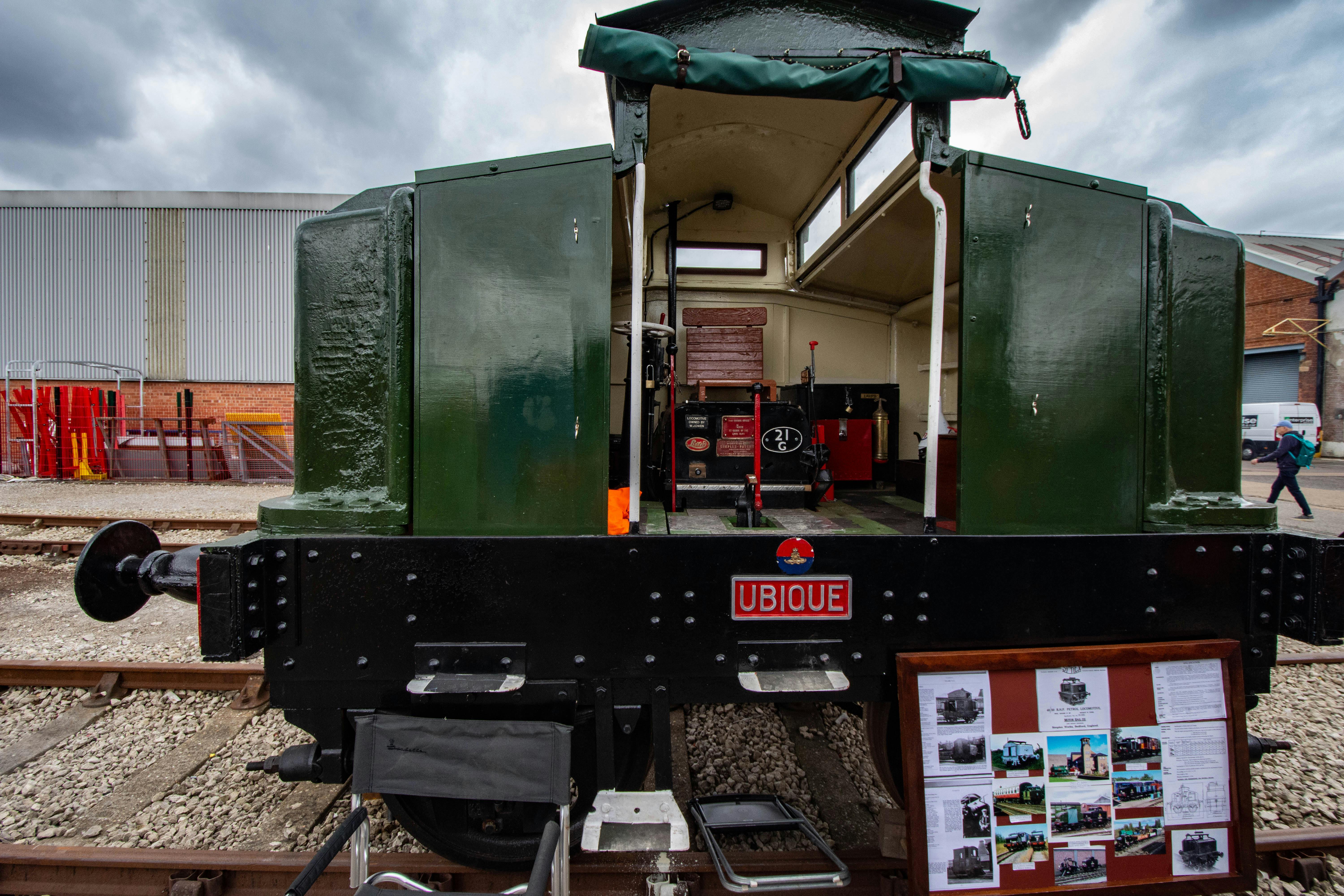
It wouldn’t be an industrial line-up without a Ruston, and the 48DS 294266 ‘Sir William McAlpine’ is here to fly that flag for compact shunters. Finally we have a Motor Rail Simplex 0-4-0PM No.1930 ‘Ubique’ which was built in 1919 for light industrial and military duties. It served with the Royal Engineers and was named ‘Ubique’, Latin for ‘everywhere’ which reflects the motto of of the regiment.


Around the same area are representatives of the Cab Yard. This group take old cabs and restore them but what’s even better, these two cabs from a Class 43 and Class 442 have gone the extra step and been converted into fully accessible, interactive train simulators. I didn’t have a go myself as the queue was long but it looks absolutely fantastic and its been given a rave review by those who did participate so I look forward to hopefully have a go myself one day.
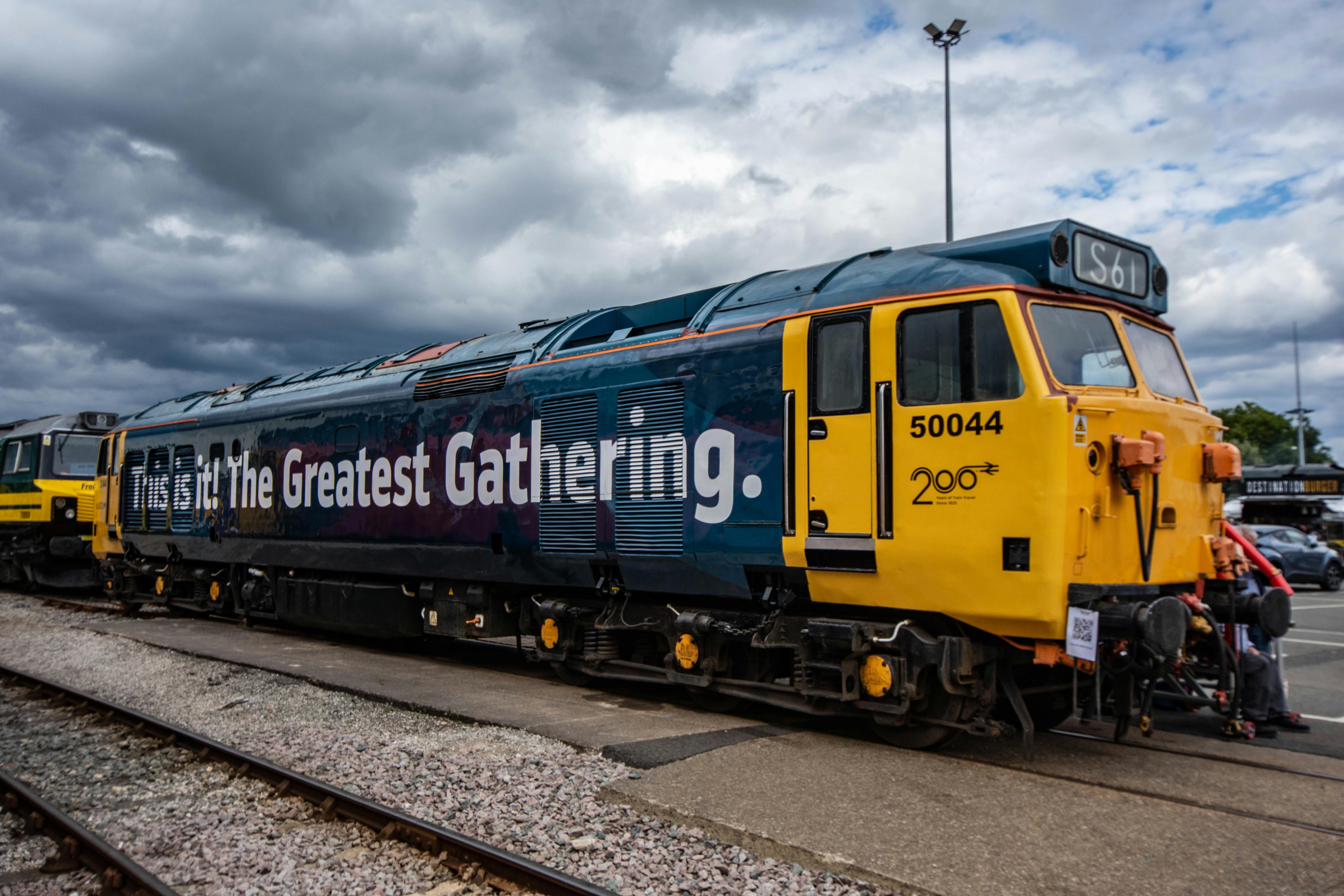
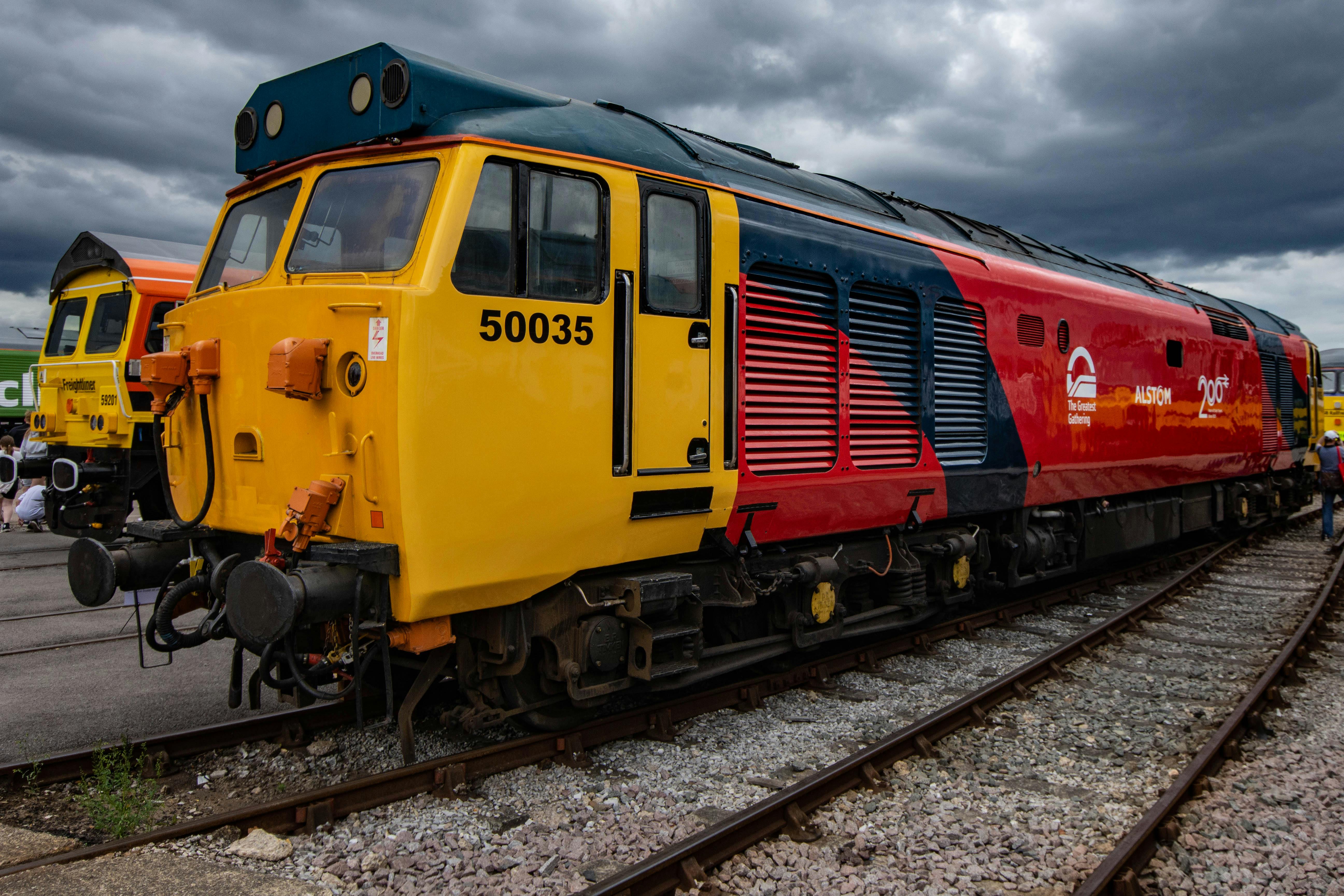
It’s now getting close to closing time and I still have the Freight Focus and Johnson Junction areas at the entrance of the site to do so I make my way down there now. There’s a huge variety here and representation from many freight operating companies. First up is the remaining two Class 50s from the Class 50 Alliance; 50044 ‘Exeter’ and 50035 ‘Ark Royal, both who are sporting special liveries for the Greatest Gathering. ‘Ark Royal’ was the first Class 50 to be preserved.
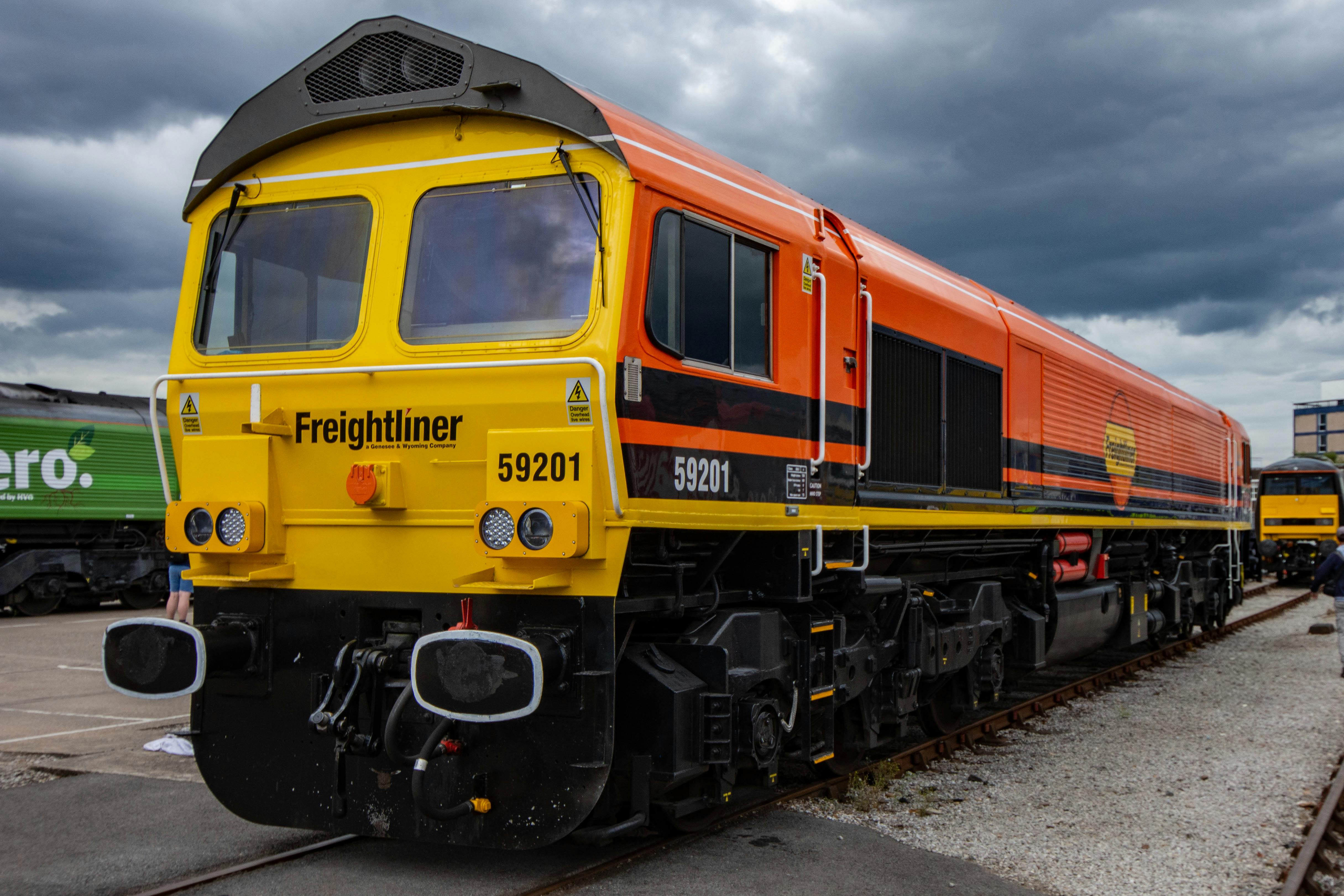
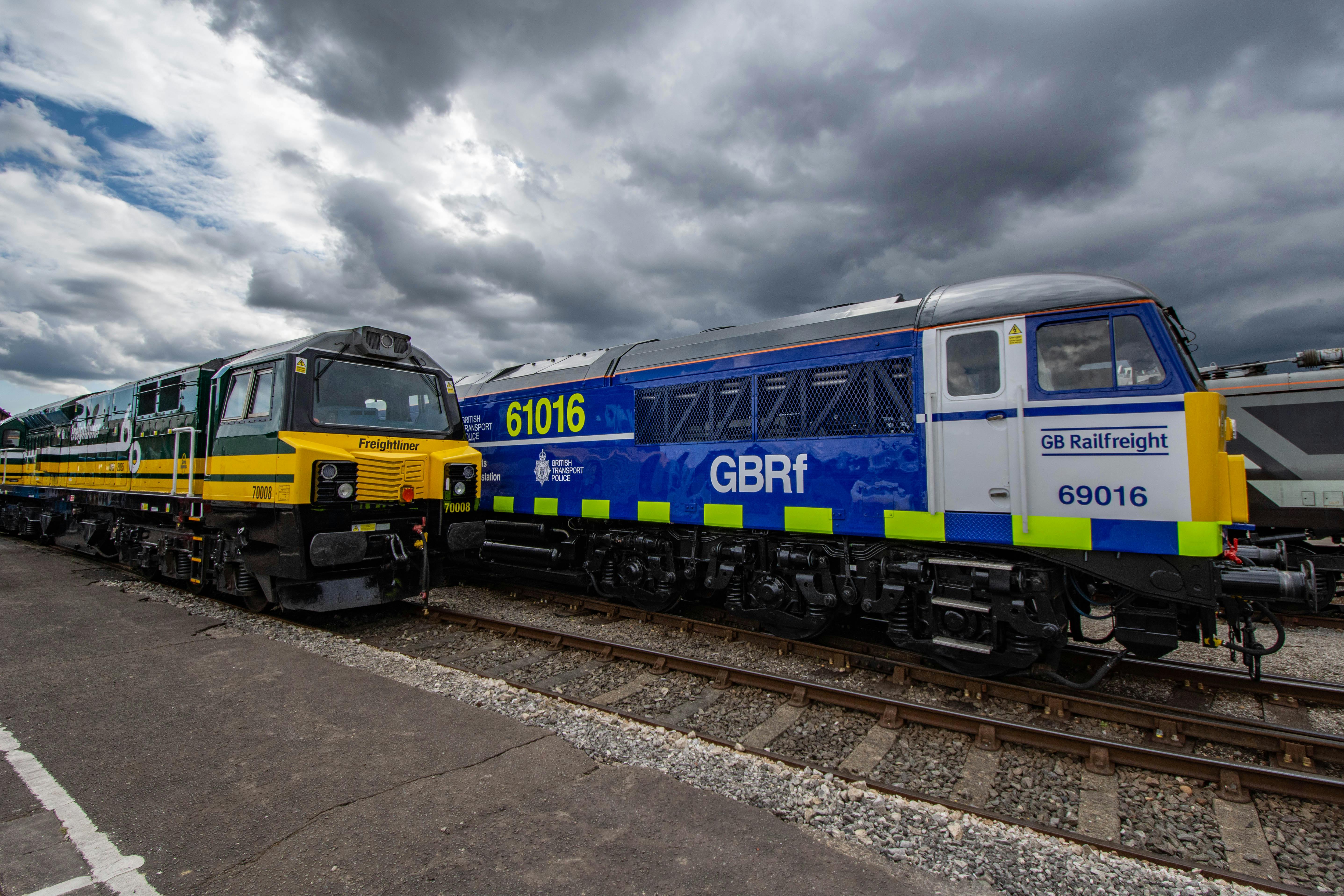
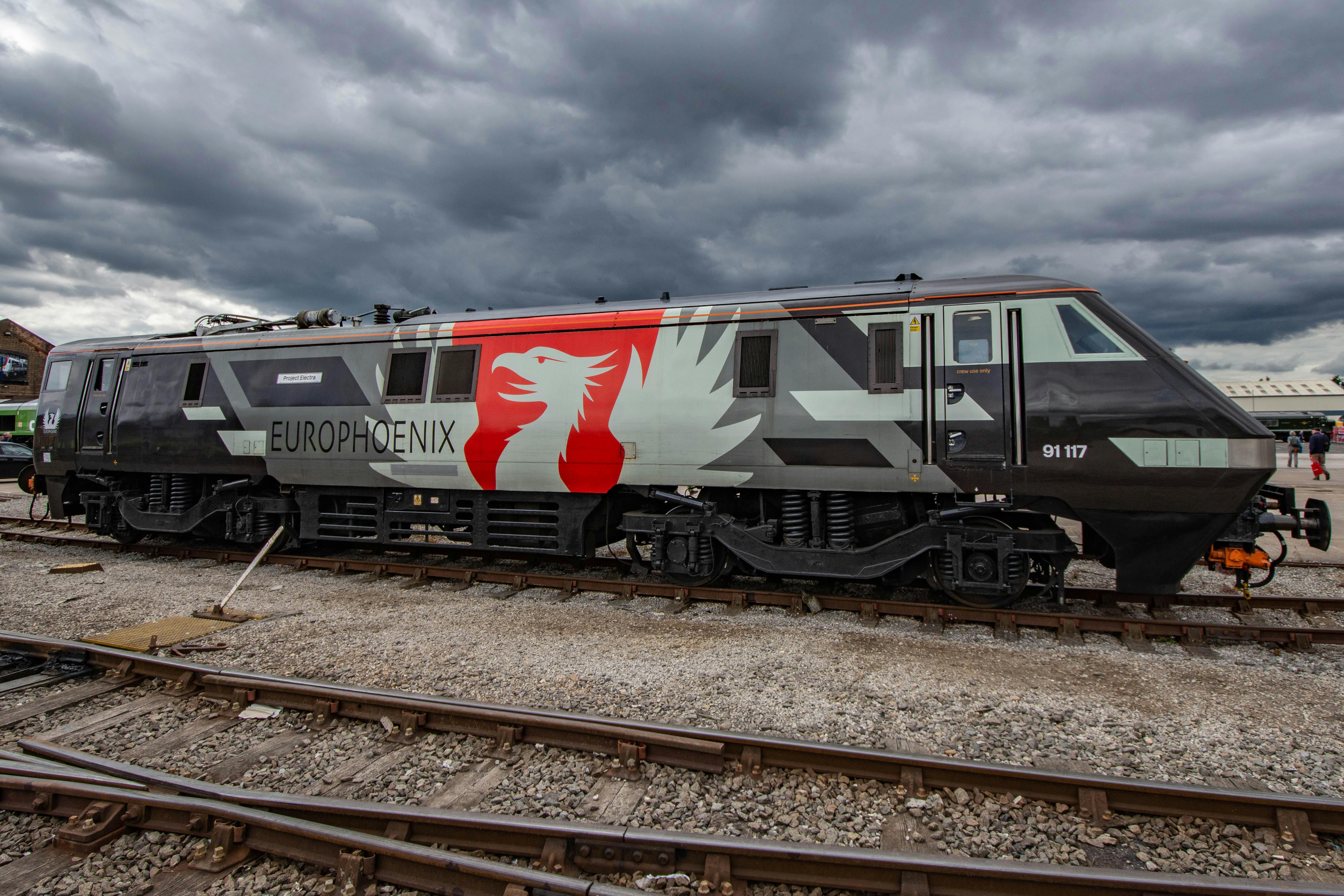
These are followed by two Freightliner locos, a Class 59 (59201 ‘Westbury PSB 1984-2024’) who is dedicated to heavy aggregate trains from the Mendip stone quarries. She’s joined by a Class 70 70008. To the right of this is a Class 69 (69016 ‘British Transport Police’) in a distinctive white and blue livery featuring hi-vis yellow chequered panels. This livery was designed to promote the British Transport Police’s text service, 61016 to increase public awareness of this safety initiative. Finally there is a Class 91 (91117 ‘Project Electra’). This was originally intended to be cannibalised for parts for the Class 89 ‘Avocet’ however it is now used in testing and development work by Europhoenix.
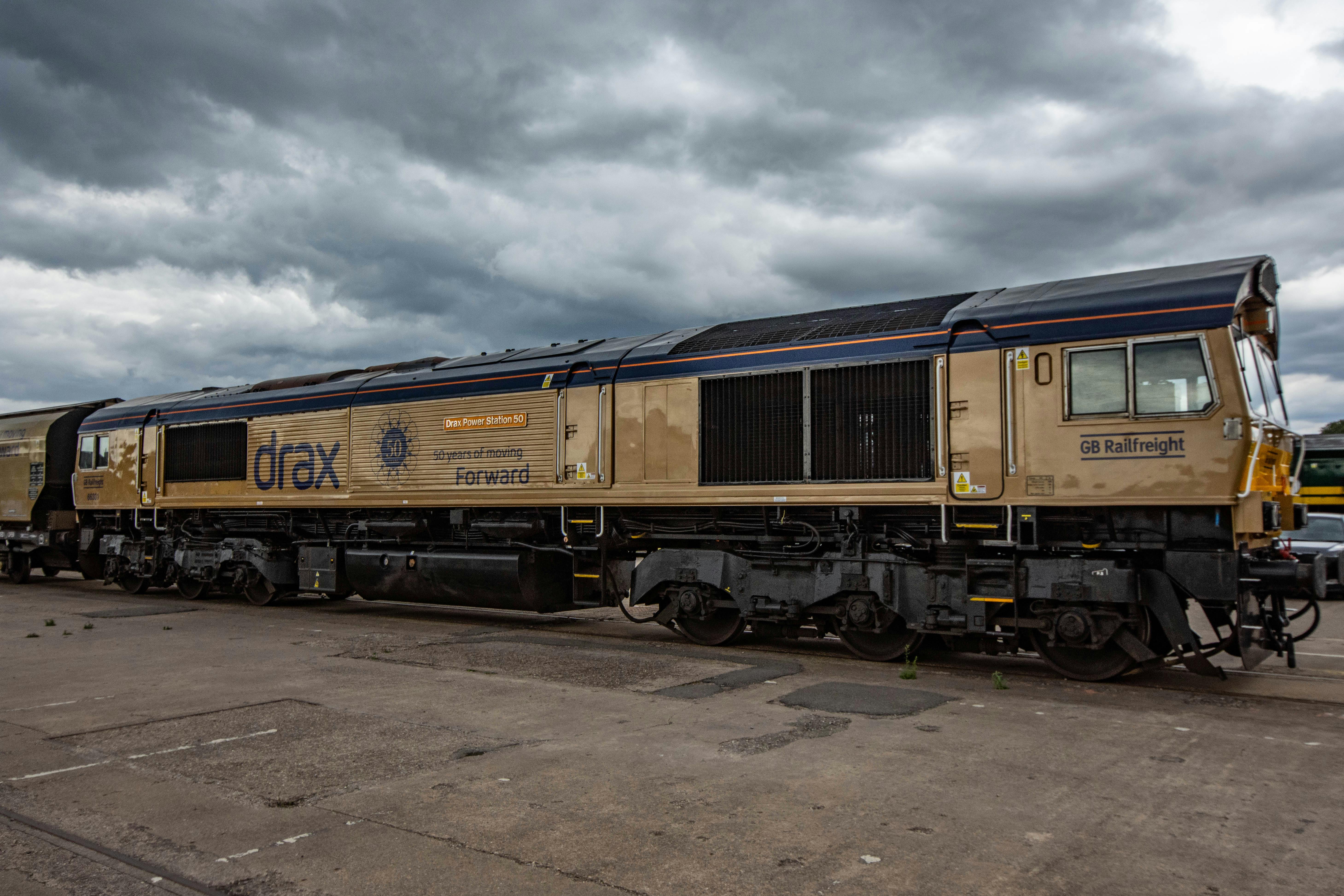
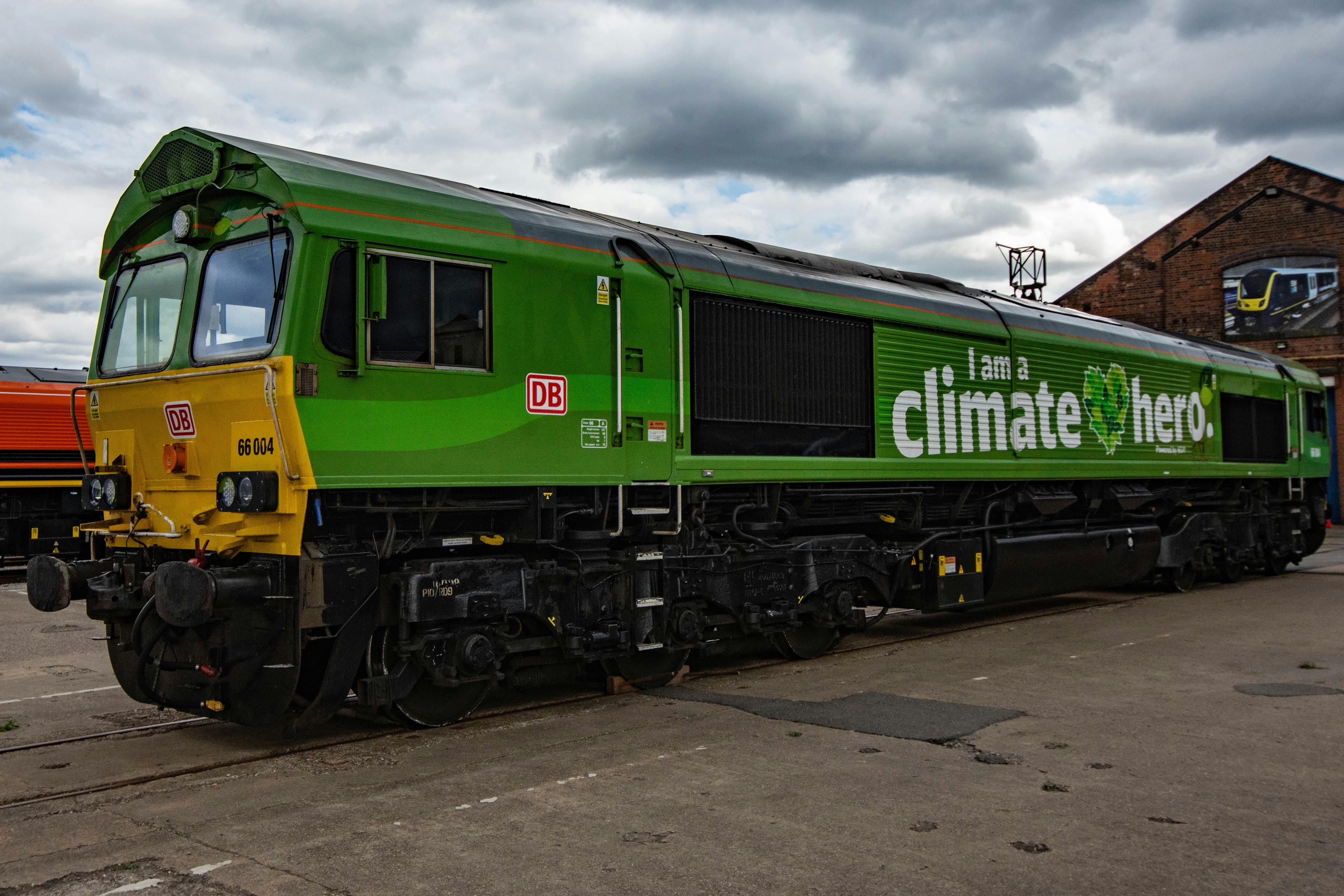
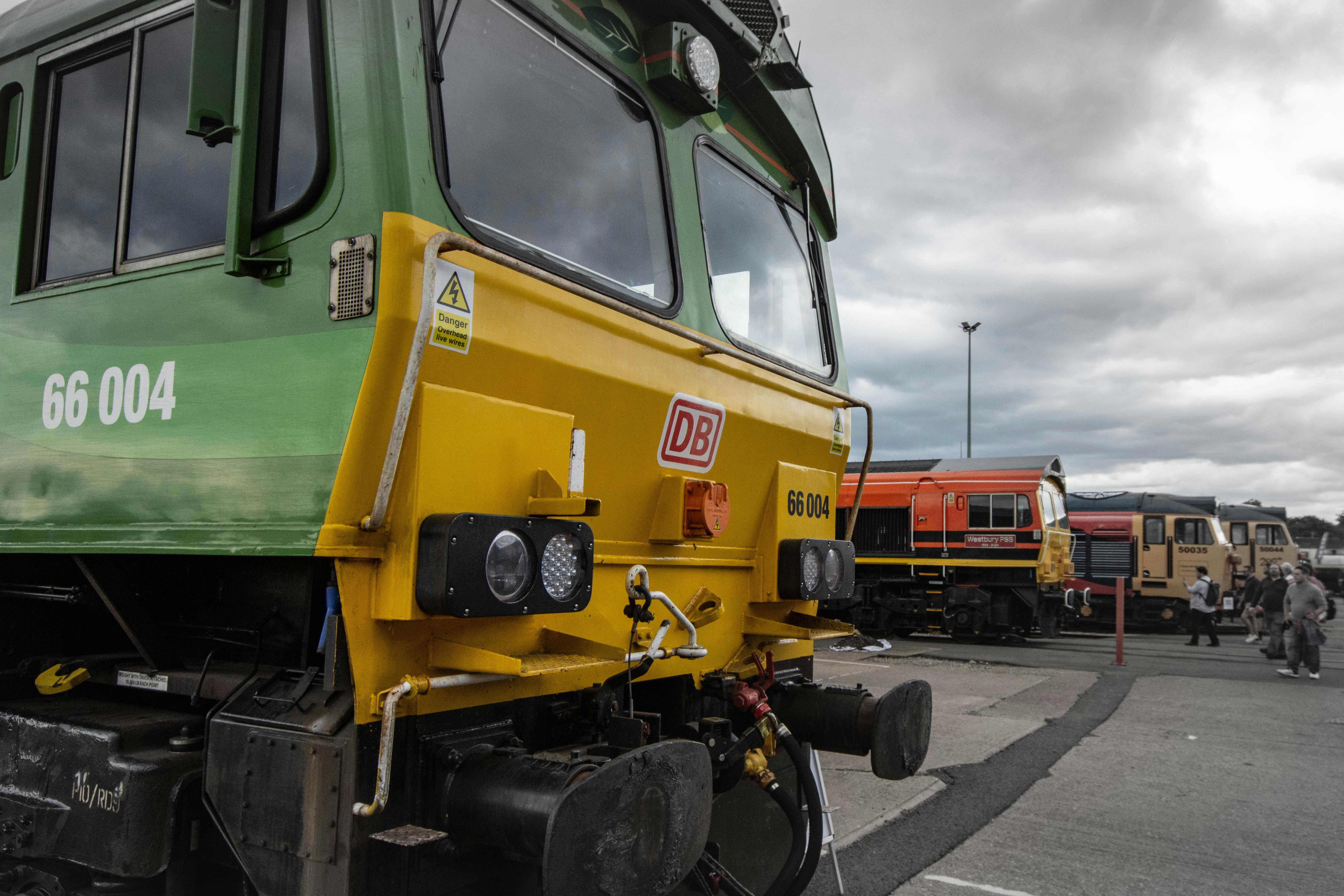
In train circles, it’s not uncommon to hear certain classes of locomotives referred to by a nickname. There are plenty of nicknames that float around, such as Choppers (Class 20’s), Tractors (Class 37s), Peaks (Class 44/45/46) and the Class 66 is no exception and commonly referred to as ‘Sheds’ on account of the roof looking like one. We’ve a couple of examples here of 66’s, the first being 66301 ‘Drax Power Station 50’ which was repainted in a striking gold livery to commemorate the 50th anniversary of Drax Power Station and unveiled in 2024, highlighting the long-standing partnership between GBRf and Drax. 66004 features as well in its ‘Climate Hero’ livery which symbolises DB Cargo UKs commitment to sustainability. In 2021, it was converted to operate on hydrogenated vegetable oil which is one of its eco-friendly initiatives.
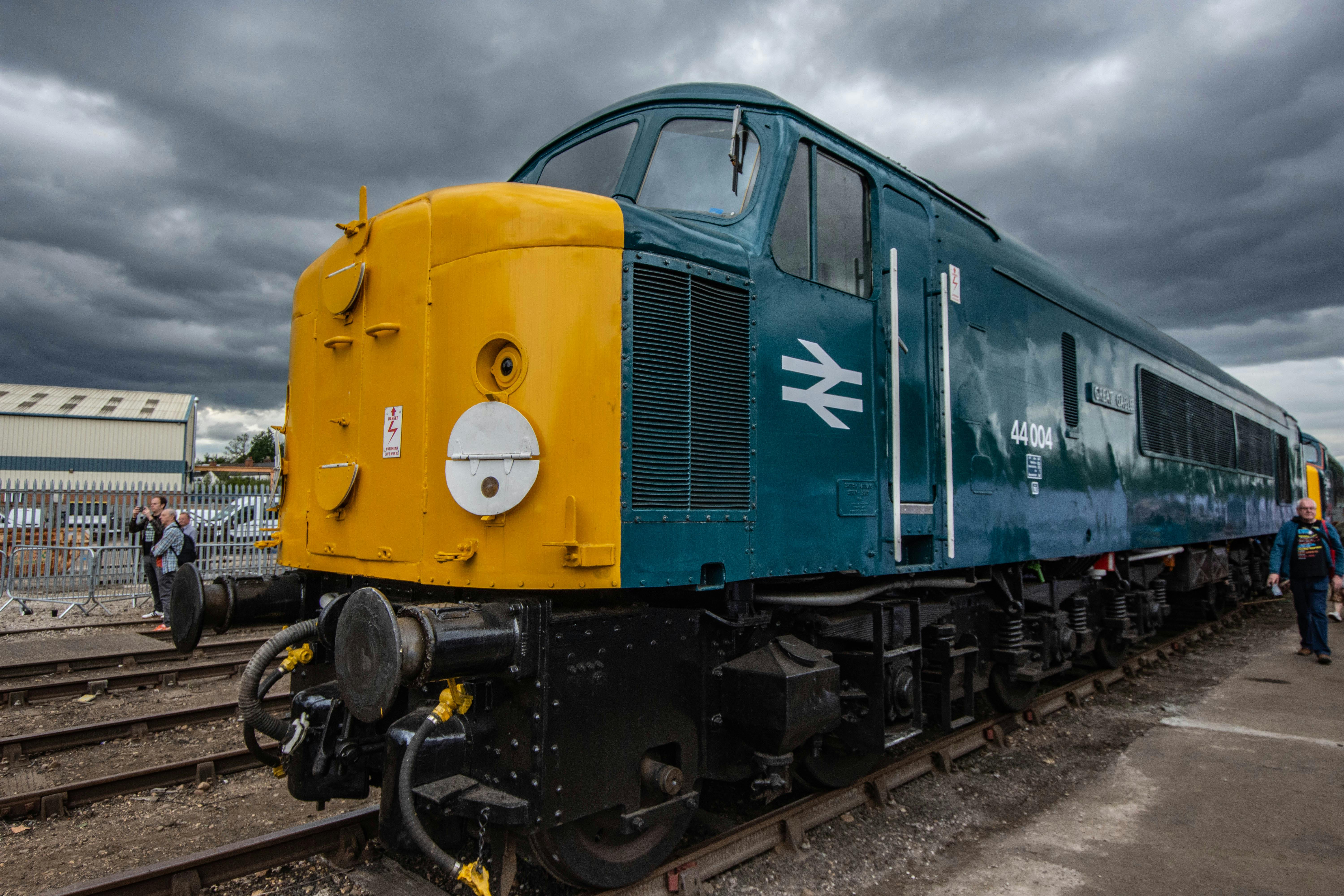
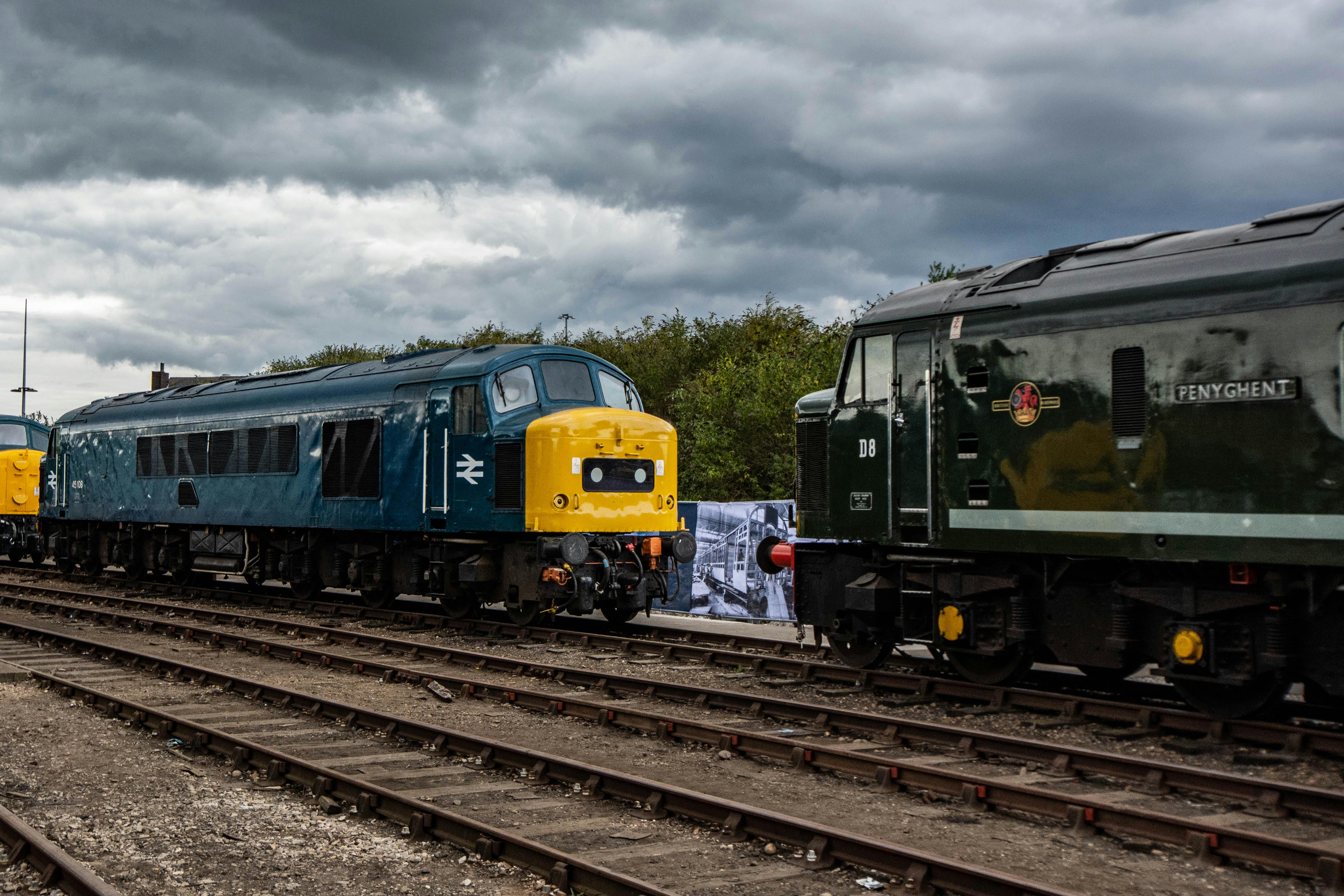
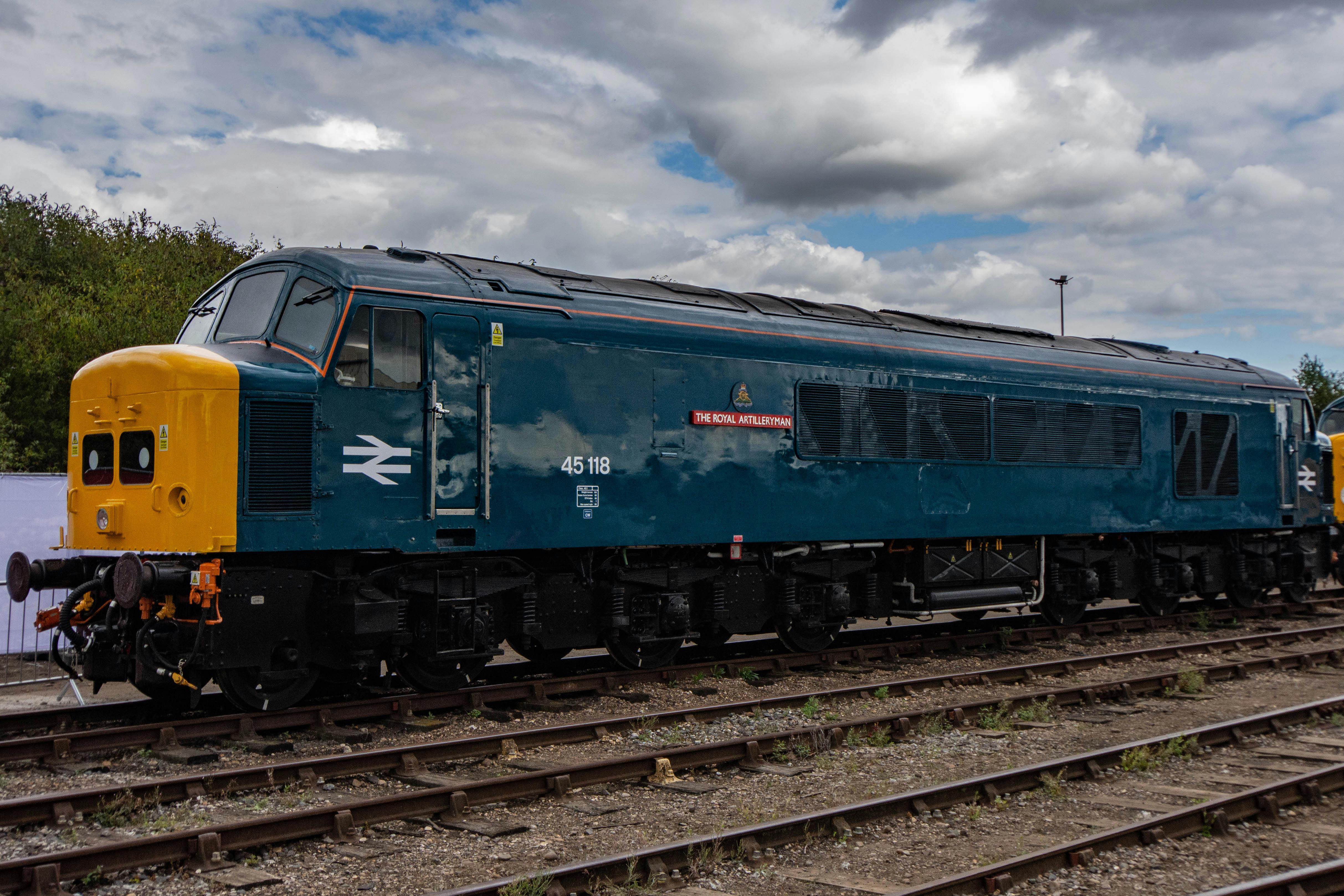
Time for a few ‘Peaks’ now, Classes 44, 45 and 46s all shared a similar design and all three classes are collectively know as ‘Peaks’ on account of the first 10 locomotives in the series being named after famous mountains in England and Wales. Class 44 44004 ‘Great Gable’ and 44008 ‘Penyghent’ were both one of the first ten made and today they are the only two locomotives of this class to survive and they’re both here today! The Class 44 diesels were the first big diesels commissioned for the British Rail modernisation projects in 1958 and were the precursor to the Class 45s and 46’s. Also on display is a Class 45 (45118 ‘The Royal Artilleryman’) who was subject to some pretty bad vandalism in 2008 and has since been repaired and restored at Barrow Hill recently. Completing the ‘Peak’ line-up is Class 46 46045 built in Derby in 1962. It was withdrawn in 1984 and entered preservation in 1990.
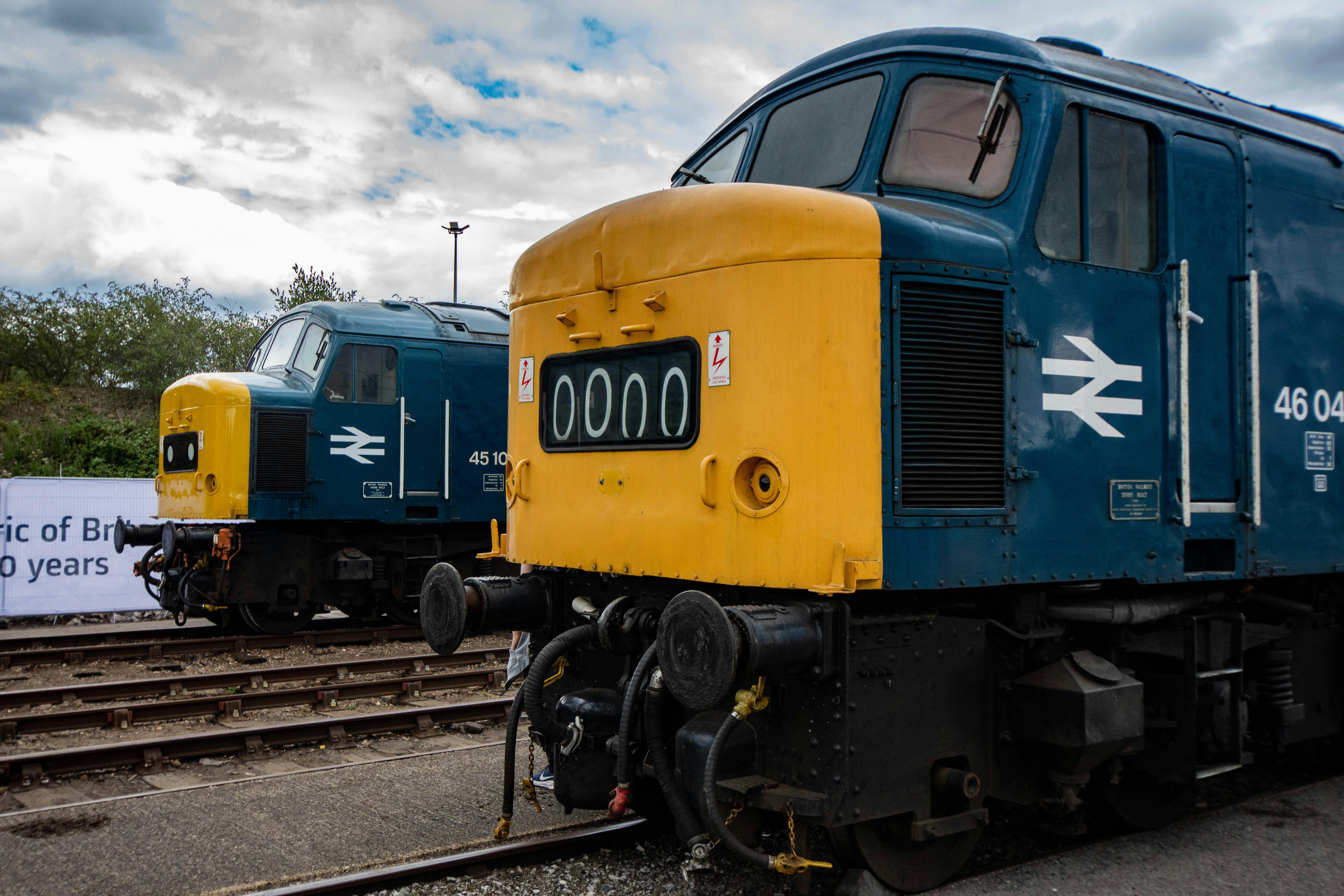
There are three other locos here who are also presented in the same British Rail ‘Rail Blue’ livery as the ‘Peaks’ above and those are a Class 56 (56045), Class 42 (D821 Warship ‘Greyhound’) and Class 52 (D1015 ‘Western Champion’). ‘Greyhound’ is now only one of two Class 42s in preservation.
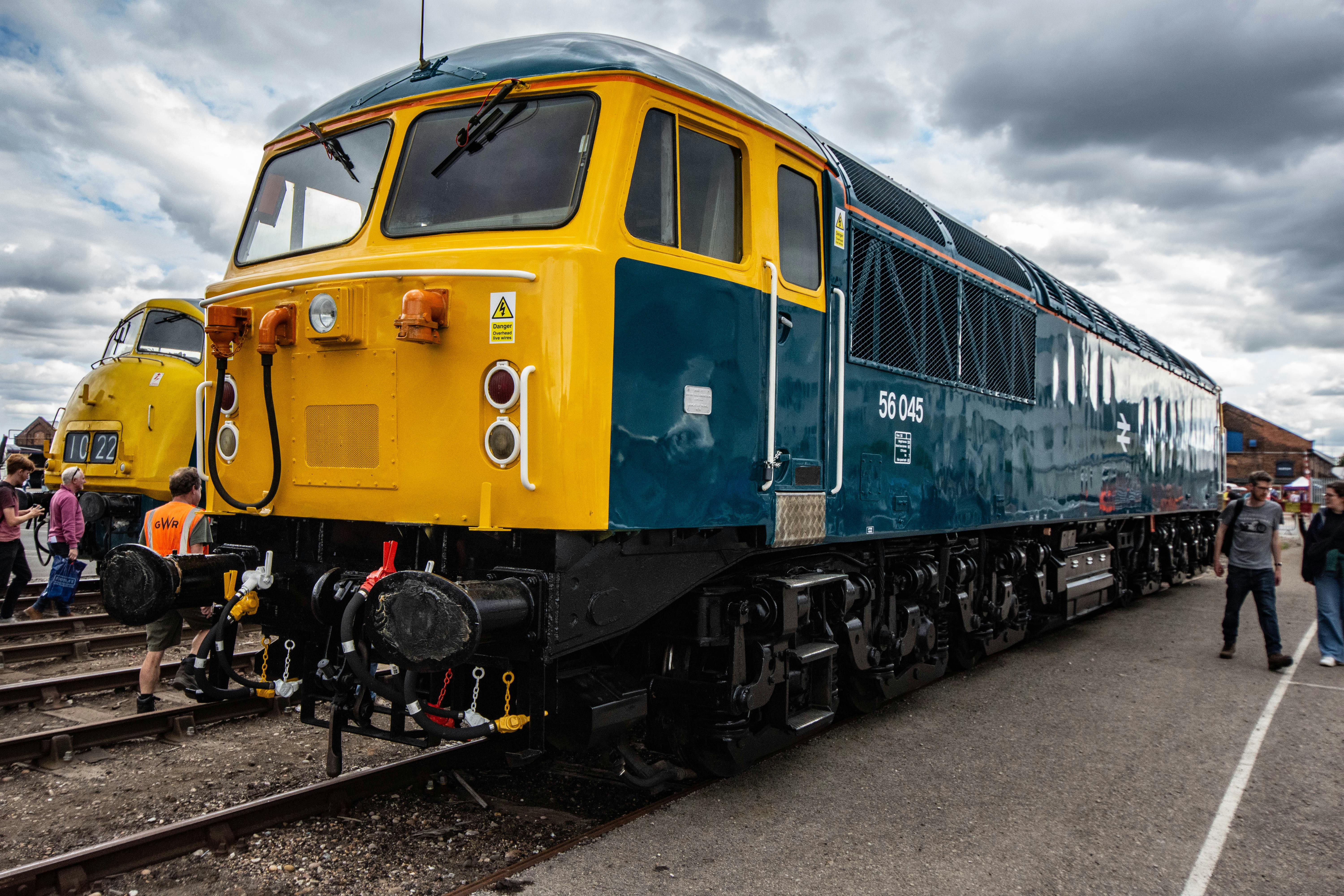
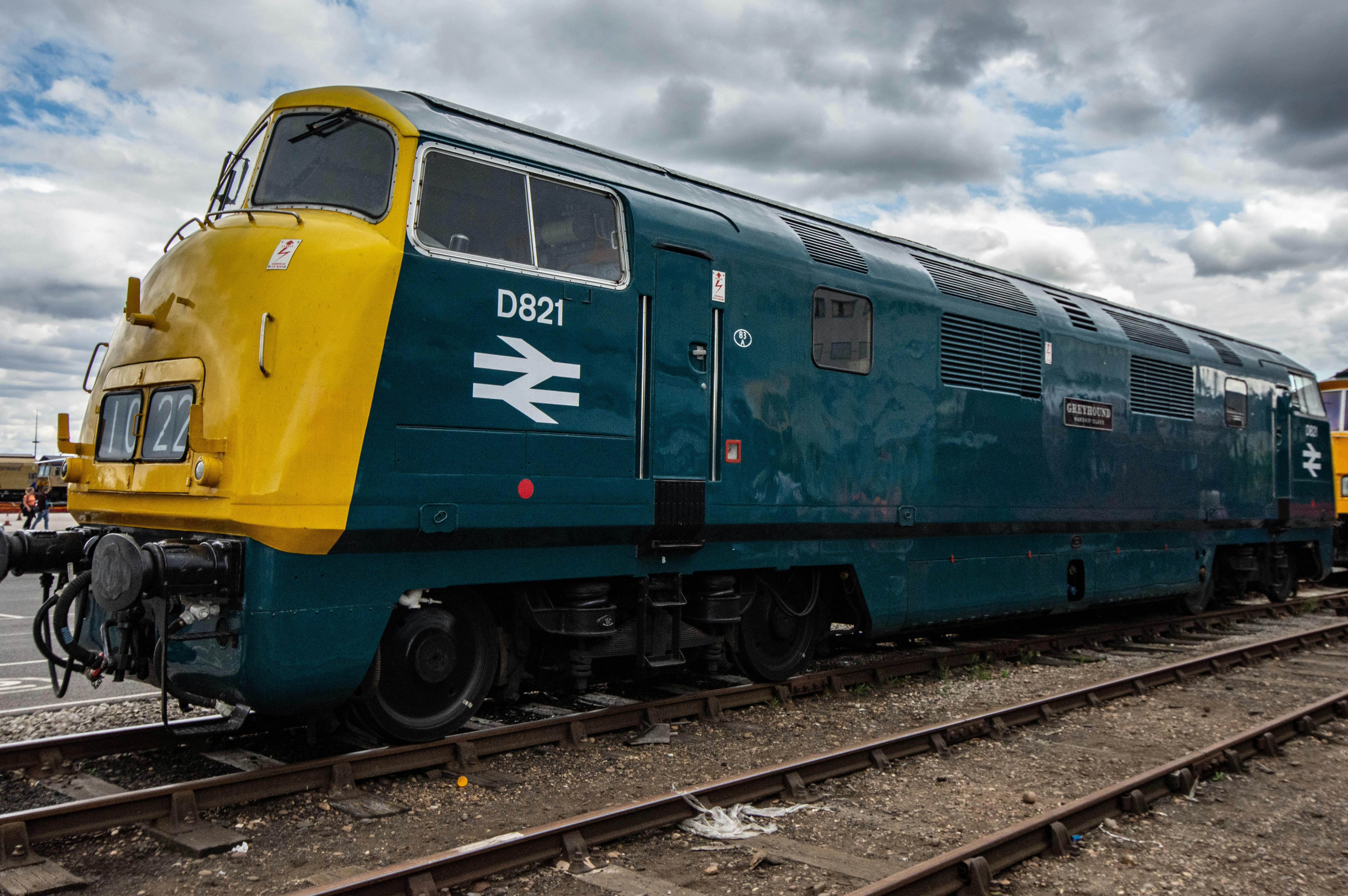
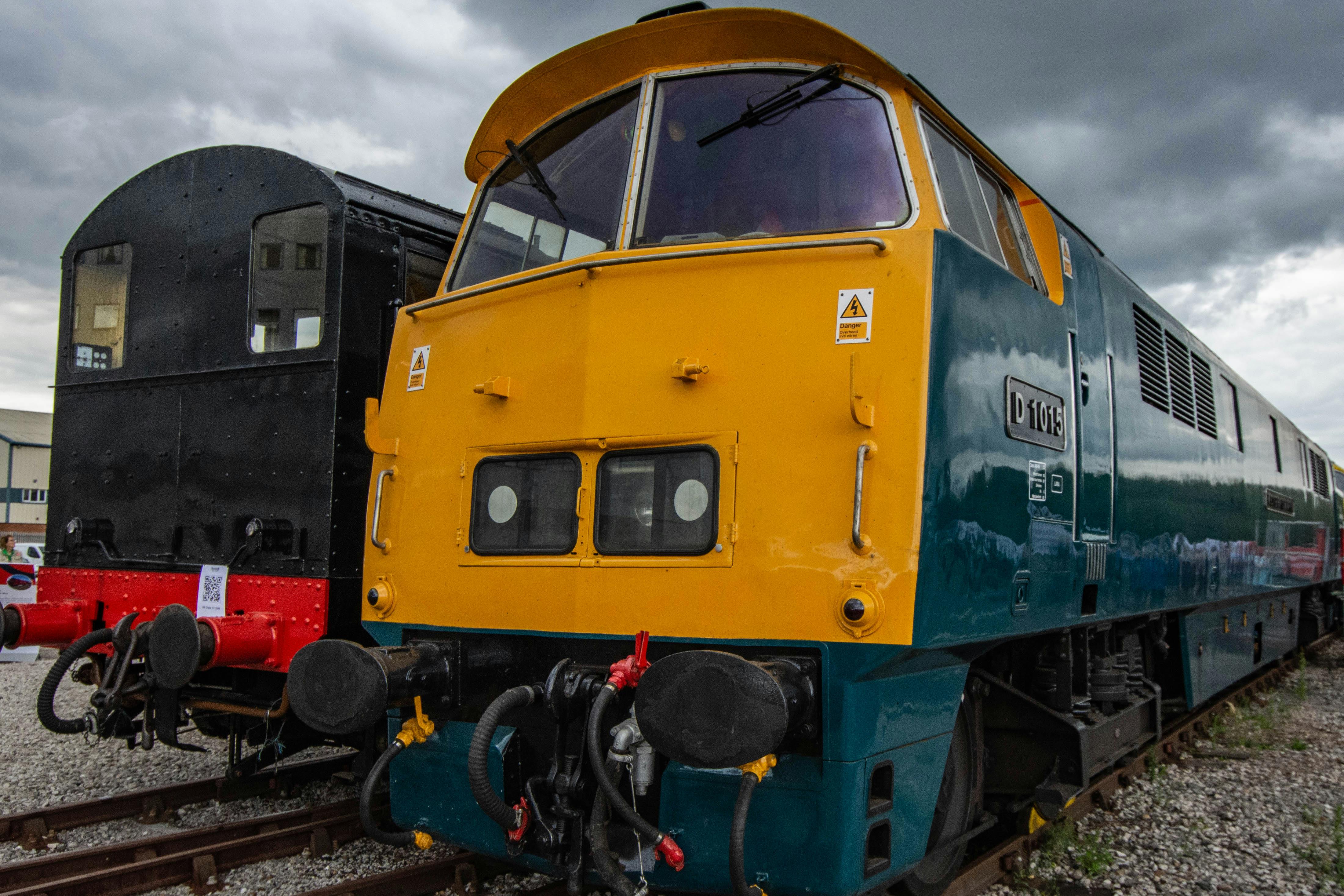
Seeing all of these diesels lined up and in the same location at the same time is not likely to happen again anytime soon so I’m soaking it in.

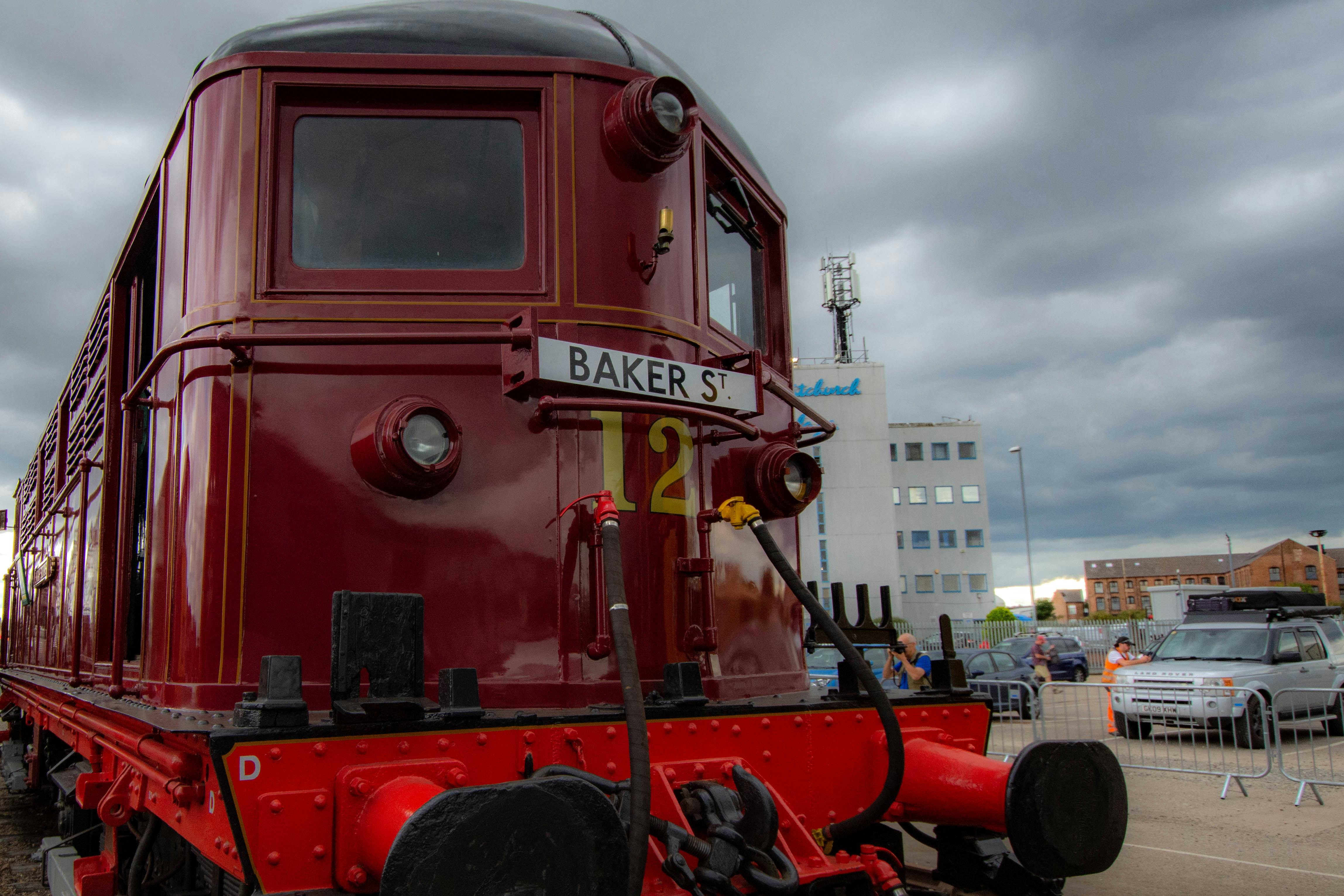
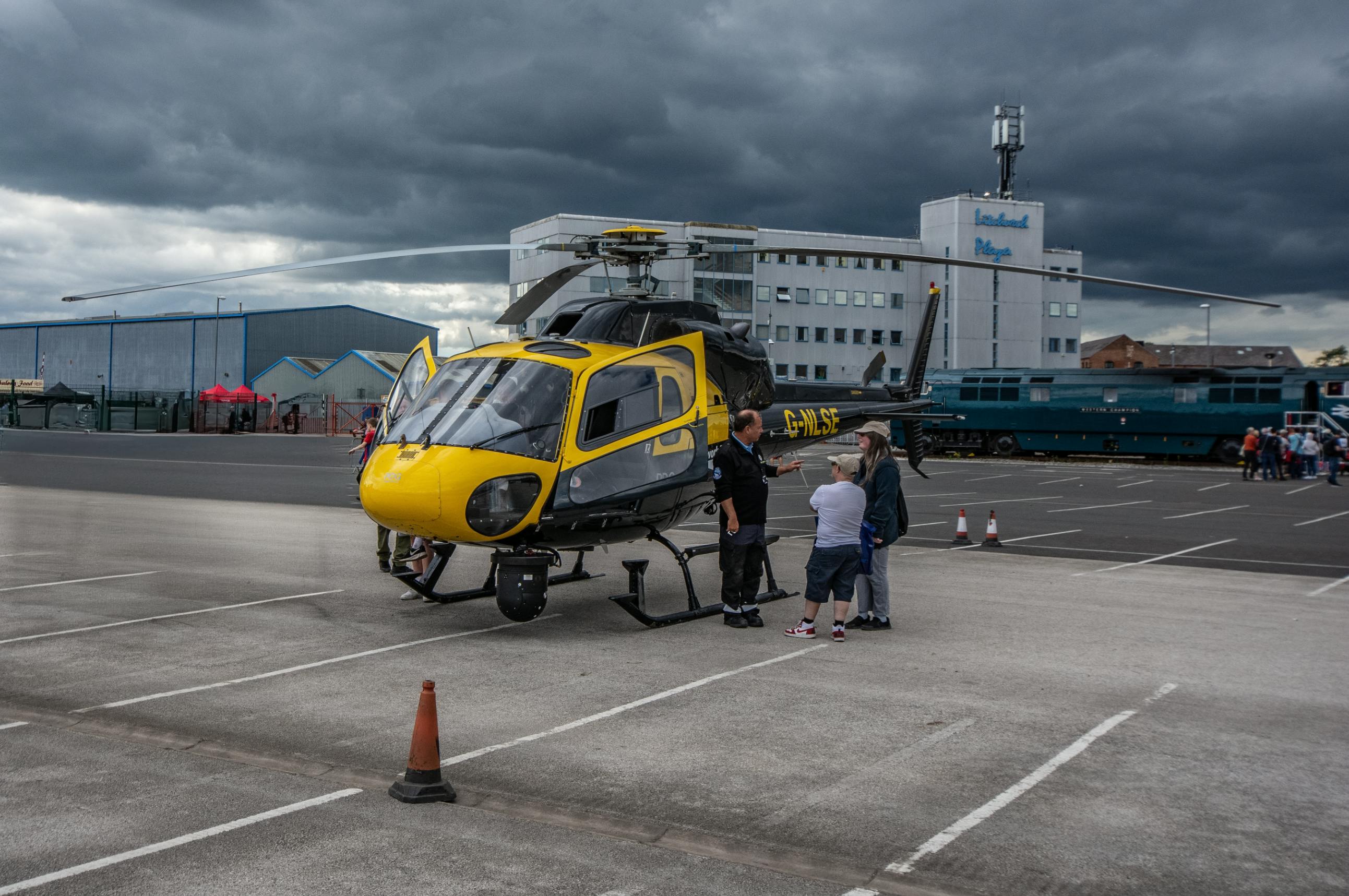
There were a final few surprises found in this area as well in the form of the Metropolitan electric No. 12 ‘Sarah Siddons’ who we last saw at the London Transport Museum Depot. She’s the sole working survivor of twenty early 1920’s Metropolitan Railway electric locomotives built by MetropolitanVickers for London Transport. She is Britain’s oldest electric locomotive. As well as this, we also have a rail inspection helicopter from Network Rail here which is used for track inspection and other roles and is kept generally pretty busy.
And that’s it! Truly a once in a lifetime opportunity, the Greatest Gathering brought together over 140 items of rolling stock and railway related vehicles but it did more than that. It ignited passions old and new and brought together this national and dare I say international community of railway enthusiasts who all have their own reasons for being interested in railways. Some people are mechanically minded and interested in the granular details of their operation, some work in the industry or have family who worked on the railways at some point while some inherit the love from their parents and carry the interest on. Whatever the reason for being interested, Alstom should be commended for the vision and execution of this event. So many people left the event filled with joy and in the following weeks after the event, there is a very public outpouring of adoration and appreciation for what has been done. These mechanical marvels have been here for the last 200 years and I’m sure with preservation efforts, will be here in another 200. Britain gave the railways to the world. This is our countries heritage and we should be rightly proud of it and protect it.