
We’re going international! Today we’re not in the UK, but over in Belgium at the Maldegem – Eeklo heritage railway. 2025 marks 200 years of the birth of the modern railways and there are nationwide celebrations and events all throughout the year to celebrate. Some places overseas are also celebrating this event and one of those was the Maldegem and Eeklo railway.
The line here used to run from Ghent to Bruges, but half of it between Eeklo and Bruges was closed for passengers in 1959 and finally for goods traffic in 1967. The railway maintains around 10KM of standard gauge tracks between Maldegem and Eeklo and today they’re holding an annual event called Stoomtrein Festival which runs over the whole weekend with rides on historic trains and heritage bus services. Services depart from the main hub which is Maldegem. It’s a simple but I think striking façade.

The first service of the day is pulled by a visiting loco; 1949 built ‘Hannibal’ type “Tom”. After WW2, manufacturer Krupp in Essen, Germany, designed a 3-axle unit type locomotive which was produced until 1961. The machine could only run at a top speed of 45 km/h but with their 500 HP, they were as powerful as the elephants with which Hannibal crossed the Alps, hence the nickname. The design of Tom is quite different to a British loco, for one, note the contraption to the side of the funnel. I’m unsure exactly what this was doing but it seemed to periodically stutter and hiss with steam. You can see her in action below.


Also in service and visiting today is a Series 62 Belgium diesel locomotive. This was the largest series of diesel locomotives in Belgium which ran passenger trains on non-electrified lines, such as Ghent to Eeklo until 2003. Some of these still survive today as work trains for rail infrastructure manager Infrabel.
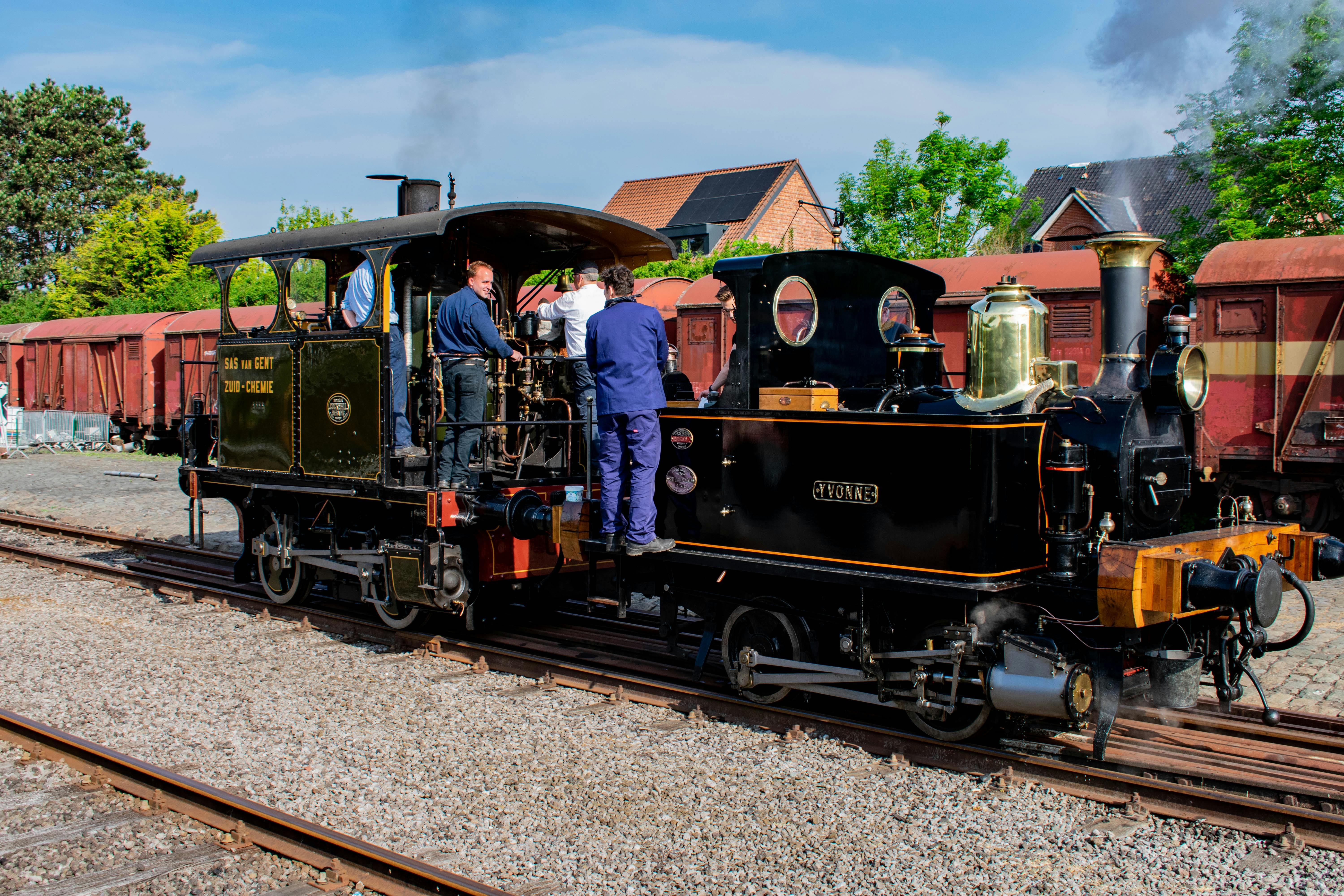
On the smaller side, running footplate rides is the diddy 0-4-0 Yvonne. Built in 1893 by La société de Saint-Léonard, she is the oldest item in the railways collection and undergone an intensive restoration. She’s coupled up to Cockerill 3098 which was built in 1926. This loco looks different to the other locos on site, on account of her having a vertical steam boiler. The design was hugely suitable for the shunting industry as these locos could be lit and brought up to pressure quickly and the short wheel base allows them to navigate tight curves with ease. Almost 1000 of this type of loco were built which is testament to their popularity and success at the time.
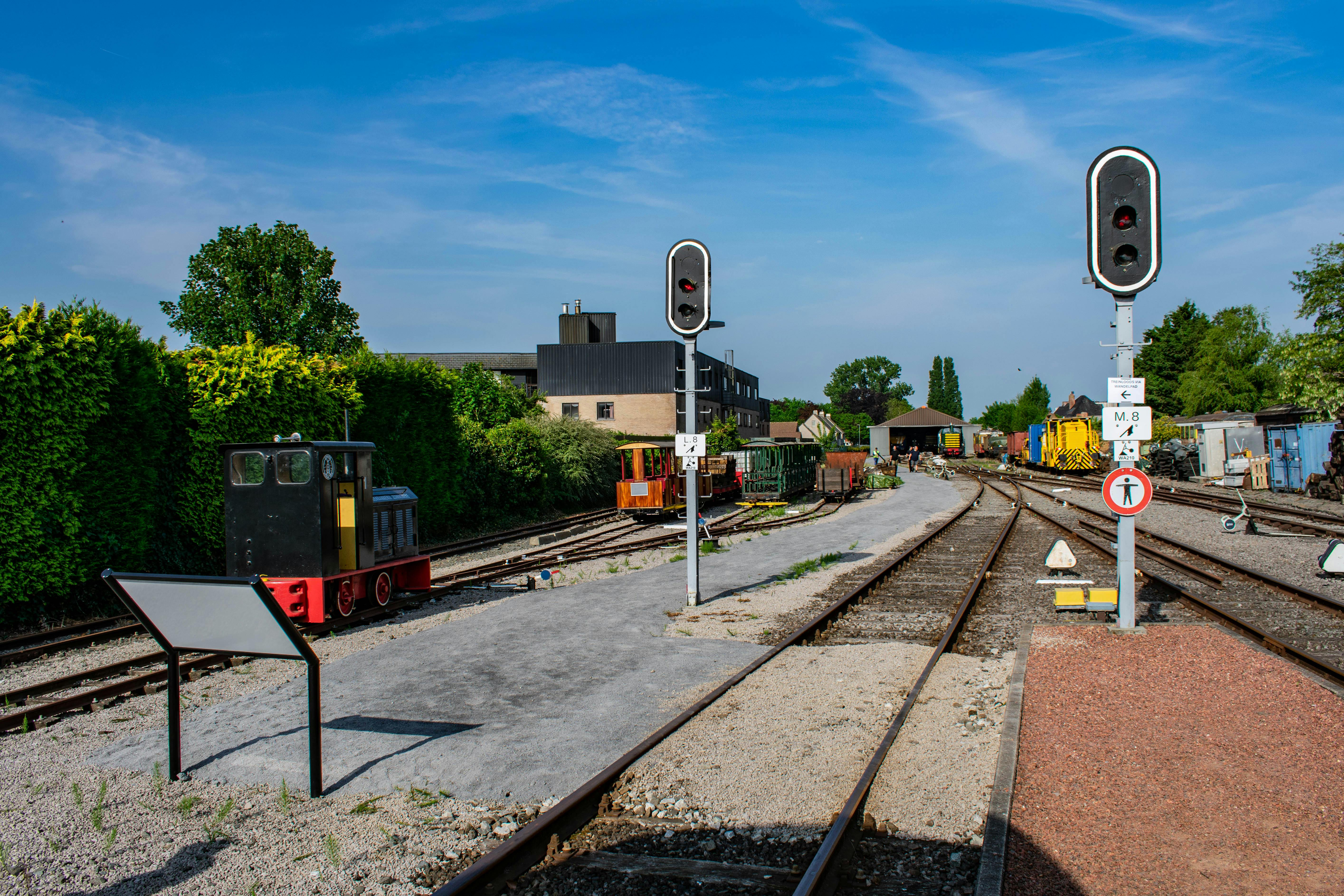

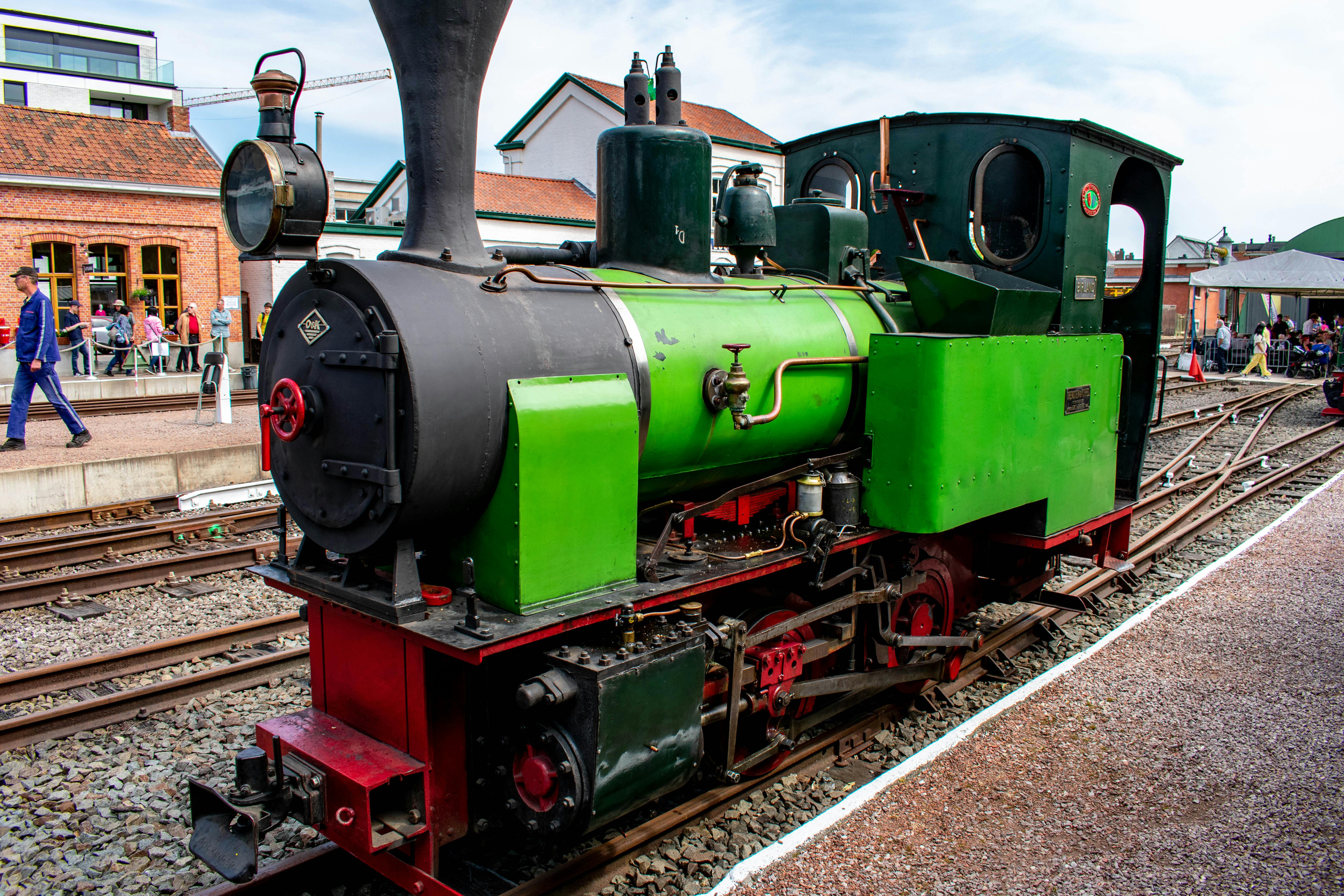
The site also has a short narrow gauge section of track and running along this today is another visiting loco; Birland. She spent much of her life working in a paper mill where she served until 1965. She’s recently been overhauled and has a new set of boiler tubes and going strong today. Not in service today, but in the sidings is a diesel narrow gauge loco; A Diema DS30.

Dotted around the site are collections of other diesel locos, railcars and wagons in various conditions and stages of restoration. Of the selection below, we have a V60 built for the SNCB (left), an unidentified vertical boiler engine with MW 4620 ex-SNCB railbus behind her (center), and on the right we have a diesel train unit MW 4403.


The railway also has a variety of artifacts on display and unlike in the UK, they are open to the public to interact with. Although not wired in, the below is an example of a signal box control panel, complete with a line section diagram. It is unknown exactly where this was taken from.

So cycling back to Railway 200 and why I am here in the first place. Although I was not expecting a big speech about the railways being 200 years old since this is a predominantly British celebration this year, I was however expecting something. What I found was quite surprising. An Austerity WD196 Hunslet is here and has called the railway home since 2016. She’s not pulling services today but is on manoeuvres in the sidings. Take a look above the boiler door and there it is, the railways recognition of Railway 200 in the UK….yes that was really it.

This was an interesting day out and a first for me in visiting a heritage steam railway overseas. I’ll leave you with this image I took in my hotel room for the night of the feature wall. I could spend ages looking at each of these invididual posters and still be mesmerised and pick out new details.
